
Iran's Missile Strikes Escalate Tensions in the Middle East Amid Ongoing Conflict
Escalating Conflict in the Middle East
Dubai: Iran has launched missile attacks targeting various locations in the Middle East, igniting fires at a Kuwaiti oil refinery. This escalation comes as American and Israeli airstrikes struck Iran early Friday, marking nearly five weeks of continuous conflict. The UN Security Council is set to convene to discuss Iran's control over the strategic Strait of Hormuz.
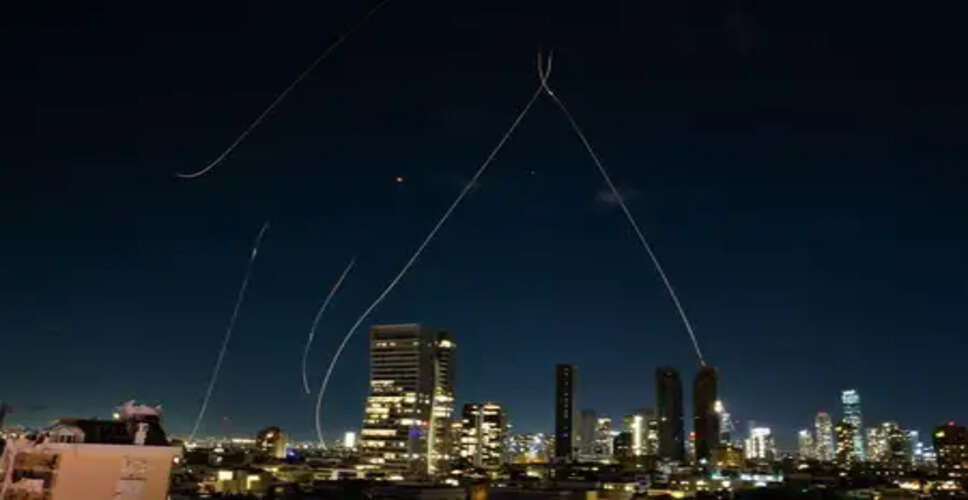
Despite assertions from the US and Israel that Iran's military strength has been significantly diminished, Tehran continues to exert pressure on Israel and its Gulf Arab neighbors. A drone strike targeted Kuwait's Mina al-Ahmadi oil refinery early Friday, which has faced multiple assaults during the ongoing war. The state-run Kuwait Petroleum Corporation reported that firefighters are battling several blazes, while sirens in Bahrain warned of potential Iranian strikes, and Israel reported incoming missiles.
Reports from activists indicated strikes near Tehran and Isfahan, although the specific targets remain unclear.
Iran's assaults on energy infrastructure in the Gulf region and its firm grip on the Strait of Hormuz, a vital passage for a significant portion of the world's oil and natural gas, have led to soaring oil prices, affecting global economies.
As of early Friday, Brent crude prices were approximately USD 109, reflecting a rise of over 50% since February 28, when the conflict escalated with Israeli and US attacks on Iran.
UN Security Council Addresses Strait of Hormuz Security
Prior to the conflict, shipping through the Strait of Hormuz was largely unimpeded. However, US President Donald Trump has stated that it is not Washington's responsibility to reopen the waterway, suggesting that nations reliant on fuel shipments should 'summon some delayed courage' and take action themselves.
The UN Security Council is anticipated to vote on a proposal from Bahrain aimed at authorizing defensive measures to ensure safe passage for vessels through the strait. Bahrain's initial draft would permit countries to 'use all necessary means' to secure the strait, but Russia, China, and France, who hold veto power, have expressed opposition to the use of force.
During a speech in South Korea, French President Emmanuel Macron remarked that the expectation for the Strait of Hormuz to be reopened through military means is unrealistic. He emphasized that any military operation would take an indefinite amount of time and pose risks to vessels from Iran's Revolutionary Guard. Macron suggested that reopening the strait should occur through negotiations with Iran following a potential ceasefire.
Discussions led by Britain, involving over 40 nations, focused on diplomatic rather than military solutions to secure the strait. These nations, excluding the US, advocated for increased diplomatic pressure on Iran and the possibility of sanctions.
Rising Casualties Amid Ongoing Violence
The conflict has resulted in over 1,900 fatalities in Iran, with 19 reported deaths in Israel. Additionally, more than two dozen individuals have died in Gulf states and the occupied West Bank, alongside 13 US service members. In Lebanon, where Israel has initiated a ground invasion against the pro-Iranian Hezbollah militant group, over 1,300 people have lost their lives, and more than 1 million have been displaced.