
Iran's Military Commander Reportedly Killed Amid Escalating Tensions
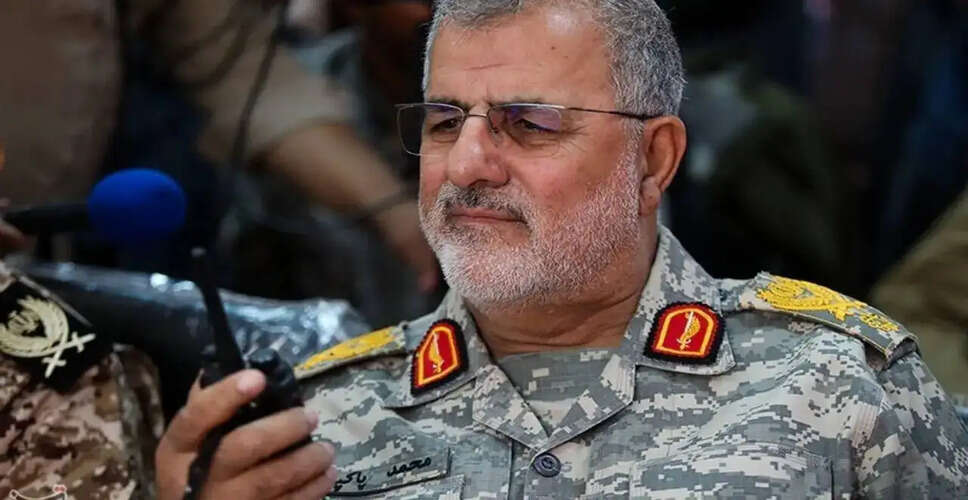
Death of a Key Military Figure
Reports indicate that Mohammad Pakpour, the commander of Iran’s Islamic Revolutionary Guard Corps, was killed during airstrikes on Saturday, February 28. As a prominent figure in Iran's military hierarchy, Pakpour took command following the reported death of his predecessor, Hossein Salami. Just prior to the strikes, he had issued a strong warning to both Israel and the United States, advising them to avoid any miscalculations. He emphasized that the Islamic Republic is 'more prepared than ever' and described the nation as having its 'finger on the trigger,' according to a report from a news outlet.
However, Tehran has yet to officially confirm Pakpour's death. In 2025, Iran’s Supreme Leader Ayatollah Ali Khamenei promoted Pakpour to the rank of major general, assigning him the responsibility of enhancing the IRGC’s operational capabilities, readiness, and internal cohesion.
The situation escalated further when the US and Israel conducted significant strikes on various targets within Iran. President Donald Trump urged Iranians to take cover during the attacks, suggesting that once the strikes concluded, they could reclaim their government. This unprecedented appeal hinted at a potential shift towards ending Iran's theocratic regime after years of conflict.
In a social media video, Trump accused Iran of advancing its nuclear program and developing missiles capable of reaching the US. The initial strikes reportedly targeted the residence of Iran’s 86-year-old Supreme Leader, Ayatollah Ali Khamenei, in central Tehran, although it was unclear if he was present at the time. Smoke was observed rising from the capital.
In response to the attacks, Iran’s paramilitary Revolutionary Guard launched a 'first wave' of drones and missiles aimed at Israel, prompting a nationwide alert as the military prepared to intercept Iranian fire. Additionally, Iraq and the United Arab Emirates closed their airspace, and sirens were activated in Jordan. Bahrain reported a missile strike targeting the US Navy’s 5th Fleet headquarters, with explosions also heard in Qatar.