
Iran's Leadership Crisis: Mojtaba Khamenei's Absence and Political Turmoil
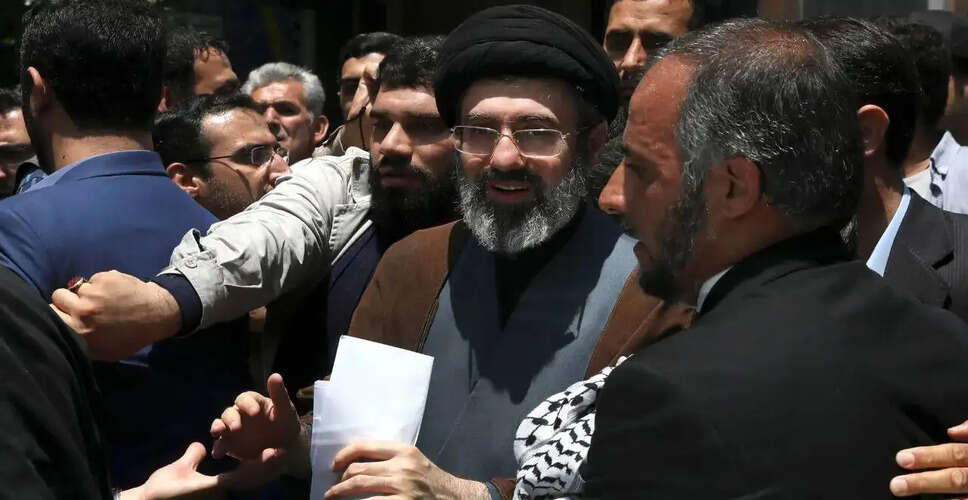

Mojtaba Khamenei's Status Amidst Conflict
According to a report from a Saudi news outlet, al-Hadath, Iran's Supreme Leader Mojtaba Khamenei is currently not in Iran. This information comes from an Israeli security source, which indicates that Khamenei, who succeeded his father Ayatollah Ali Khamenei, sustained serious injuries during a US-Israeli operation that resulted in his father's death on February 28. Since the onset of the conflict, he has not appeared publicly and has only communicated through written statements. Iranian officials assert that he is recuperating and has been involved in negotiations with the United States. However, the Saudi report suggests that the messages attributed to Khamenei are actually being crafted by Ahmad Vahidi, the newly appointed chief of the Islamic Revolutionary Guard Corps (IRGC), along with other senior IRGC officials. An Israeli security source noted that internal divisions within Iran pose a significant threat to the IRGC's stability.
Political Struggles in Iran
Iran Hardliners Cry 'Coup' - What's Happening In Iran
While Mojtaba Khamenei remains out of sight, a power struggle is unfolding within Iran's political landscape. Reports indicate that hardliners are accusing the leadership of executing a 'soft coup.' There is a growing belief that officials who engaged in negotiations with the US are attempting to marginalize the revolutionary leadership. Hardliners claim that rather than retaliating for Ali Khamenei's assassination, the government has capitulated by agreeing to a Memorandum of Understanding with the US.
Mojtaba Khamenei's Warning to the US
Mojtaba Khamenei's Fresh Threat To The US
Recently, Khamenei issued a stern warning to the United States, criticizing them for breaching an agreement and labeling the American president's signature as 'worthless.' He accused the US of consistently failing to meet its obligations and cautioned that there would be 'unforgettable lessons' if attacks continue. This statement was broadcast on state television, emphasizing the seriousness of his message.