
Iran's IRGC Closes Strait of Hormuz Amid Rising Tensions

Closure of the Strait of Hormuz
On Sunday morning, the Islamic Revolutionary Guard Corps (IRGC) Navy of Iran announced the closure of the Strait of Hormuz to all maritime traffic indefinitely. This decision followed the firing of warning shots at a vessel that allegedly entered an "unauthorized route" within this crucial waterway. According to a statement from Iranian state media, the IRGC indicated that the ship had turned off its tracking systems and disregarded multiple directives to change its course before being halted. The statement emphasized, "A vessel that jeopardized maritime security by disabling its systems was consequently targeted with warning fire and brought to a stop." The IRGC further declared that the Strait would remain closed "until further notice and until US intervention in the region ceases," asserting that no vessels would be allowed to pass. They also cautioned that any further US attacks on Iran under the guise of this incident would provoke a "severe" response aimed at additional US bases in the area.
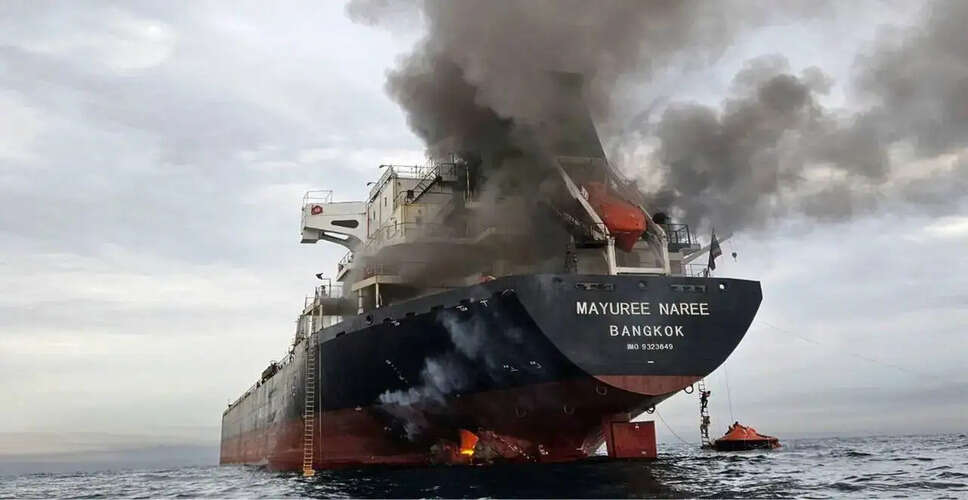
A senior US official informed Axios that Iran had launched a missile at a commercial cargo ship attempting to navigate the Strait of Hormuz, resulting in damage to the vessel.
US officials reported that Washington had demanded on Saturday that Iran publicly announce the reopening of the Strait of Hormuz for shipping and commit to not attacking civilian vessels. Earlier, senior officials from the Trump administration warned that Tehran would face repercussions if it did not provide these assurances. These developments occur amidst ongoing diplomatic efforts to avert a larger conflict between Washington and Tehran. Representatives from Iran, Oman, and Qatar have been engaged in discussions in Muscat aimed at reducing tensions related to the Strait of Hormuz, a critical global shipping lane through which approximately one-fifth of the world's oil and gas supplies transit, prior to the joint US-Israeli strikes on Iran that commenced on February 28.
As reported by CNN, Oman has proposed a plan to manage shipping through two distinct transit corridors in the strait. Under this proposal, vessels using the southern corridor through Omani waters would have free navigation, while those passing through the northern corridor in Iranian waters would need prior approval from Tehran, although no transit fees would be imposed. This proposal is still under consideration.
Iran has dismissed US President Donald Trump's assertion that negotiations could proceed without a ceasefire, insisting that Washington must first adhere to what Tehran refers to as previously established agreements regarding shipping through the Strait of Hormuz and the normalization of Iranian oil exports. On Friday, Trump warned that the United States would retaliate with "1000 Missiles" if Iran acted on threats against him, referencing calls made during the funeral of Iran's former Supreme Leader Ayatollah Ali Khamenei and reports indicating that Israel had provided intelligence about a purported Iranian assassination plot. The Iranian stance was reiterated on Saturday by the semi-official Fars news agency, which quoted an unnamed source stating that the United States must fulfill "agreed-upon understandings" before any further negotiations could occur. This exchange follows several days of US airstrikes and Iranian counteractions that have driven oil prices higher and raised concerns about the potential for a broader agreement between the two nations.