
Iran's Intelligence Minister Killed in Israeli Airstrike: A Major Escalation
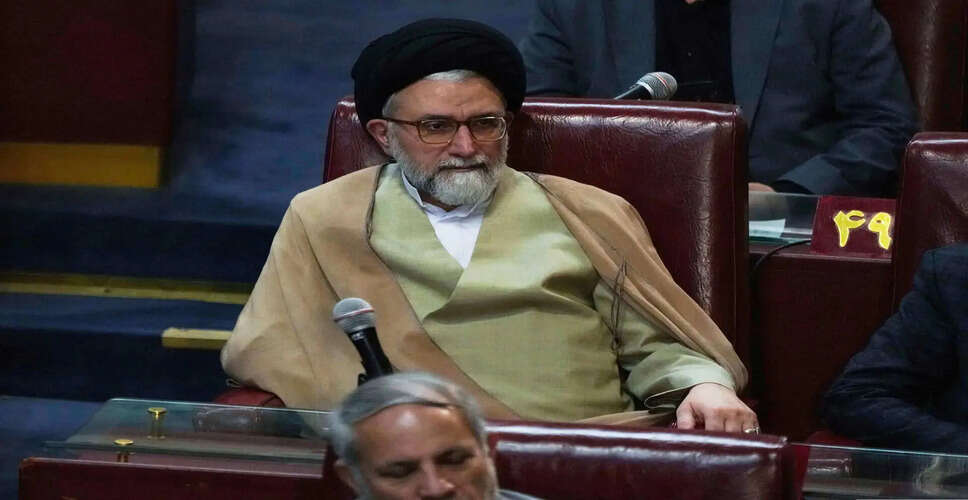
Iranian President Confirms Death of Intelligence Minister
Tehran: On Wednesday, March 18, Iranian President Masoud Pezeshkian announced the death of Esmail Khatib, the country's intelligence minister, due to an Israeli airstrike. Pezeshkian condemned the act as "cowardly," highlighting the significant escalation in the ongoing conflict involving Iran. He expressed deep sorrow over the loss of Khatib, along with Ali Larijani, Aziz Nasirzadeh, and several family members and associates, stating, "The cowardly assassination of my dear colleagues has left us in deep mourning," in a post on X.
drpezeshkian
2034271068488130787
Khatib, who took office as Iran’s intelligence minister in 2021, was known for his close ties to Supreme Leader Mojtaba Khamenei. Prior to the outbreak of widespread protests, he had warned about increasing public dissatisfaction and the threats posed by hostile forces targeting the Supreme Leader during a Security Council meeting.
Earlier, Israel's defense minister claimed responsibility for Khatib's death, although Iranian officials had not confirmed this at that time. Katz mentioned that "significant surprises are expected throughout this day on all fronts," without providing further details.
On the previous day, Iranian authorities reported the deaths of national security chief Ali Larijani, his son Morteza Larijani, and the head of the Basij force. Larijani had also served as the secretary of Iran’s Supreme National Security Council. A statement from the council, reported by Mehr, noted, "After a lifetime of striving for the elevation of Iran and the Islamic Revolution, he finally reached his long-cherished wish, answered the call of truth, and proudly attained the blessed rank of martyrdom in the service front."
Following the US and Israeli airstrikes that resulted in the deaths of high-ranking Iranian officials, tensions in the Middle East have intensified. In response, Iran has begun targeting Israeli and US military installations in Gulf nations. The Islamic Revolutionary Guard Corps (IRGC) has effectively blocked the Strait of Hormuz, a crucial maritime route that facilitates nearly 20% of global liquefied natural gas trade.