
Iran's Guard Corps Issues Warning Over Strait of Hormuz Amid Rising Tensions
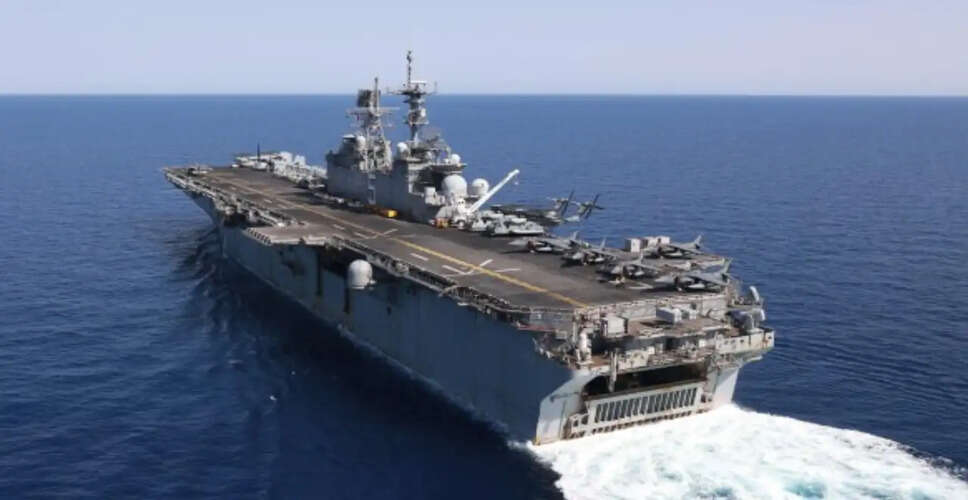
Iran's Warning on Strait of Hormuz
The Islamic Revolutionary Guard Corps (IRGC) Navy of Iran has reportedly announced via VHF radio that no vessels are permitted to navigate through the Strait of Hormuz, as per a report from a news agency. An official associated with the European Union's naval mission has indicated that this crucial shipping route is currently closed. However, there has been no official confirmation from Iran regarding such an order. The Strait of Hormuz serves as the primary channel for oil exports from the Gulf, linking major oil producers like Saudi Arabia, Iran, Iraq, and the UAE to the Gulf of Oman and the Arabian Sea. A sudden closure of this strait could disrupt global trade within a matter of hours.Israel Iran War Live Updates
In previous periods of heightened tensions, Iran has issued similar warnings, stating that it may block the strait if it faces military aggression. Revolutionary Guard leaders have reiterated this threat multiple times, including earlier this year.TehranTimes79
2027772693555163293
Significance of the Strait of Hormuz
Why Does Strait Of Hormuz Matter?
The Strait of Hormuz, located between Iran and Oman’s Musandam region, connects the Gulf to the Indian Ocean. It is approximately 50 kilometers wide and features shallow areas, making it susceptible to disruption during conflicts. According to the US Energy Information Administration, around 20% of the world's oil passed through this strait in 2024, with a similar percentage of global LNG shipments, primarily from Qatar. Over 80% of these shipments are directed towards Asia.
While countries like Saudi Arabia and the UAE have alternative pipelines, they can only reroute a limited portion of their exports. Several significant islands are located near the shipping lanes, with Iran controlling Hormuz, Qeshm, and Larak, as well as Greater Tunb, Lesser Tunb, and Abu Musa, which are disputed by the UAE. This strategic positioning grants Iran substantial control over the adjacent waters.BismillahSamee2
2027788096025305311
Escalating Tensions Between Iran, US, and Israel
What Led To Tensions Between Iran, US And Israel
Recent tensions escalated following airstrikes conducted by the United States and Israel within Iran, targeting high-ranking Iranian officials and calling for the Iranian government’s downfall. In retaliation, Iran launched missiles at Israel and Gulf nations hosting US military bases. President Trump stated that the strikes were intended to eliminate a security threat to the US and prevent Iran from acquiring nuclear weapons, urging Iranian security forces to disarm and encouraging the Iranian populace to rise against their government once the bombings ceased. Iran responded by targeting Israel and US allies in the Gulf with missile strikes, warning of even stronger retaliation. A senior commander of the Revolutionary Guards, Ebrahim Jabbari, indicated that Iran had only utilized “scrap missiles” thus far and would soon unveil more advanced weaponry that could catch its adversaries off guard. Iran condemned the strikes as “illegal and unprovoked,” with state television announcing that Supreme Leader Ali Khamenei was expected to address the nation shortly. Concurrently, explosions were reported in several oil-producing Gulf states, with their air defense systems claiming to have intercepted incoming missiles after Iran threatened to retaliate if attacked first. (With inputs from Reuters)