
Iran's Foreign Minister Warns US Over Alleged Submarine Attack
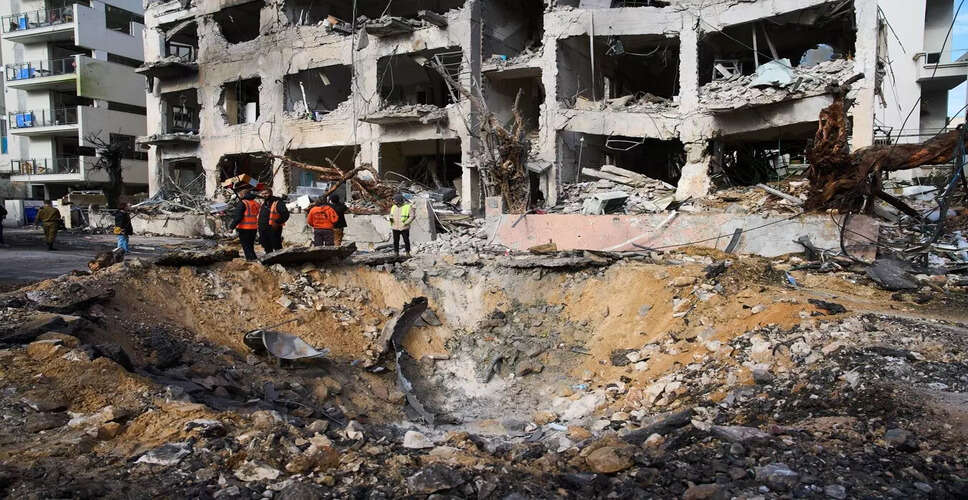
Iran Responds to US Submarine Incident
Dubai, Mar 5: On Thursday, Iran's Foreign Minister Abbas Araghchi expressed that the United States will deeply regret its actions following an incident where a US submarine reportedly sank an Iranian frigate near Sri Lanka.
This statement marks the Iranian government's first acknowledgment of the sinking of the IRIS Dena in the Indian Ocean.
Araghchi took to social media to declare that the US has committed an act of aggression at sea, far from its own shores.
He stated, “The frigate Dena, which was visiting India’s Navy and had nearly 130 sailors aboard, was attacked in international waters without any warning. The US will come to bitterly regret this precedent,” he warned.
In response to the escalating tensions, Iran initiated a series of attacks targeting Israeli and American military installations, following prior threats to dismantle military and economic structures in the region.
Missiles were launched towards Bahrain, Kuwait, and Israel as the situation intensified. Turkey reported that NATO defenses intercepted a ballistic missile from Iran before it could enter Turkish airspace.
Israel confirmed multiple missile threats, with air-raid sirens activated in both Tel Aviv and Jerusalem. Iranian state media reported further strikes aimed at US bases.
The Israeli Defense Forces conducted targeted operations in Lebanon against Hezbollah, an Iranian-supported militant group, particularly in the southern suburbs of Beirut.
The frequency of American and Israeli strikes on Iran was so significant that state television announced the postponement of a mourning ceremony for Iranian Supreme Leader Ayatollah Ali Khamenei, who was killed at the conflict's outset.
In 1989, millions attended the funeral of his predecessor, Ayatollah Ruhollah Khomeini.
US President Donald Trump commended the military's performance, stating they were excelling on the battlefield. Republican senators supported Trump by rejecting a resolution aimed at ceasing military actions against Iran.
During a Pentagon briefing, Defense Secretary Pete Hegseth did not specify a timeline for US military operations, which Trump indicated could extend for a month or more.
“You might say four weeks, but it could be six, eight, or even three. Ultimately, we control the pace and tempo. The enemy is disoriented, and we intend to keep them that way,” Hegseth remarked.
The ongoing conflict has resulted in over 1,000 fatalities in Iran, more than 70 in Lebanon, and around a dozen in Israel, according to reports from officials in those nations.
This war has severely impacted global oil and gas supplies, disrupted international shipping routes, and left hundreds of thousands of travelers stranded throughout the Middle East.