
Iran's Economic Pressure Threatens Global Trade via Bab el-Mandeb Strait
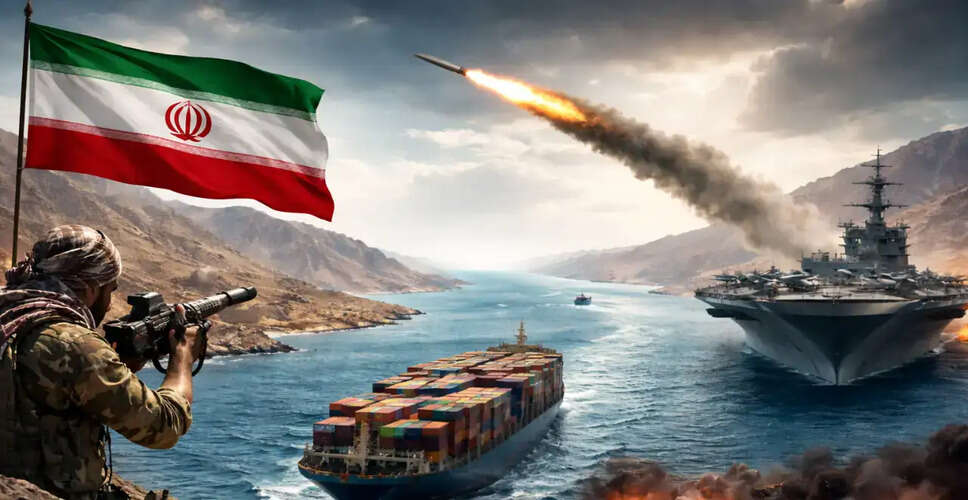
Iran's Warning on Strategic Sea Lanes
On Friday, Iran issued a warning about potentially escalating its economic pressure by targeting one of the globe's crucial maritime routes following the Strait of Hormuz. In a statement shared on the social media platform X, Iranian Parliament Speaker Mohammad Bagher Ghalibaf suggested that Tehran might shift its focus to the equally significant Bab el-Mandeb Strait. He emphasized the potential repercussions this could have on global oil, food, and supply chains. Ghalibaf posed a critical question regarding the volume of essential goods, such as LNG, wheat, and rice, that transit through this narrow passage.
He inquired, "What percentage of global oil, LNG, wheat, rice, and fertilizer shipments pass through the Bab el-Mandeb Strait?" The Speaker further indicated that certain nations and corporations could be particularly vulnerable to such a strategic maneuver, asking, "Which countries and companies have the highest transit volumes through the strait?" This implies that Iran is considering impactful strategies to exert its influence.
mb_ghalibaf
2040186566195208307
Potential Flashpoint in the Red Sea
Recently, Yemen's Iran-aligned Houthi rebels launched a missile aimed at Israel, raising concerns about the security of the Red Sea corridor, a vital maritime trade route. Although Israel successfully intercepted the missile, the incident highlights the broader implications, especially with the already strained Strait of Hormuz. The emergence of another volatile front could once again jeopardize global trade and create far-reaching consequences.
The Red Sea corridor serves as a crucial link between Europe and Asia through the Suez Canal, facilitating the movement of global trade, including oil, gas, and essential commodities. Renewed attacks by the Houthis on commercial vessels could obstruct this passage, forcing ships to navigate around Africa’s Cape of Good Hope, which would increase costs, delays, and energy prices worldwide.
The Houthis' active participation in this conflict could transform the Red Sea into a significant flashpoint, with a closure or major disruption of the Bab el-Mandeb Strait having extensive global ramifications. Approximately 12% of the world's seaborne oil transits through Bab el-Mandeb, making it the fourth-largest shipping chokepoint globally.