
Iran's Deputy Foreign Minister Warns Against Regional Spillover Amid Middle East Conflict
Iran's Stance on Middle East Tensions
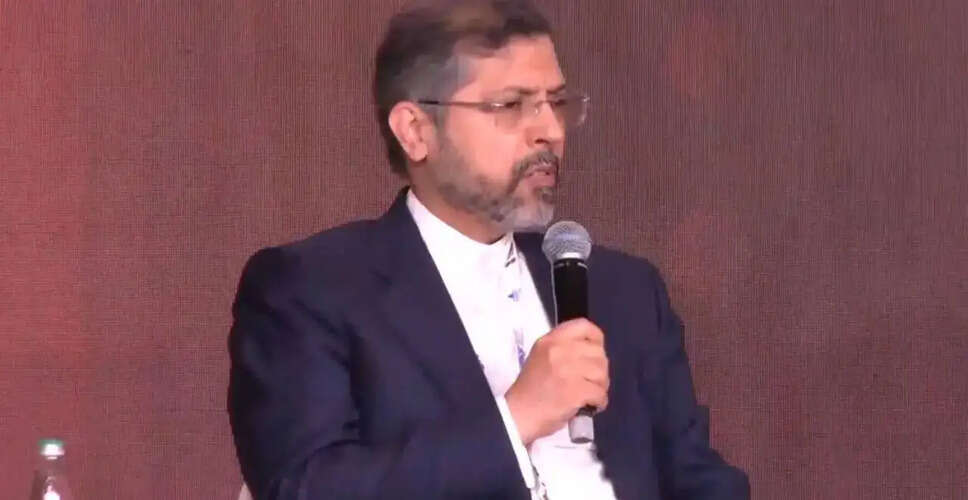
New Delhi: In light of the escalating conflict in the Middle East, Dr. Saeed Khatibzadeh, Iran's Deputy Foreign Minister, emphasized the nation's efforts to prevent the situation from spreading to other regions. He accused Israel's Mossad of orchestrating false-flag operations in the area. Khatibzadeh made these statements during a geopolitics conference held in Delhi, labeling the ongoing conflict as an "existential war" for Iran.
Allegations Against Israel: Khatibzadeh stated, "We are striving to prevent a spillover into other regions. Reports of false-flag operations by Mossad targeting refineries or even Cyprus are circulating." He referenced comments from UK Prime Minister Keir Starmer, who indicated that attacks on oil refineries did not originate from Iran. Additionally, he mentioned that media figures like Tucker Carlson reported the capture of multiple Mossad operatives in Saudi Arabia and Qatar while attempting similar operations. Khatibzadeh reiterated Iran's intention to avoid escalating the conflict.
#WATCH | On US-Israel vs Iran conflict, Dr Saeed Khatibzadeh, Iran's Deputy Minister of Foreign Affairs, says, "We are trying to avoid a spill over to other areas. I am sure you are hearing about false-flag operations by Mossad and by Israelis to attack refineries or even Cyprus.… https://t.co/MjfMEGTsNV pic.twitter.com/mXa4qOjtg3
— News Media (@ANI) March 6, 2026
'Existential War': The Iranian Deputy Foreign Minister characterized the current conflict between the US-Israel and Iran as an "existential war." He acknowledged the concerns of regional allies, stating, "This is a war that affects everyone involved."
Khamenei's Death Considered 'Unprecedented': Discussing the assassination of Khamenei during US-Israel strikes on February 28, Khatibzadeh described it as an "unprecedented" event. He questioned the ethics of targeting a head of state amidst international tensions, warning that if this becomes a new standard, it poses significant dangers.
India Expresses Condolences: Following Khamenei's death, India expressed its condolences. Foreign Secretary Vikram Misri signed a condolence book at the Iranian Embassy in New Delhi on behalf of the Indian government.
Engagement Between India and Iran: India's External Affairs Minister, S. Jaishankar, reached out to Iranian Foreign Minister Seyed Abbas Araghchi amid the evolving situation in the Middle East. Jaishankar confirmed the telephonic conversation, noting that Khamenei was killed in the joint airstrikes by the US and Israel, which prompted Iran to retaliate with strikes on Israeli and US military installations in the Gulf.