
Iran's Control Over the Strait of Hormuz: A Global Energy Crisis Unfolds
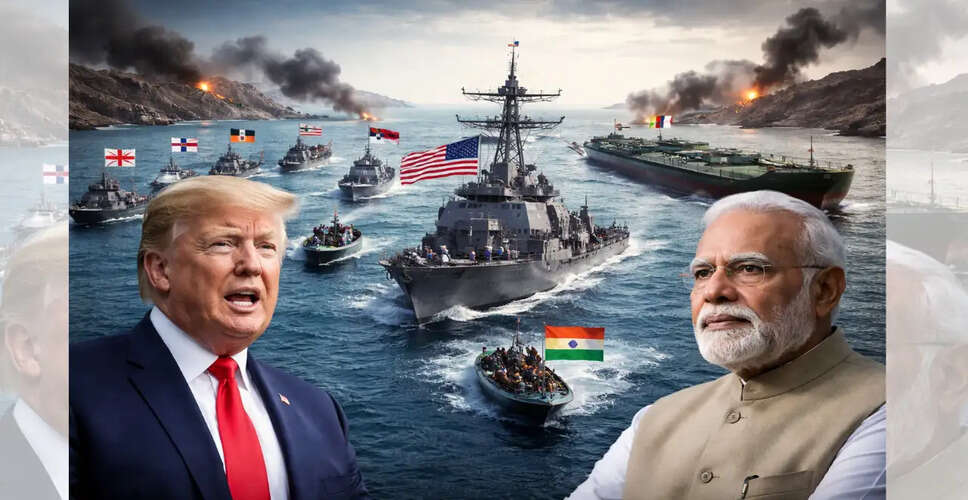
Iran's Dominance in the Strait of Hormuz
In a stark warning back in 2011, a commander from Iran's Islamic Revolutionary Guard Corps stated that shutting down the Strait of Hormuz would be "easier than drinking a glass of water." This prediction materialized in 2026 when Iran effectively blocked this crucial oil passage. As tensions rise in the Gulf, oil prices have surged globally, prompting US President Donald Trump to urge allies to assist in securing this vital route. However, the response from traditional US allies has been notably subdued, with some nations adopting a cautious approach while others outright declined to participate. In contrast, India is taking a different route, engaging in direct diplomacy with Tehran to ensure the safety of its maritime operations.
The Strategic Significance of the Strait of Hormuz
The Strait of Hormuz and Its Strategic Importance
The Strait of Hormuz serves as a critical maritime corridor connecting the Persian Gulf to the Gulf of Oman, with approximately 20-25% of the world's crude oil traversing this route. Since the onset of the Iran conflict on February 28, numerous vessels have been stranded in this narrow passage. The closure has forced major oil producers in the region, including Saudi Arabia, Iraq, and Kuwait, to reduce output as they struggle to store oil that cannot be loaded onto tankers.
The International Energy Agency has labeled this closure as the most significant disruption to global energy supplies ever, with oil industry leaders warning the Trump administration that the ongoing situation will exacerbate the global fuel crisis.
Trump's Appeal to Allies for Support
Trump's Call to US Allies to 'Secure' Strait of Hormuz
Trump has called on approximately seven nations to deploy warships to maintain the openness of the Strait of Hormuz. The US is currently in discussions with countries that heavily depend on West Asian oil to form a coalition aimed at patrolling the waterway. Although Trump has not disclosed the names of these nations, they are likely to include China, France, Japan, South Korea, and the UK. "I'm demanding that these countries come in and protect their own territory, because it is their own territory," Trump stated, emphasizing that the US does not require the strait for its own oil supply. He added, "It would be nice to have other countries police that with us, and we'll help. We'll work with them."
Reactions from US Allies
US Allies Adopt Cautious Approach to Trump's Offer
In response to Trump's request for naval support, US allies have largely taken a cautious stance or have outright declined. Both Australia and Japan have confirmed they will not provide naval assistance. Australian Cabinet Minister Catherine King stated that while the waterway is crucial, no formal request has been made, and there are no plans for deployment. Similarly, Japanese Prime Minister Sanae Takaichi indicated that Japan has no current plans to send naval assets to escort vessels in the region. The UK is opting for a diplomatic approach, with Prime Minister Keir Starmer discussing the importance of reopening the strait with Trump to alleviate disruptions to global shipping.
Meanwhile, South Korea has acknowledged Trump's request and stated it will closely monitor and review the situation with the US. France has indicated it is collaborating with various nations, including partners in Europe, India, and Asia, to consider an international mission for escorting vessels through the strait, but emphasized that this would only occur when conditions allow.
China's Position on the Situation
The China Angle
Trump has been vocal about the need for China to join the coalition, noting that Beijing relies on the strait for about 90% of its oil. US Energy Secretary Chris Wright mentioned that he has been in discussions with some of the countries Trump previously referenced and expressed optimism that China would be a "constructive partner" in reopening the strait. However, a spokesperson for the Chinese embassy in the US stated that all parties share the responsibility to ensure a stable energy supply and that China would enhance communication with relevant parties for de-escalation. Despite this, it seems unlikely that China will deploy warships, as reported by Al Jazeera, citing several reasons including China's critical stance on US and Israeli actions since the onset of the Iran conflict.
Wright also suggested that India might assist the US in securing the Strait, highlighting that many Asian nations, including Japan, Korea, China, Thailand, and India, depend on the energy flows through Hormuz.
India's Successful Navigation Through the Crisis
Can West Take Lessons From India?
While Western nations grapple with the implications of the Hormuz blockade on their crude supplies, India has successfully ensured safe passage for two of its vessels carrying liquefied petroleum gas (LPG). The Indian ships, Shivalik and Nanda Devi, have safely navigated through the Strait of Hormuz and are expected to arrive in Gujarat shortly. External Affairs Minister Dr. S. Jaishankar clarified that there is no formal arrangement between India and Iran, and Tehran has not received anything in return for this safe passage. He noted that while this is a positive development, ongoing discussions are essential.
When asked if European nations could replicate India's approach, Jaishankar remarked that each relationship with Iran is unique, making comparisons challenging, but he expressed willingness to share India's strategy with EU capitals, noting that many have also engaged in discussions with Tehran.
Iran's Control Over the Strait
Tehran's Stand on Hormuz - Why It Is So Easy For Iran To Choke Hormuz
Tehran asserts that the Strait of Hormuz is only closed to US and allied vessels. Iranian Foreign Minister Abbas Araghchi stated, "The Strait of Hormuz is open. It is only closed to the tankers and ships belonging to our enemies or to those who are attacking us and their allies. Others are free to pass." Iran possesses significant leverage in Hormuz, as the strait is quite narrow, with shipping lanes measuring about two nautical miles wide. Tankers must navigate near Iranian islands and a rugged coastline, providing Iran with natural cover to deploy missiles, drones, and boats.
Despite claims that Iran's conventional navy has been largely diminished, the Revolutionary Guards still have numerous options, including fast attack crafts, mini submarines, mines, and even explosive-laden jetskis. Retired Royal Navy commander Tom Sharpe noted that escorting a few ships daily through the strait could be feasible in the short term with adequate air cover, but sustaining such operations over months would require more resources.