
Iran's Control Over Hormuz Strait Raises Global Economic Concerns

Impact of Recent Conflicts in West Asia
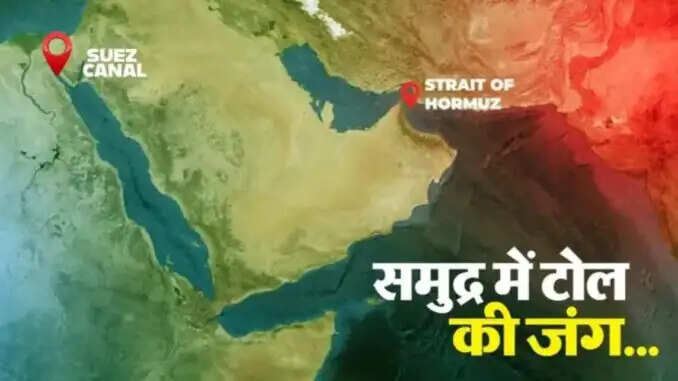
New Delhi. The recent military actions by the United States and Israel against Iran in West Asia have significantly shaken the global economy. At the heart of this crisis lies the Strait of Hormuz, a narrow maritime passage approximately 34 kilometers wide, yet crucial as nearly 20% of the world's oil transits through this route.
As the conflict escalated, Iran tightened its grip on this passage, launching attacks on several vessels through the Islamic Revolutionary Guard Corps, effectively halting maritime traffic.
Some reports suggest that ships passing through this area were forced to pay exorbitant fees, although this has not been officially confirmed.
This situation has plunged global shipping and energy supplies into a serious crisis, highlighting that this small passage is, in fact, a vital artery for the world economy.
Iran's Proposal for Shipping Fees: Amidst the ongoing war, Iran has proposed a controversial plan that has stirred international political waters. The country demands that every vessel passing through Hormuz must obtain its permission and pay a fee in return. This fee will be determined based on the type of vessel, its cargo, and other circumstances.
Reports indicate that this fee could reach up to one dollar per barrel of oil, and notably, Iran is allegedly preparing to accept this payment in cryptocurrency.
Iran's Deputy Foreign Minister Kazem Gharibabadi mentioned a collaboration with Oman to establish a system requiring ships to obtain licenses and permits to navigate this route, although Oman later distanced itself from this proposal.
This marks the first instance of a nation openly attempting to exert economic control over a natural international maritime route, escalating the controversy further.
Global Objections to Iran's Demands: Central to this dispute is international maritime law, enforced under the United Nations Convention on the Law of the Sea.
This law clearly states that no country has the right to charge vessels merely for transiting through natural waterways. Such routes are considered international, granting all nations' vessels the freedom to navigate without obstruction.