
Iran's Attack on US Radar System Poses Major Threat to Missile Defense
Significant Damage to US Defense Capabilities
Iran has inflicted a serious setback on the United States by destroying a vital $300 million radar system essential for managing US missile defense installations in the Gulf region. Satellite imagery indicates that an RTX Corp. AN/TPY-2 radar, along with its support equipment, was obliterated at the Muwaffaq Salti Air Base in Jordan during the initial phase of the conflict, as reported by a major news outlet. This destruction could further complicate the region's capacity to respond to future threats, according to a US official. Research from the Foundation for Defence of Democracies reveals two Iranian attacks in Jordan: one on February 28 and another on March 3, both of which were reportedly intercepted. Ryan Brobst, deputy director at the Center on Military and Political Power, noted that a successful Iranian strike on a THAAD radar would represent one of Iran's most significant achievements to date. However, he reassured that the US military and its allies possess alternative radar systems that can maintain air and missile defense operations, thus lessening the impact of losing a single radar.
Implications for US Defense Strategy
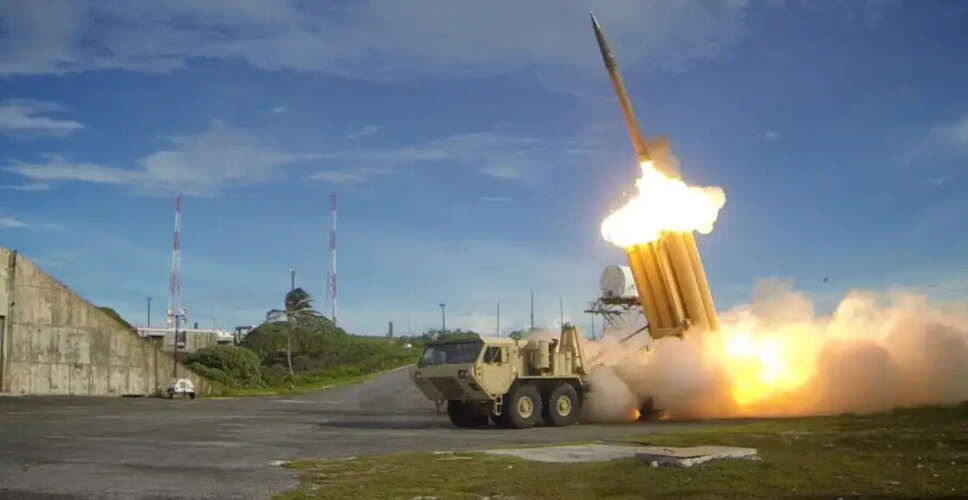
The United States operates eight THAAD systems worldwide, including locations in South Korea and Guam. These Terminal High Altitude Area Defense units are designed to neutralize ballistic missiles at the upper limits of the atmosphere, allowing them to tackle more complex threats compared to shorter-range Patriot systems. Each THAAD battery is valued at approximately $1 billion, with the radar system accounting for around $300 million, according to the Center for Strategic and International Studies. With the AN/TPY-2 radar now non-operational, the responsibility for missile interception will shift to the Patriot systems, which are already facing a shortage of PAC-3 missiles. Tom Karako, a missile defense specialist, emphasized that the loss of such strategic assets is a significant blow. He pointed out that the Army's current eight-battery configuration falls short of the nine-battery requirement established in 2012, leaving no surplus TPY-2 radars available.
A typical THAAD battery comprises 90 personnel, six truck-mounted launchers, and 48 interceptors—eight per launcher—along with one TPY-2 radar and a tactical fire control and communication unit. Each interceptor missile, produced by Lockheed Martin Corp., costs around $13 million. Earlier in the conflict, an AN/FPS-132 radar in Qatar also sustained damage from an Iranian assault, as per findings from the James Martin Center for Nonproliferation Studies in Monterey, California. This radar serves as an early warning system, capable of detecting threats from great distances but lacking the precision necessary for weapon engagement.
Air and missile defense systems in the Gulf have been under considerable strain, and ongoing strikes and counterstrikes have raised concerns about the dwindling stockpiles of advanced interceptors like THAAD and PAC-3. Recently, defense contractors, including Lockheed and RTX, convened at the White House as the Pentagon seeks to accelerate weapons production.