
Iran's Alarming Execution Rates and Human Rights Violations
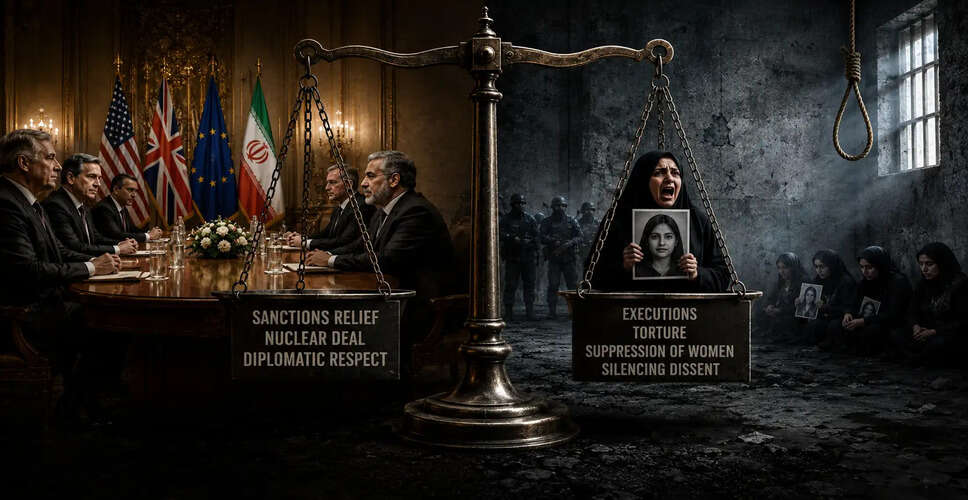

Escalating Executions in Iran
In 2025, Iran reportedly executed at least 1,639 individuals, including minors, marking a staggering 68% rise from the previous year. Among those executed were at least 48 women, the highest figure in over two decades. Amnesty International noted that Iran accounted for 64% of all known global executions in 2024. A significant majority, over 94%, of these executions occur in secrecy, reflecting a deliberate policy of concealment, as reported by the Human Rights Activists News Agency. The Iranian regime has a long history of imprisoning activists, including Nobel laureate Narges Mohammadi, who is currently facing severe health issues in prison. On October 6, 2023, the day she received the Nobel Peace Prize, she declared from Tehran’s Evin Prison, “Women will not give up. We are fuelled by a will to survive, whether we are inside prison or outside.”
Narges has spent the majority of her adult life incarcerated for advocating women’s rights. Today, at 54, she is battling serious health complications, including a heart attack in March, while Iranian authorities have repeatedly denied her medical furlough. Over her lifetime, she has been arrested 13 times, sentenced to a total of 31 years in prison, and received 154 lashes for her activism against the death penalty. Her lawyer described her situation as a slow death by design, highlighting the systematic cruelty of the Iranian state.
This situation raises critical questions for the international community, particularly for US President Donald Trump, who previously claimed that the conflict in West Asia aimed to facilitate regime change for the benefit of Iranian citizens. Why are these human rights violations not being addressed in diplomatic discussions? In April 2026, Trump called for the release of eight Iranian women protestors allegedly facing execution, labeling it a “good start” for peace negotiations. However, Iran denied these claims and asserted that these individuals were not on any execution list.
The broader implications of these documented cases, which have garnered global consensus, remain unaddressed in negotiations with the Iranian regime. The principles of freedom, democracy, and human rights—foundational to societies like the USA—are not being emphasized, overshadowed by geopolitical interests in oil and nuclear capabilities.
The Plight of Women in Iran
Iran Is Torturing Its Own People – Gender No Bar
The regime's brutality is particularly evident in its treatment of women. Mahsa Amini, a 22-year-old woman, was arrested in September 2022 for allegedly not adhering to hijab regulations and died in custody three days later. The UN Fact-Finding Mission on Iran concluded that her death was unlawful and resulted from physical violence, placing direct responsibility on the state. In contrast, Iranian authorities denied any wrongdoing and opted for executions instead of accountability.
Nika Shakarami, a 16-year-old girl, was reportedly sexually assaulted and killed by security personnel during the 2022 protests, according to a leaked document from Iran's security forces. Officially, the authorities claimed she fell. Majid Kazemi endured mock executions at least 15 times, where interrogators threatened to kill his brothers if he did not confess. He ultimately confessed and was executed in May 2023.
Rapper Toomaj Salehi faced arrest due to his music, and a coerced confession was aired on state television, leading to a death sentence that was later overturned. He was released in December 2024 but was briefly rearrested in June 2025. Filmmaker Mohammad Rasoulof faced threats against his actors and was flogged in 2025 for refusing to withdraw his film from Cannes. He ultimately fled Iran.
Mohsen Shekari, a 23-year-old, was executed in December 2022 for allegedly wounding a security officer during a protest. His trial was widely condemned as a sham, lacking due process. Despite these egregious violations, the international community has largely remained silent.
The Disturbing Statistics
The Chilling Numbers… And A Wake-Up Call
The UN Special Rapporteur has confirmed that children have also been executed in Iran, with at least 23 women put to death in a single year. The Iranian government has even employed artificial intelligence to monitor compliance with mandatory hijab laws for women and girls. This is a regime that uses technology to enforce oppressive laws. Iran defends its actions as a matter of sovereignty, arguing that its interpretation of Islamic law differs from Western standards. While there is some truth to this, it does not excuse the brutal treatment of individuals, including a 16-year-old girl beaten to death in a van and a Nobel laureate denied medical care.
These are human lives, and no legal framework—be it Islamic or Western—can justify such governance.
A Call for Change
So, Dear Iran, Here Is Your To-Do List
This is not a lecture but a necessary list of actions for Iran to be taken seriously on the global stage. First, cease executing individuals for mere existence. Limit the death penalty to the most serious crimes recognized by any legal standard, and abolish the execution of minors. Ensure fair trials with legal representation before any execution.
Second, establish independent courts. Revolutionary courts that operate under the influence of clerics and security forces are not legitimate judicial bodies. Eliminate torture-based confessions, secret trials, and expedited verdicts for death penalty cases.
Third, allow freedom of expression. Peaceful protests should not be treated as treason, journalism should not be equated with espionage, and artistic expression should not be criminalized.
Fourth, abolish the hijab law entirely. A woman's hair is not a threat to national security, and the morality police have caused unnecessary deaths as a result of this law.
Fifth, treat all citizens equally, regardless of ethnicity or religion. Disproportionate rates of execution and imprisonment among minorities must end.
Lastly, stop the use of corporal punishment. Iran is a signatory to the UN Convention Against Torture, and flogging individuals for their creative work contradicts this commitment. Open the internet and allow free press; a government that punishes journalists for trivial actions is not governing but terrorizing its citizens.
Accountability is essential. Investigate deaths in custody, clarify secret executions, and permit UN monitors access. Impunity is not sovereignty; it is merely a façade for oppression.
The Laws That Must Change
The Five Laws That MUST Change
Moharebeh and Mofsed-e-filarz – "enmity against God" and "corruption on Earth". These vague capital charges can be applied to nearly any dissenting act, putting thousands at risk of execution following unfair trials in Iran’s revolutionary courts, as documented by Amnesty International.
The mandatory hijab law. A new bill has been passed imposing penalties, including imprisonment, for non-compliance.
Revolutionary Courts. These courts deny defendants fair trial rights and impose death sentences after unjust proceedings.
The death penalty for drug offenses. International law prohibits the death penalty for drug-related crimes. In 2024, executions of Afghans for drug offenses surged amid rising xenophobia.
The "propaganda against the State" charge. This vague accusation serves as a tool to imprison individuals for any dissenting opinion.
The Global Double Standard
Questions 'NOT ALLOWED'
Iran’s brutality is undeniable, as is the global double standard regarding human rights. Iran ranks 176 out of 180 on the RSF Press Freedom Index 2025, making it the second-largest jailer of journalists after China. Thousands of websites are blocked, and social media platforms are heavily filtered or banned. In June 2025, a nationwide internet shutdown occurred shortly after military strikes.
In August 2024, journalist Hossein Shanbehzadeh received a 12-year prison sentence for a trivial response to a post by the Supreme Leader. Despite these violations, no G7 government has imposed targeted sanctions on Iranian judges responsible for death sentences, nor has any country severed diplomatic ties over the surge in executions.
The UN Human Rights Council has extended the Fact-Finding Mission's mandate, yet Iran continues to participate in nuclear negotiations without facing significant repercussions. This imbalance underscores the necessity of incorporating human rights discussions into current ceasefire talks between Iran and the US—not as an idealistic notion, but as a bargaining chip. Neither side can emerge from this conflict unscathed, making it imperative to include human rights as part of the negotiations. Demands for the release of political prisoners, the repeal of moharebeh, and the abolition of the hijab law are not extreme; they represent the minimum requirements for Iran's reintegration into the international community.
Trump, who has positioned himself as a peacemaker, has a unique opportunity to secure a human rights concession from Iran that would not threaten its existence, enhance his standing among women voters, and provide a significant legacy moment. The question remains whether he possesses the resolve and strategy to execute such a statesmanlike maneuver.