
Iranian President Resigns Amid Tensions with Revolutionary Guard
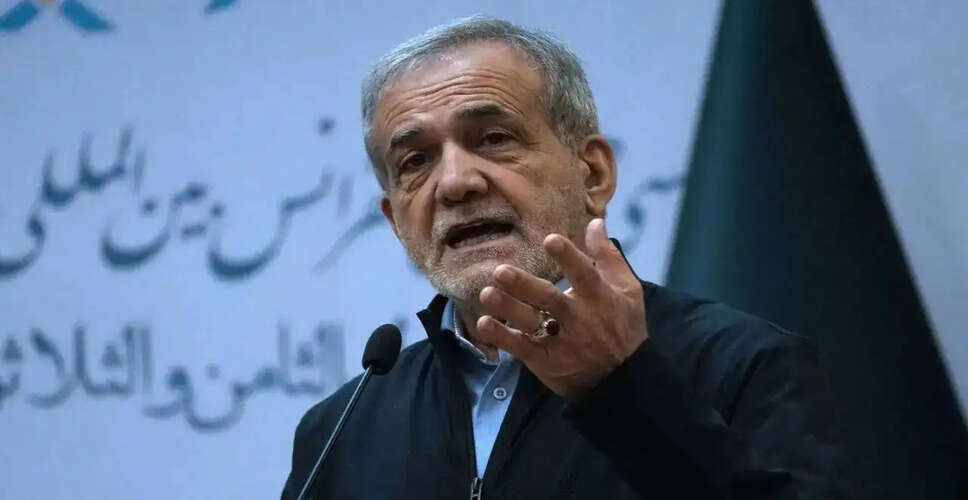

Resignation of Iranian President
Masoud Pezeshkian, the President of Iran, has reportedly handed in his resignation letter to Supreme Leader Mojtaba Khamenei, as per a report from a news outlet. The letter, attributed to an unnamed Iranian official, claims that the Islamic Revolutionary Guard Corps (IRGC) has taken over significant aspects of governmental decision-making, effectively sidelining the president and other high-ranking officials from crucial discussions.
Pezeshkian expressed in his letter that he could no longer govern effectively or meet his constitutional duties under the prevailing conditions, prompting his request to resign. As of now, there has been no official acknowledgment from Iranian authorities regarding this resignation.
Sources cited by the news outlet indicated that tensions between Pezeshkian and the IRGC leadership have escalated, particularly concerning the management of recent conflicts and their economic repercussions on the nation. The primary contention appears to revolve around the handling of the war and its detrimental effects on the populace's livelihoods and the economy.
This development raises broader concerns about the decision-making dynamics within Iran's leadership, especially following months of regional strife and military confrontations. Recently, US officials disclosed that Iran's supreme leader is operating from a concealed location with limited external communication, reachable only through a complex network of couriers. Even senior Iranian officials reportedly lack direct contact with him.
In the meantime, US President Donald Trump remarked that Iranian officials are "very tough negotiators" as discussions regarding a comprehensive agreement between the US and Iran continue. In an interview, Trump mentioned that the US is adopting a patient stance in these negotiations. Earlier this year, he characterized Iran's leadership as "seriously fractured," suggesting that internal discord influenced his decision to extend a ceasefire arrangement indefinitely.
A source familiar with the negotiations revealed that recent modifications made by Trump to a proposed US-Iran memorandum included significant changes related to the Strait of Hormuz and the management of Iran's highly enriched uranium reserves. The overarching framework under consideration reportedly encompasses a 60-day halt to violence, measures to reopen the Strait of Hormuz, and a strategy for resuming discussions on Iran's nuclear program.
Multiple sources have indicated that the proposal may also entail sanctions relief or waivers that would allow Iran access to billions of dollars in frozen assets, contingent on the progress of diplomatic talks. Pakistan is said to be acting as the primary mediator between Washington and Tehran, although specifics of the discussions remain scarce. Trump had anticipated making a final decision on the proposed agreement recently, but further amendments were later communicated to Iran. In a recorded interview, he stated he was "in no hurry" to finalize a deal.