
Iran Threatens to Block Bab al-Mandab Strait Amid Rising Tensions
Escalating Conflict in the Middle East
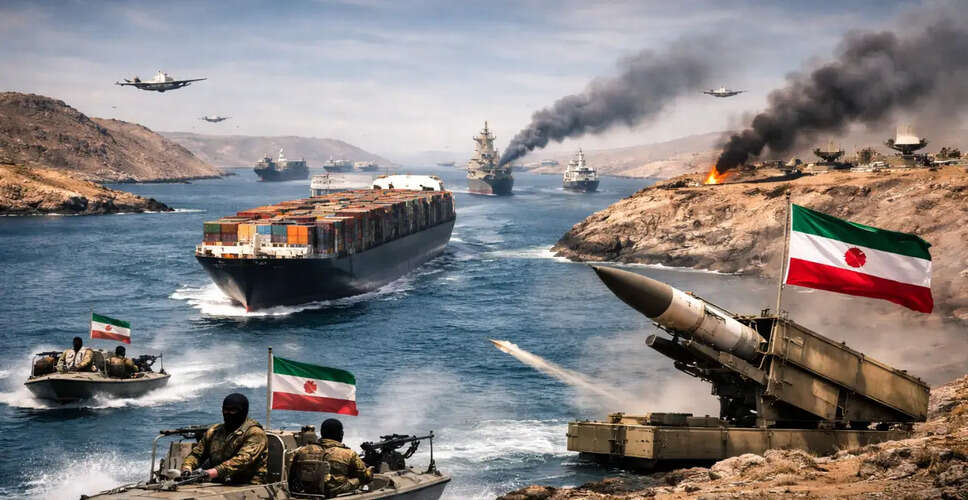
Tehran: As tensions in the Middle East continue to rise, new reports indicate that Iran may consider blocking additional vital waterways, including the Bab al-Mandab Strait, which is already facing disruptions due to Iranian military actions. According to sources cited by Tasnim News Agency, Iran is contemplating this move in response to ongoing military actions by the United States and Israel. The Bab al-Mandab Strait, located in southern Iran, is crucial as it connects the Indian Ocean to the Red Sea and the Suez Canal. Any blockade here could significantly impact the region's economy, as approximately 12% of global oil traffic passes through this route, making it the fourth busiest shipping lane globally. Its proximity to Yemen also makes it vulnerable to attacks from Iran-aligned Houthis.
Sources from the Islamic Revolutionary Guard Corps warned, "If the enemy attempts to engage in land operations on Iranian islands or elsewhere, or seeks to impose costs on Iran through naval maneuvers in the Persian Gulf and the Sea of Oman," they will respond accordingly.
Additionally, there are indications that the Iran-backed Houthis in Yemen may join the conflict against the United States and Israel. This group had previously disrupted shipping in the Red Sea in October 2023 by targeting vessels in retaliation for Israeli military actions in Gaza.
Understanding the Bab-el-Mandeb Strait:
The Bab-el-Mandeb Strait serves as a significant global chokepoint, situated between Yemen on the Arabian Peninsula and Djibouti and Eritrea in the Horn of Africa. It connects the Red Sea to the Gulf of Aden and acts as a strategic conduit between the Indian Ocean and the Mediterranean Sea via the Red Sea and the Suez Canal. In addition to the Strait of Hormuz, which is currently under Iranian control, the Bab-el-Mandeb Strait is vital for the transit of petroleum and natural gas from the Persian Gulf through the Suez Canal and the SUMED Pipeline. Should Iran gain control over this strait, it would severely hinder tanker movements from the Persian Gulf.
Iran's Stance on Shipping and Peace Talks:
On Wednesday, Iran's Foreign Minister Abbas Araghchi announced that Tehran would allow vessels from "friendly nations"—including China, Russia, India, Iraq, and Pakistan—to navigate through the Strait of Hormuz. This statement comes amid a significant decline in shipping traffic through this critical chokepoint, which accounts for about one-fifth of the world's oil and liquefied natural gas.
In a related development, Tehran has dismissed claims of engaging in peace talks with the United States. Araghchi clarified that while Tehran is reviewing Washington's negotiation proposal, there are no intentions for direct discussions. He criticized the US for its inability to safeguard regional allies despite its military presence, emphasizing that communications through intermediaries do not equate to negotiations. "There are no negotiations with Washington," he stated, asserting that US messages relayed via mediators do not constitute formal talks.
The ongoing conflict in the Middle East, which began on February 28 following coordinated airstrikes by the US and Israel on Iran, has now entered its 27th day.