
Iran Strengthens Ties with China Amid Rising Geopolitical Tensions

Iran's Diplomatic Moves
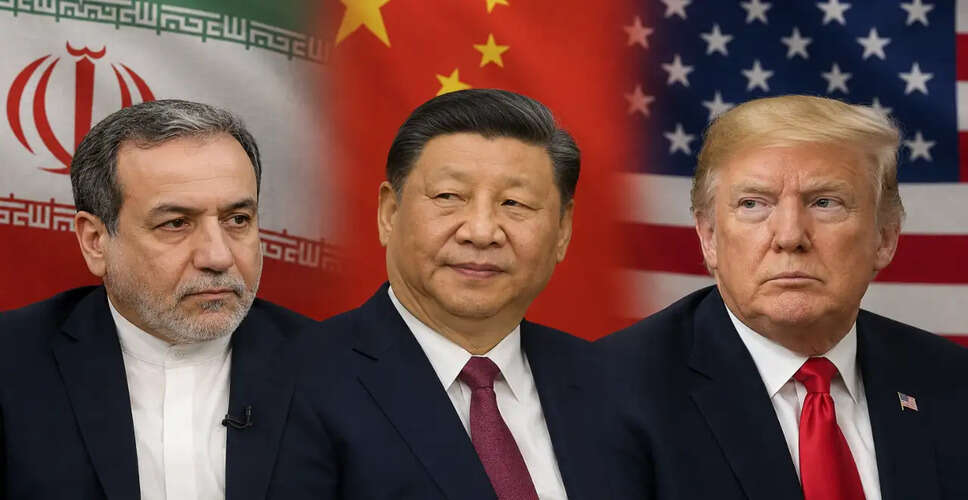
Iran is intensifying its diplomatic initiatives to forge an "anti-US" coalition, with China actively engaging significant global players in rapid succession. Recently, Iranian Foreign Minister Abbas Araghchi visited Beijing to meet with China's Foreign Minister Wang Yi, marking his first trip to China since the onset of the ongoing conflict in Iran. This diplomatic engagement is not solely initiated by Tehran; just a month prior, Russian Foreign Minister Sergey Lavrov was in Beijing, where discussions centered on enhancing strategic cooperation and promoting what they termed the "unity of the Global South." This outreach occurs amidst increasing pressure from Washington.
From the US, Secretary of State Marco Rubio expressed hopes that China would leverage its influence to persuade Iran to de-escalate tensions, particularly regarding its control over the strategically vital Strait of Hormuz. While engaging with Iran, both China and Russia have also encouraged Tehran to continue negotiations with Washington. These consecutive diplomatic efforts indicate that Iran is actively strengthening its relationships with both Moscow and Beijing, potentially forming a more substantial counterbalance to US influence.
As geopolitical tensions escalate, Donald Trump is anticipated to visit China on May 14-15 for discussions with Chinese leaders, a meeting that was postponed due to US military actions in Iran.
Strait of Hormuz: A Critical Issue
Hormuz still a major contention point
Earlier in Washington, Rubio reiterated the importance of Beijing communicating to Tehran the necessity of easing its control over the Strait of Hormuz, a crucial waterway for global energy supplies. Iran's effective blockade of this strait, through which significant oil and gas shipments flowed before the conflict, has led to soaring fuel prices and disrupted the global economy. Reducing Iran's influence in this area would strip it of a key leverage point as Trump demands significant reductions in Tehran's controversial nuclear program.
Meanwhile, China is strategically positioning itself to gain advantages regardless of the war's outcome. It has refrained from taking a definitive public stance on the conflict. Reports indicate that Beijing is subtly encouraging Iran to engage in negotiations with the United States while simultaneously permitting Chinese firms to provide materials that could bolster Iran’s military capabilities. As the Trump-Xi summit approaches, China's balancing act between Washington and Tehran is poised to face significant challenges.