
Iran Sets Tough Conditions for Talks Amid US Negotiation Efforts
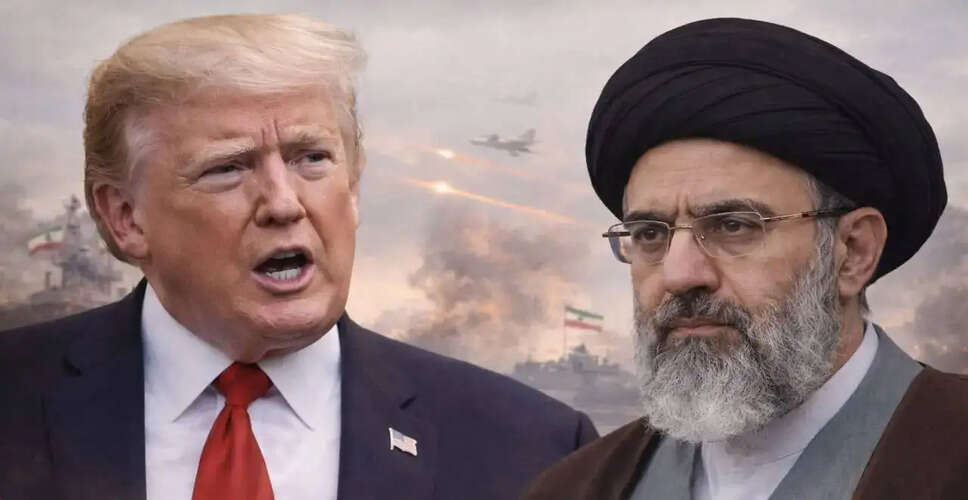
Iran's Stance on Proposed Talks
In light of renewed discussions suggested by Donald Trump, Iran has reportedly outlined stringent conditions. These include demands for the closure of American military installations in the Gulf, the lifting of sanctions, and increased control over a crucial global shipping lane. Despite these stipulations, Tehran has publicly rejected Washington's assertions of ongoing negotiations, emphasizing that a viable agreement seems unlikely. A report from a major publication indicates that Iran has set a high bar for resuming formal ceasefire talks, even as some indirect communications persist.
Iranian officials are demanding the closure of all US military bases in the Gulf, compensation for wartime damages, and an end to Israel's military actions against Hezbollah. They are also advocating for a system that would allow Iran to levy fees on ships navigating through the Strait of Hormuz, a vital oil transit route. Sources indicate that the Islamic Revolutionary Guard Corps has gained significant influence within Iran's leadership, shaping these demands.
Control Over the Hormuz Strait
Hormuz Strait Takes Centre Stage
A key aspect of Iran's position involves a proposed framework that would grant it substantial control over the Strait of Hormuz, along with solid assurances to prevent renewed hostilities. Tehran has firmly stated that the lifting of all sanctions is a non-negotiable prerequisite for any agreement.
Potential for Compromise
Subtle Signals of Flexibility
Despite its strong public stance, there are signs that Iran might be open to compromise in private discussions. Reports indicate that Tehran could contemplate pausing its ballistic missile program for up to five years and reducing uranium enrichment levels. There is also a willingness to discuss its stockpile of 60% enriched uranium and permit inspections by the International Atomic Energy Agency on remaining centrifuges.
Revisiting Regional Support
Rethink on Regional Proxies
Iran may also be prepared to reconsider its support for regional proxy groups as part of a broader agreement. This could involve scaling back or ceasing support for groups like Hezbollah, Hamas, and Iraqi militias, marking a significant potential shift in its regional strategy. These indications are seen as possible negotiating space, even as Iran maintains a hardline public stance.
US-Iran Relations Under Scrutiny
‘Talking to Yourselves’
In a pointed criticism, Iranian military spokesperson Ebrahim Zolfaqari ridiculed US leadership, dismissing the notion of meaningful negotiations. He remarked, “The United States is negotiating with itself,” questioning whether internal conflicts have led to such a situation. Zolfaqari warned that US economic interests would continue to be pressured, asserting that pre-war energy prices and investments would not recover unless Washington acknowledges Iran's role in maintaining regional stability.
Complex Negotiation Landscape
High-Risk Talks Ahead
The combination of rigid public demands and subtle signs of flexibility underscores the complexity of the current situation. As both sides test their limits and signal their red lines, the path to any ceasefire agreement remains uncertain, with consequences that extend well beyond the immediate conflict.