
Iran Rejects US Ceasefire Proposal Amid Escalating Middle East Conflict
Iran's Firm Stance Against US Peace Efforts
On Wednesday, Iran firmly rejected a ceasefire proposal from the United States aimed at halting the ongoing conflict in the Middle East. Instead, Iran intensified its military actions against Israel and Gulf Arab nations, including a significant attack that caused a major fire at Kuwait International Airport.
This defiance from Iran coincided with Israeli airstrikes targeting Tehran and the deployment of additional US troops to the region.
According to an unnamed official quoted by Iran's state-run Press TV, the country dismissed the US ceasefire initiative, which had been relayed to Iran through Pakistan.
The official stated, "Iran will conclude the war on its own terms and timeline," emphasizing that Tehran would persist in delivering substantial strikes throughout the region.
The US proposal, which consisted of 15 points, reportedly included sanctions relief, limitations on Iran's nuclear activities, missile restrictions, and the reopening of the Strait of Hormuz, a crucial shipping route for global oil.
An Egyptian official involved in mediation efforts indicated that the proposal also sought to limit Iran's backing of armed groups. However, many of these points were previously deemed unacceptable by Iran, which views its missile program and support for regional militias as vital to its national security.
Iran's recent assaults on energy infrastructure and its control over the Strait of Hormuz have led to soaring oil prices, raising concerns about a potential global energy crisis and increasing pressure on the US to find a resolution.
US Military Reinforcements Arrive in the Region
Reports suggest that around 1,000 troops from the 82nd Airborne Division are set to be deployed to the Middle East shortly, according to sources familiar with the military plans. These paratroopers are trained for rapid deployment in hostile environments.
Additionally, the Pentagon is preparing to send approximately 5,000 Marines, skilled in amphibious operations, along with thousands of sailors to bolster the US presence in the area.
Challenges in Diplomatic Negotiations
Efforts are underway to facilitate potential face-to-face discussions between Iranian and American representatives, possibly as early as Friday in Pakistan, according to Egyptian and Pakistani officials.
Former President Trump mentioned that negotiations are currently taking place, involving key figures such as special envoy Steve Witkoff and his son-in-law Jared Kushner, although he did not disclose the Iranian counterparts involved.
Press TV, which is controlled by hard-liners in Iran, reported a five-point ceasefire plan proposed by an Iranian official, which included demands for an end to the killing of Iranian officials, assurances against future conflicts, reparations for damages, cessation of hostilities, and Iran's control over the Strait of Hormuz.
These demands, particularly regarding reparations and control over the Strait, are likely to be unacceptable to the US, especially given the ongoing impact of the conflict on global energy supplies.
While both Iran and Oman have territories adjacent to the Strait of Hormuz, the narrow shipping lanes are recognized as international waters accessible to all vessels.
Israeli officials, who have been advocating for continued military action against Iran, expressed surprise at the submission of a ceasefire proposal.
Any potential negotiations between the US and Iran face significant hurdles, particularly regarding who in the Iranian government holds the authority to negotiate, especially as Israel has vowed to continue targeting Iranian leadership.
Iran remains deeply skeptical of US intentions, recalling past attacks during diplomatic negotiations, including strikes that initiated the current conflict.
Iranian Foreign Ministry spokesperson Esmail Baghaei remarked on the country's negative experiences with US diplomacy.
Escalating Military Actions in the Region
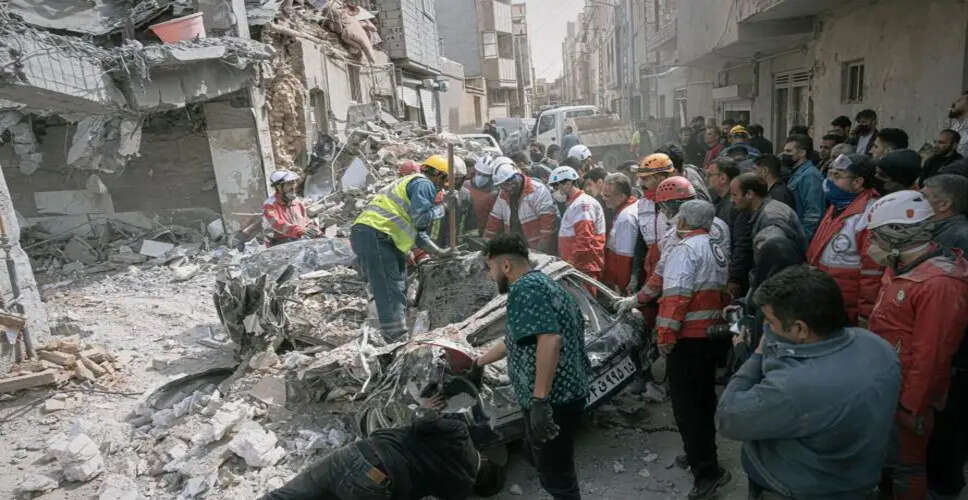
The Israeli military announced that it had conducted multiple airstrikes in Tehran, targeting facilities including an Iranian submarine development center in Isfahan.
Residents in Tehran reported intense bombing, leading many to remain indoors due to security concerns.
Simultaneously, missile alerts were triggered in Israel as Iran retaliated with its own attacks.
The Iran-backed Hezbollah militant group has continued its rocket fire into northern Israel, significantly disrupting daily life for many.
Iran has also intensified its assaults on Gulf Arab nations, with Saudi Arabia's Defense Ministry reporting the interception of several drones in its oil-rich Eastern Province, while Kuwait confirmed that one drone struck a fuel tank at its international airport, igniting a large fire.
The Iranian Health Ministry has reported over 1,500 casualties in Iran, while Israel has recorded 20 deaths, including two soldiers in Lebanon. Additionally, at least 13 US military personnel have lost their lives, alongside numerous civilians in the occupied West Bank and Gulf states.
In Lebanon, where Israeli forces have targeted Hezbollah, over 1,000 fatalities have been reported, while in Iraq, 80 members of the security forces have died due to the involvement of Iranian-supported militant groups.
Oil Prices Fluctuate Amid Negotiation News
The announcement of potential negotiations led to a decrease in oil prices, with Brent crude trading below $100 after nearing $120 during the conflict. However, prices remain approximately 35% higher than before the war began.
The prospect of ending hostilities has also positively influenced stock markets, with the S&P 500 index rising over 1% in early trading.
Economists have warned of severe consequences if energy prices remain elevated, affecting everything from food costs to mortgage and auto loan rates.
Iran's control over the Strait of Hormuz has been a significant factor in the surge of oil prices, as the country has restricted passage for vessels from the US, Israel, and their allies.
When asked about whether Iran was charging ships for passage, Baghaei confirmed, "absolutely."