
Iran Launches Missile Strikes Amid Escalating Tensions with US and Israel
Iran's Military Response
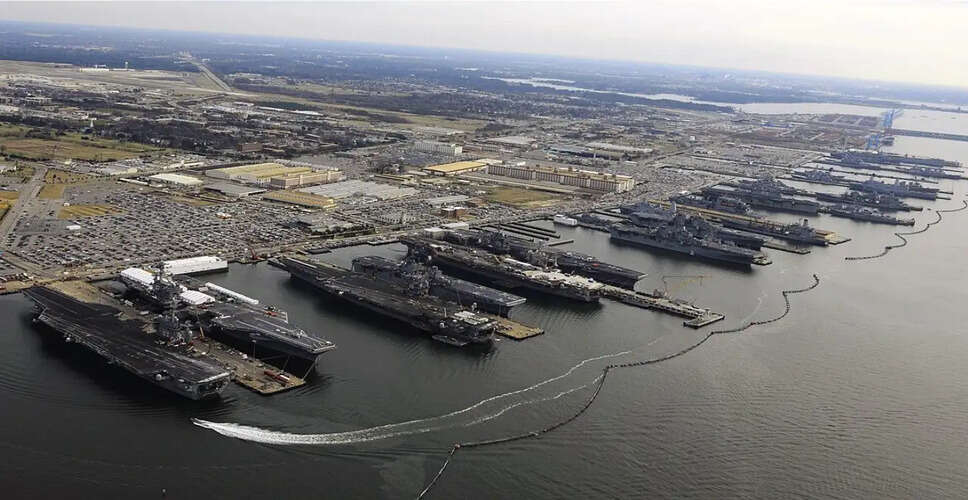
On Saturday, February 28, Iran initiated a series of missile attacks targeting Israel and US military installations in the Middle East. This action followed the commencement of significant military operations by US and Israeli forces earlier that day. Reports from the Iranian semi-official Fars news agency indicated that the US Navy's 5th Fleet headquarters in Bahrain was among the sites struck. Additionally, a loud explosion was reported in Abu Dhabi, resulting in one fatality, as confirmed by the Emirati defense ministry. Iran also targeted Al-Udeid Air Base in Qatar, the largest US military facility in the region, as well as Al-Salem Air Base in Kuwait.
The Iranian foreign affairs ministry declared that the time had come to protect the nation, vowing that aggressors would face consequences for their actions. They emphasized that US bases are now legitimate targets. In their first official statement since the US and Israel's morning assault, the ministry condemned the renewed military aggression as a breach of international law and UN principles, asserting that the Iranian people have consistently shown restraint to maintain regional stability.
As tensions rise, airspace has been closed in several countries due to fears of a broader conflict in the West Asia/Middle East region, with US and Israeli military bases being potential targets for Iranian retaliation.
US Military Bases in the Region
Where Are US Bases Located in The Region?
According to a Congressional Research Service report from July 2024, the US Department of Defense oversees nearly 128 overseas bases across at least 51 countries. These bases are categorized based on their usage and management:
- Persistent bases: Sites continuously utilized by the DoD for a minimum of 15 years, where the US military maintains operational control.
- Selected other US military sites: Locations that do not meet the criteria for persistent bases but where the DoD has some form of presence or access.
- Temporary military sites: Locations used for military exercises or contingency operations without plans for long-term establishment.
In the Middle East, there are eight enduring bases and 11 additional sites accessible to the Department of Defense, operating under US Central Command (CENTCOM), which is headquartered at Qatar's Al Udeid Air Base.
Key US Bases in the Middle East
Qatar
Al Udeid Air Base in Qatar, covering 24 hectares and housing nearly 10,000 troops, represents the largest US military presence in the region. Since 2003, over $8 billion has been invested in its development, and last year, the US extended its access agreement for another decade. The base supports various aircraft, including surveillance planes, KC-135 Stratotankers, C-17A Globemasters, CH-130H Hercules, and Patriot missile defense systems.
Bahrain
Bahrain hosts the naval Support Activity, which is home to the US Navy’s Fifth Fleet. With over 9,000 personnel, this base plays a crucial role in covering the Persian Gulf, Red Sea, Arabian Sea, and parts of the Indian Ocean, accommodating aircraft carriers and amphibious assault ships.
Kuwait
Kuwait is home to the headquarters of US Army Central, featuring Camp Arifjan and Ali al-Salem Air Base, which houses the 386th Air Expeditionary Wing, making it a vital airlift hub.
United Arab Emirates
Near Abu Dhabi, Al Dhafra Air Base is home to the 380th Air Expeditionary Wing, supporting various aircraft and intelligence platforms.
Iraq
In Iraq, US troops are stationed at Al Asad and Erbil air bases, with approximately 2,500 personnel involved in coalition efforts against the Islamic State.
Saudi Arabia
Prince Sultan Air Base in Saudi Arabia supports missile defense systems and houses 2,300 American personnel.
Other Locations
In Syria, US forces operate from Al Tanf, while in Jordan, the 332nd Air Expeditionary Wing is stationed at Muwaffaq al Salti Air Base. Although Israel does not have a permanent US base, joint exercises are conducted, and a limited number of US personnel operate in Yemen against al-Qa’ida and ISIS.