
Iran Denies US Meeting Amid Diplomatic Tensions
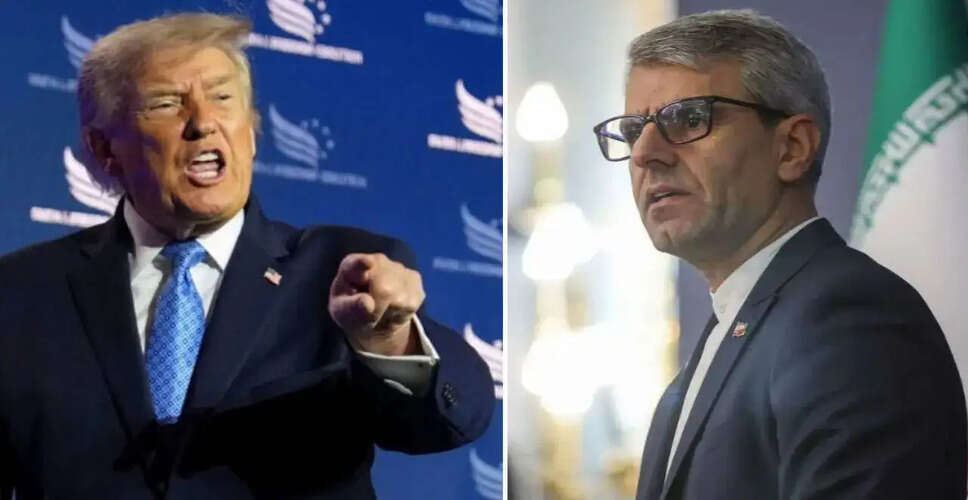

Iran's Stance on US Talks
On Tuesday, Iranian officials clarified that there are no upcoming discussions planned with the United States, directly contradicting President Donald Trump's claim of a scheduled meeting in Doha. This discrepancy has intensified doubts regarding the trajectory of US-Iran relations, especially after both nations accused one another of breaching a ceasefire established under a memorandum of understanding (MoU) aimed at resolving ongoing conflicts.
The Iranian Foreign Ministry announced that a technical team would be heading to Qatar this week, but emphasized that this trip is not linked to any discussions with US representatives. Foreign Ministry spokesperson Esmaeil Baghaei stated, "No talks between Iran and the United States are scheduled in the coming days," and highlighted that the delegation's visit to Qatar is unrelated to any US officials.
Baghaei further noted that discussions regarding a comprehensive agreement have not commenced, as Iran's priority remains the execution of the MoU's key elements. Earlier, President Trump had mentioned on Truth Social that Iran had requested a meeting, asserting that it would occur in Doha without elaborating on specifics.
The White House later confirmed that Special Envoy Steve Witkoff and Jared Kushner would be traveling to Doha for significant discussions. White House Press Secretary Karoline Leavitt indicated that talks would persist as the US aims to further the implementation of the memorandum. "Special Envoy Witkoff and Jared Kushner will be flying to Doha for high-level meetings this week, as we continue to discuss the memorandum of understanding. On the sidelines of those high-level talks, will be the technical talks," she stated.
This diplomatic ambiguity arises as both the US and Iran strive to uphold a 14-point memorandum signed on June 17, which aimed to conclude four months of hostilities. The agreement mandated both parties to cease hostilities and reopen the Strait of Hormuz. However, the deal has faced challenges following renewed tensions over the weekend, particularly after an Iranian projectile hit a commercial vessel in the Strait of Hormuz last Thursday. Since then, both nations have accused each other of violating the ceasefire through military actions.
Despite the escalating tensions, the Trump administration has reiterated its commitment to maintaining the peace process. Leavitt remarked, "As far as we're concerned, we're holding up our end of the ceasefire. Violence will be met with violence," and referred to the recent assaults on commercial shipping, stating, "There were attacks on commercial vessels that the United States of America, directed by the president, responded to, and that will continue to happen, but we hope we don't see that. The president obviously wants to see the peace process play out."