
Iran and Russia Discuss Diplomatic Efforts Amid Ongoing Conflict with the U.S.
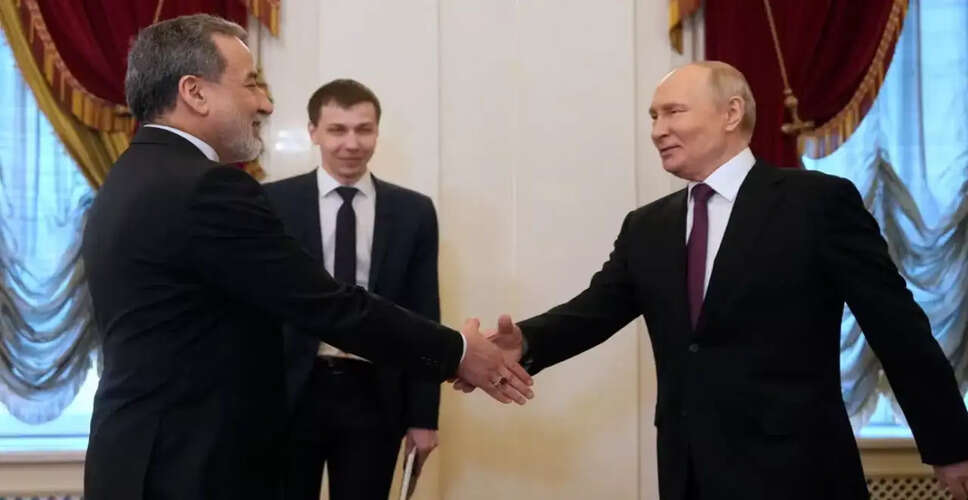

Iran's Foreign Minister Meets with Putin
On Monday, Iranian Foreign Minister Abbas Araghchi held discussions with Russian President Vladimir Putin regarding the ongoing conflict with the United States, as diplomatic initiatives appear to be faltering. This meeting highlighted Russia's complex position of supporting Iran while also safeguarding its own interests, particularly concerning the war in Ukraine and its relationships with Israel and Gulf Arab nations.
Putin's Supportive Remarks
During the meeting, Putin conveyed that he had received a message from Mojtaba Khamenei, the new Supreme Leader of Iran. He commended the Iranian populace for their brave struggle for independence and sovereignty, stating, “We will do everything in your interests, in the interests of the people of the region, so that peace gets achieved as soon as possible.”
Araghchi's visit followed a weekend of diplomatic efforts in Pakistan and Oman, where attempts were made to mediate between Tehran and Washington. Although he was set to meet with U.S. President Donald Trump’s special envoy Steve Witkoff and Jared Kushner in Pakistan, the trip was abruptly canceled by Trump, indicating significant gaps remain in reaching a comprehensive agreement.
Iran's Stance on Negotiations
Upon arriving in St. Petersburg, Araghchi informed Russian state media that the U.S. had expressed interest in negotiations, which Iran is currently contemplating. He emphasized that the purpose of his visit was to discuss the conflict with Putin and to ensure necessary coordination.
Analysts propose that a phased approach could be a viable solution, starting with halting active hostilities and reopening the Strait of Hormuz, followed by broader discussions. Omid Memarian from the Washington-based organization DAWN suggested that Putin might leverage his relationship with Iran to encourage Trump towards such an arrangement.
Russia's Strategic Caution
Despite being a significant ally of Iran, Russia has been careful not to become overly involved. Analyst Nikita Smagin from Baku noted that Putin's primary focus remains on persuading Trump to agree to a peace deal in Ukraine that aligns with Moscow's interests. Russia has refrained from providing Iran with substantial advanced weaponry and has sought to maintain strong relations with Israel and the Gulf states that Iran has targeted during the conflict.
Nonetheless, Moscow has extended support to Iran in various forms, including:
- Intelligence sharing, such as satellite images of U.S. naval vessels
- Diplomatic backing at the United Nations, including vetoing a resolution aimed at reopening the Strait of Hormuz
- Willingness to accept Iran’s enriched uranium stockpile, similar to the terms of the 2015 nuclear agreement
Economic Implications
The ongoing mutual blockades—where Iran has restricted traffic through the Strait of Hormuz and the U.S. has imposed blockades on Iranian ports—have led to a surge in global energy prices, temporarily benefiting Russia with increased oil and gas revenues. However, analysts caution that this advantage may be fleeting. Russia risks losing its long-term influence if it becomes too closely aligned with Iran, potentially alienating Gulf states, Israel, and the Trump administration.
Smagin remarked, “Russia is still trying to be cautious in the areas where Iran needs it most — primarily regarding the supply of weaponry. It does not want to ruin its relationships with the Gulf states, Israel, and Trump.” The discussions between Araghchi and Putin illustrate how the Iran-U.S. conflict is intertwined with broader geopolitical dynamics. While Russia provides diplomatic and limited material support to Iran, it seems reluctant to jeopardize its more critical objectives, particularly in Ukraine, for the sake of Tehran. Currently, negotiations remain stalled, with both parties asserting they hold the upper hand. It remains uncertain whether Putin can facilitate a resolution or will merely use the situation to his advantage.