
Investigation Links Tunnel Construction to Road Collapse in Shimla
Investigation Findings
Sunil Chadha
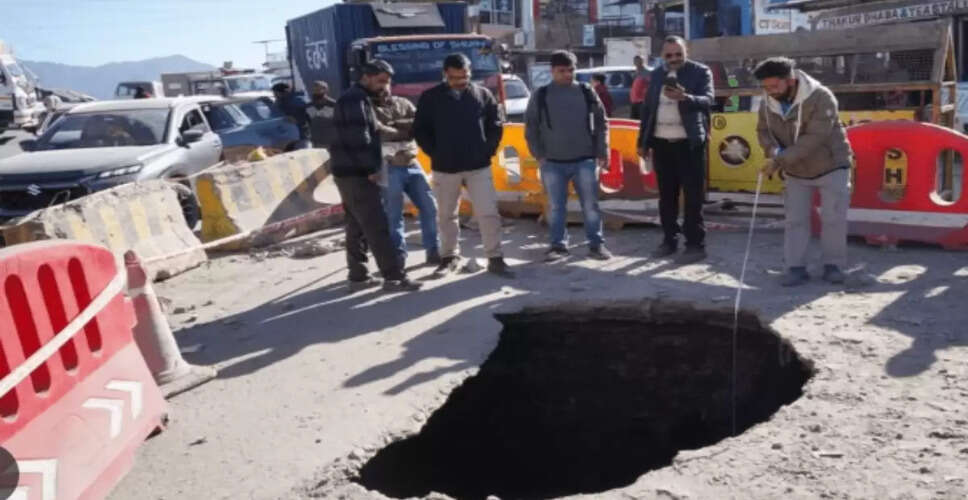
SHIMLA: A recent investigation by the Geological Survey of India (GSI) has identified the four-lane tunnelling project and water pipeline leaks as the causes behind the sudden emergence of a large ditch on Bhattakufar road, located on the outskirts of Shimla.
The findings were presented to Shimla's Deputy Commissioner Anupam Kashyap on Tuesday, December 16, 2025, nearly three weeks after the incident raised alarms regarding the safety of local residents. A schoolgirl had fallen into the ditch when the rear tyre of her bus became lodged in it.
According to the GSI report, the collapse occurred on November 22, 2025, creating a cavity approximately 2.2 meters long, 1.5 meters wide, and nearly 4 meters deep along the roadside at Bhattakufar. The investigation pinpointed leaks from two underground water pipelines as the main cause, while vibrations from tunnelling and other construction activities were deemed secondary, human-induced factors.
Recommendations for Construction Practices
Blasting to be halted, manual work permitted
The report has advised an immediate cessation of blasting activities associated with the tunnel construction. However, it has allowed for manual construction work to continue under strict supervision. Officials noted that the vibrations from blasting may have worsened subsurface instability, particularly in areas already compromised by ongoing water seepage.
In light of the report, the Deputy Commissioner has requested a detailed explanation from the company responsible for the tunnel project. The firm is required to provide all records related to surveys conducted since the commencement of tunnelling in March 2024, along with documentation of communications with the district administration throughout the construction process.
“The company must submit details regarding the preventive measures recommended by authorities, including when and how these measures were implemented,” Kashyap stated.
Commitment to Resident Safety
Safety of residents a priority, says DC
Highlighting that public safety is the administration's foremost concern, the Deputy Commissioner mentioned that cracks have already appeared in several homes within the tunnel's influence zone during the four-lane construction. District officials have conducted field inspections to evaluate the extent of the damage.
While the construction company is tasked with preparing a formal damage assessment report, the district administration has assured residents of its commitment to providing support for compensation to affected households. “Protecting lives and property is non-negotiable,” Kashyap emphasized.
Immediate Repairs and Future Precautions
Water pipes repaired, further mapping ordered
The GSI report indicated that leaks from water pipelines significantly contributed to soil erosion beneath the road surface. Officials from the Jal Shakti department promptly repaired a faulty reducer that had been causing ongoing leakage.
The Deputy Commissioner has now instructed the department to compile a comprehensive report mapping all underground water pipelines in areas affected by tunnelling work. The goal is to prevent similar incidents by ensuring construction agencies are fully aware of subsurface utility networks.
“The GSI has clearly indicated that pipe leakage was the primary factor,” Kashyap noted, adding that corrective measures have already been initiated.
A review meeting included additional district magistrate (protocol) Jyoti Rana, district revenue officer Sumedh Sharma, and other senior officials. The administration plans to determine further regulatory actions once responses from the construction company and relevant departments are received.
This incident has once again highlighted the environmental and structural risks associated with large infrastructure projects in the delicate Himalayan region, especially in densely populated urban areas like Shimla.