
Interconnected Conflicts: The Ukraine and Iran Wars Reflect Modern Warfare Dynamics

Understanding the Interplay Between Ukraine and Iran Conflicts
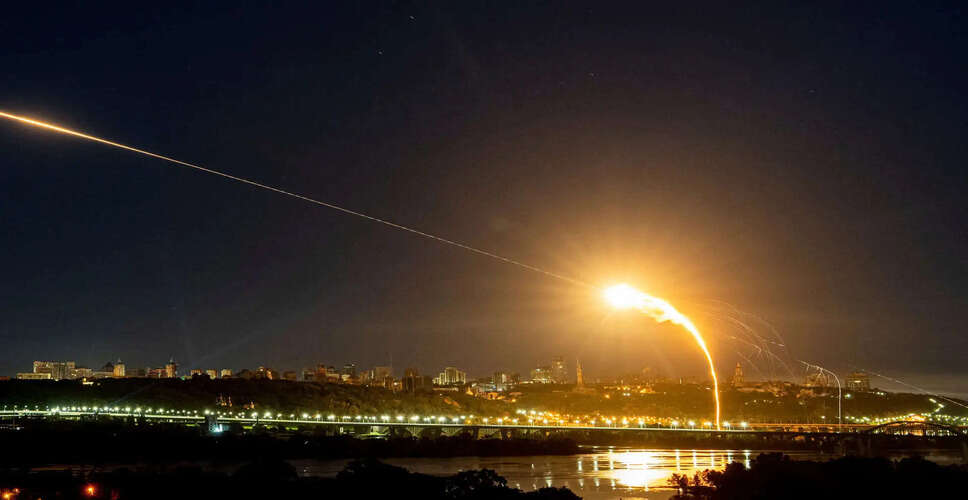
Despite their apparent differences, the conflicts in Ukraine and Iran are increasingly linked through shared strategies, technologies, and their global implications, providing insight into the future of warfare. The protracted trench warfare and artillery exchanges characterizing Russia's invasion of Ukraine since 2022 starkly contrast with the air and naval operations initiated by the United States and Israel against Iran on February 28. However, experts have noted significant parallels emerging in both scenarios, as reported by various news outlets.
In both instances, a militarily dominant nation has faced challenges in achieving a decisive victory. Russian President Vladimir Putin expected a quick triumph in what he termed a 'special military operation,' while former President Donald Trump initially referred to the Iran campaign as a brief 'little excursion' anticipated to last four to five weeks. Nicole Grajewski, a specialist in Iranian and Russian affairs at Sciences Po in Paris, remarked, 'Both Russia and the United States have encountered unmet expectations regarding their military endeavors,' attributing this to 'hubris on both sides.'
Technological Innovations Shaping Warfare
Both conflicts underscore how technological advancements and unconventional tactics empower weaker forces to confront stronger adversaries. Iran has targeted U.S. allies using one-way attack drones, attacked energy facilities in Gulf nations, and employed small armed vessels and mines to assert control over the Strait of Hormuz. Conversely, Ukraine has executed targeted strikes within Russia, targeted oil infrastructure deep inside Russian territory, and utilized sea drones to undermine Russia's larger naval presence in the Black Sea.
Drone technology emerges as a significant commonality. The United States has implemented AI-driven drone-detection systems at Prince Sultan Air Base in Saudi Arabia, originally developed by Ukraine to counter Russian assaults. In Lebanon, Hezbollah has deployed fiber-optic cable-controlled explosive drones against Israeli forces, a tactic widely utilized in Ukraine.
Michael Kofman, a senior fellow at the Carnegie Endowment for International Peace, noted the rapid proliferation of layered sensor systems, guided missiles, and drones, often enhanced by artificial intelligence. 'We are witnessing the rise of mass precision on the battlefield,' Kofman stated. 'Such systems will democratize access to precision warfare for smaller and middle powers.'
Collaboration Between Russia and Iran
There is increasing evidence of direct collaboration between Russia and Iran. Iran has provided Shahed-style drones to Russia for use in Ukraine, while Moscow is reportedly reciprocating with military assistance, including drone components transported across the Caspian Sea. Both countries have also employed similar electronic warfare strategies, such as GPS signal spoofing to mislead enemy targeting. Russian anti-jamming technology has been discovered in Iranian drones, and European officials have expressed concerns about deeper Russian support if peace negotiations falter. British Defense Minister John Healey remarked in April, 'We have observed evidence of Russia aiding Iran in its assaults.'
Shifts in Diplomatic Relations
The conflict in Iran has strained transatlantic relations, with numerous European leaders perceiving it as unnecessary and unlawful. It has also disrupted global energy markets, prompting some nations to turn to Russian oil and gas while hindering progress on peace efforts in Ukraine. Danylo Lubkivsky, director of the Kyiv Security Forum, commented, 'I believe they were celebrating in the Kremlin when President Trump initiated the war in Iran.'
Simultaneously, the conflict has created new opportunities for Ukraine. Kyiv has forged new security agreements with Qatar, Saudi Arabia, and the United Arab Emirates, offering drone technology and training in exchange for diplomatic backing, energy arrangements, and air-defense systems. Jana Kobzova from the European Council on Foreign Relations noted that Ukrainian President Volodymyr Zelensky is attempting 'to transform this crisis into an opportunity.'
Europe remains a crucial support system for Ukraine, providing arms purchases and significant loan packages. However, prolonged energy shortages stemming from the Iran conflict could restrict its capacity to maintain that support. Riccardo Alcaro from the Institute of International Affairs in Rome emphasized that while Ukraine is Europe's primary concern, the Iran conflict is far from secondary. 'The Iran war is not a secondary front; it significantly impacts Europe's ability to contribute to its foremost priority — which is Ukraine.'
As discussions continue toward a potential initial U.S.-Iran agreement — despite renewed American strikes on Monday — both conflicts illustrate that modern warfare is fought not only with traditional military forces but also through technology, alliances, and economic pressures. The outcomes of these conflicts may influence the nature of warfare for years to come.