
Indus Waters Treaty Remains Suspended: What’s Next for India and Pakistan?
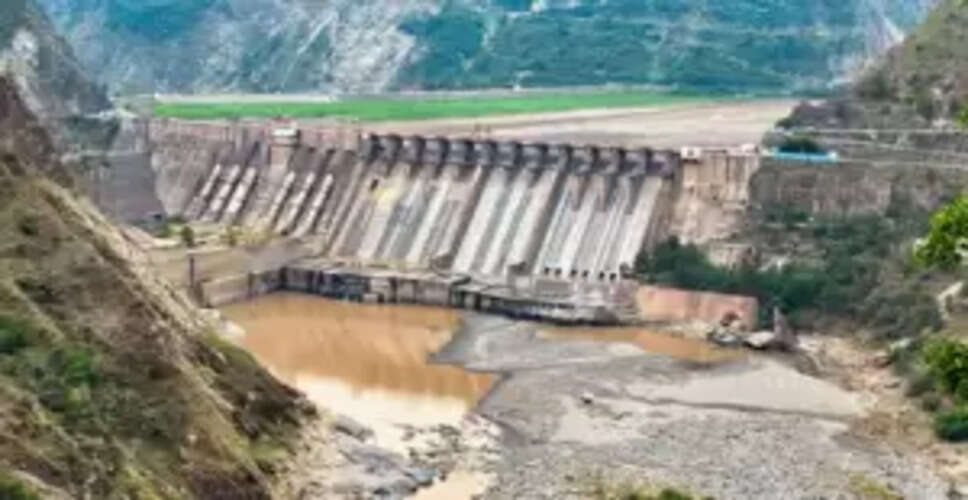
Indus Waters Treaty Status Update
New Delhi: The Ministry of Jal Shakti (MoJS) is not rushing to alter its decision regarding the Indus Waters Treaty (IWT), which remains suspended as part of stringent measures taken against Pakistan following the Pahalgam attack, according to a senior official's statement on Friday.
The IWT was a key topic in the MoJS's monthly report submitted to Cabinet Secretary T.V. Somanathan earlier this week, reaffirming the ongoing suspension.
Debashree Mukherjee, Secretary of the Department of Water Resources, River Development, and Ganga Rejuvenation, emphasized in the report that the IWT will stay suspended until Pakistan unequivocally renounces its support for cross-border terrorism.
The Indian administration is not inclined to entertain a proposal from Pakistani Water Resources Secretary Syed Ali Murtaza, who suggested discussions regarding New Delhi's previous objections to the IWT's renegotiation.
This situation coincides with contrasting views from Jammu and Kashmir Chief Minister Omar Abdullah and former Chief Minister Mehbooba Mufti regarding the revival of the Tulbul Navigation project in J&K, following the IWT's suspension.
The Tulbul Navigation project, aimed at revitalizing the Wular Lake fed by the Jhelum River in Bandipora district, was initiated in 1987 but was halted in 2007 due to objections from Pakistan under the IWT.
After India announced the suspension of the Treaty on April 23, just a day after the Pahalgam terror incident, Abdullah called for the project’s resumption.
In a post on X, he expressed uncertainty about the project's future, given the current status of the water agreement with Pakistan.
Mufti, however, criticized Abdullah’s proposal, labeling it as 'irresponsible and dangerously provocative.'
Last month, Union Minister of Jal Shakti C.R. Patil introduced a web-based Reservoir Storage Monitoring System (RSMS) Portal.
The Central Water Commission oversees the live storage capacity of 161 significant reservoirs across the nation, providing a weekly bulletin every Thursday. The total live storage capacity at full reservoir level (FRL) is 182.375 billion cubic meters (BCM), which constitutes approximately 70.74 percent of the total live storage capacity developed in the country.
This bulletin is distributed to the PMO, Niti Aayog, MoJS, MOP, MOA&FW, IMD, Disaster Management Authorities, and relevant states, and is also available on the CWC website.