
India's BRICS Summit Achieves Historic Consensus Amidst Tensions
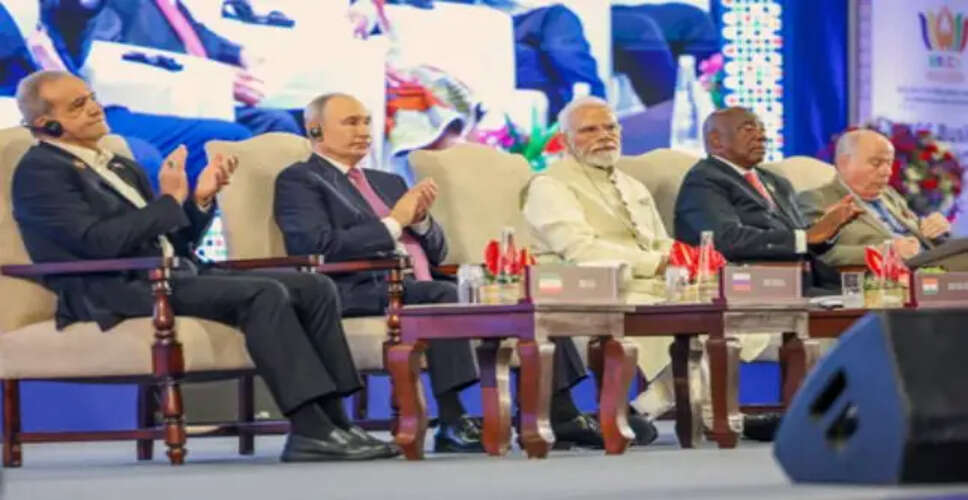

Major Diplomatic Achievement at BRICS Summit
New Delhi: In a pivotal moment for Indian diplomacy, the BRICS coalition reached a consensus on a joint declaration during its summit on Saturday, successfully navigating significant disagreements between Iran and the UAE regarding the West Asia conflict after extensive behind-the-scenes discussions.
Prime Minister Narendra Modi revealed the declaration's adoption at the conclusion of the first day of the two-day summit hosted by India.
The negotiations for the declaration text were intense, as both Iran and the UAE initially took firm stances. The BRICS group operates on a consensus basis, meaning that any single member can prevent a joint declaration from being finalized.
At the end of the inaugural session, Prime Minister Modi was seen engaging in a handshake with Chinese President Xi Jinping.
Modi remarked in his closing statements, "Today's discussions highlight that the evolving world cannot be guided by outdated institutions; reforms in representation, responsiveness, and rule-making are crucial."
He also stressed the importance of equal involvement from the Global South in shaping future technologies and the regulations that govern them.
The Prime Minister pointed out that bridging the gap between decisions and their outcomes requires collaboration and collective efforts.
"The New Delhi Declaration we adopted today sets a clear path for our collective commitment. It is now our duty to turn these resolutions into concrete actions," he stated.