
Indian-American Group Advocates for Protection of Foreign Workers Amid Green Card Suspension

Call for Safeguards for Foreign Professionals
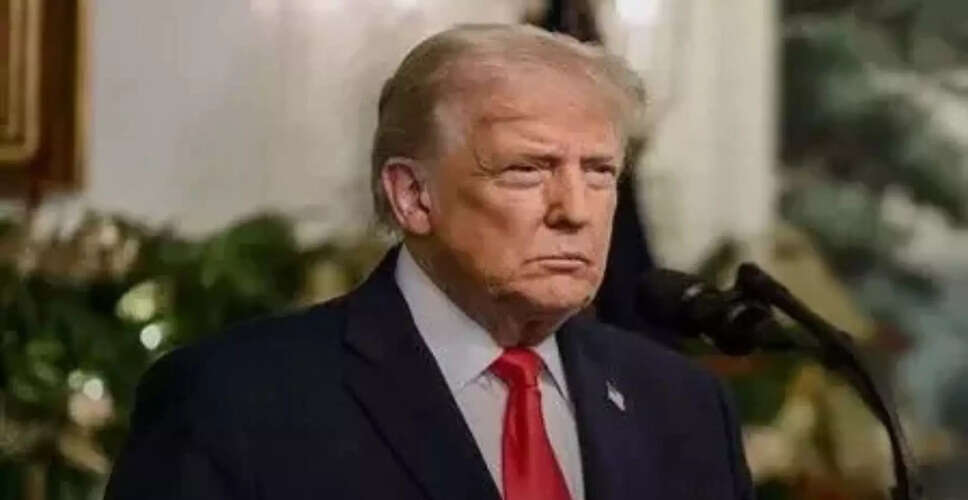
A file image of US President Donald Trump (Photo: IANS)
Washington, Oct 9: A policy advocacy organization representing the Indian-American community has urged the Trump administration to ensure the protection of legally employed foreign professionals and their families following the recent suspension of green-card sponsorship applications by specific tech companies.
The Foundation for India and Indian Diaspora Studies (FIIDS) emphasized the need for evidence-based enforcement, improved communication with employers, and clear protections for workers impacted by the restrictions on the Permanent Labour Certification (PERM) program.
According to FIIDS, the administration's decision on October 8 halted the acceptance of new applications and the processing of pending ones under the PERM program for certain technology and IT service employers.
While the organization acknowledged the necessity of combating immigration fraud, it cautioned that sweeping restrictions could adversely affect compliant workers and their families.
“FIIDS understands the administration’s duty to safeguard American workers and prevent immigration fraud. Employers who breach recruitment, wage, or certification standards should face accountability through evidence-based enforcement and fair processes,” stated Khanderao Kand, the chief of policy and strategy for the organization.
Kand highlighted the need for a thorough review of employers' recruitment practices, job requirements, wages, and the availability of qualified workers in the U.S.
“Engaging meaningfully with employers is crucial to grasp genuine talent shortages and evolving skill demands,” he added.
The organization contended that immigration enforcement should differentiate between actual violations and legitimate recruitment efforts by American firms seeking specialized skills.
It also raised concerns about relying on aggregate layoff statistics and visa application numbers to determine if foreign professionals were displacing American workers.
“Assertions that H-1B workers are taking jobs from Americans should be substantiated with job-level evidence, rather than inferred solely from overall layoff statistics and visa petition counts,” Kand remarked.
He urged investigators to assess whether American workers who lost their jobs and foreign workers hired by the same employers had comparable roles, worked in similar locations, and possessed equivalent skills.
The review should also evaluate if displaced workers could feasibly acquire the necessary skills through training, he noted.
FIIDS called for a distinction between applications for new foreign hires and those seeking extensions or status changes for employees already legally working in the U.S.
The organization warned that actions affecting entire employers could create uncertainty for workers whose individual immigration applications were compliant.
“Broad actions against employers can negatively impact genuine, compliant cases and create uncertainty for lawfully employed professionals and their families who are not responsible for any alleged misconduct,” Kand stated.
FIIDS urged the Department of Labor and U.S. Citizenship and Immigration Services to issue clear guidelines on how the restrictions would be implemented.
It also requested a time-bound review process, transparent criteria for restoring employers' eligibility, and measures to prevent unnecessary losses of immigration progress or missed filing deadlines.
The group asserted that immigration regulations should reflect actual workforce needs while ensuring protections for American workers and safeguards against misuse.
“Protecting American workers and attracting specialized global talent are mutually beneficial objectives,” Kand concluded.
“America’s economic and technological leadership is best supported by fair enforcement, investment in domestic talent, and a transparent immigration system that responds to real workforce needs.”
The PERM program, overseen by the U.S. Department of Labor, is typically the initial step in employer-sponsored permanent residency applications across various employment-based immigration categories. It mandates that employers demonstrate that hiring a foreign worker will not negatively impact the wages and working conditions of similarly employed American workers.