
India Considers Lifting Restrictions on Chinese Firms Amid Border Tensions
Government's Potential Policy Shift
The Indian government is reportedly contemplating the removal of restrictions placed on Chinese companies in 2020 regarding their participation in government contracts, as alleged by the Congress party on Friday, referencing a report from a news agency.
This report, which cited unnamed officials, indicated that the finance ministry is considering lifting these restrictions due to a perceived decrease in border tensions.
One official mentioned that efforts are underway to eliminate the requirement for Chinese bidders to register with a governmental committee, although any final decision would need the Prime Minister's Office's approval.
Congress Criticism and Concerns
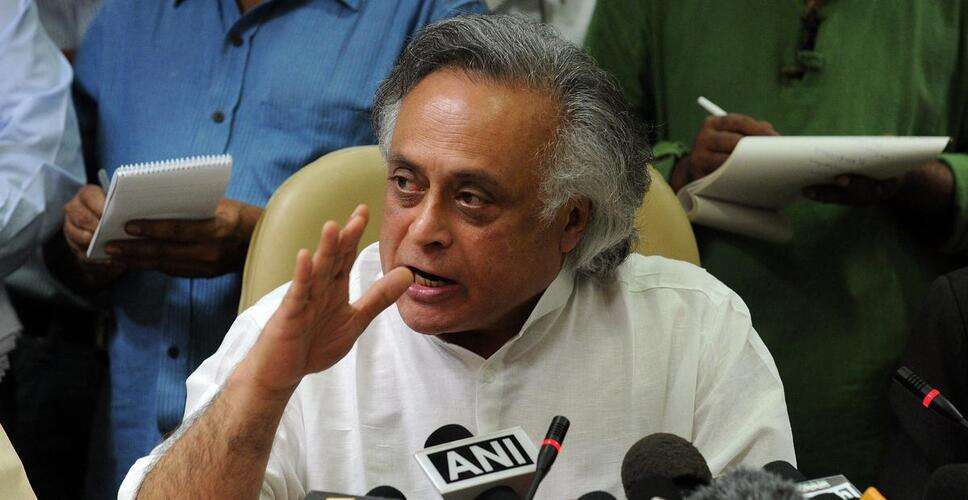
Jairam Ramesh, the Congress communications chief, criticized this potential decision as a significant shift in India's stance towards China, demanding clarification from Prime Minister Narendra Modi during the upcoming Budget Session of Parliament.
Ramesh pointed out that this move follows previous decisions that allowed Chinese investments in India's electronics sector and facilitated visa approvals for Chinese workers, all while India's trade deficit with China continues to grow.
He highlighted that this news comes just eight months after China allegedly provided military support to Pakistan during Operation Sindoor, a conflict that saw India and Pakistan at odds, with China being labeled as an adversary by the Indian military.
Broader Implications and Historical Context
Ramesh suggested that the government's proposal is part of a larger set of recommendations from the NITI Aayog aimed at easing restrictions on Chinese trade and investment in India.
He described this as a calculated capitulation to Chinese aggression, reflecting the Prime Minister's perceived weakness, particularly referencing Modi's statement from June 19, 2020, which claimed that Chinese soldiers had not crossed into Indian territory during the Galwan Valley clash.
The tensions between India and China escalated significantly in June 2020, following a violent confrontation in Ladakh's Galwan Valley that resulted in the deaths of 20 Indian soldiers, with China reporting four casualties.
Current Military and Diplomatic Landscape
Ramesh's remarks also pointed to ongoing challenges along the Line of Actual Control, including restrictions on Indian soldiers' access to traditional patrol areas, China's military presence in eastern Ladakh, and tensions over Arunachal Pradesh, where China claims territory it refers to as Zangnan.
Despite the military standoff, both nations have engaged in multiple rounds of talks to resolve their border disputes, with a recent agreement in October 2024 aimed at establishing a patrolling arrangement along the Line of Actual Control.
Initial disengagement efforts have occurred at several points of tension, although areas like Demchok and Depsang remain contentious.
Intelligence and Military Dynamics
In July, the Indian Army reported that Pakistan had been receiving real-time intelligence from China regarding India's military deployments during the conflict in May.
Lieutenant General Rahul R Singh noted that India faced multiple adversaries during this conflict, with Pakistan at the forefront, supported by China, and Turkey providing drones and trained personnel.