
Increased Vessel Traffic in the Strait of Hormuz Amid US-Iran Tensions
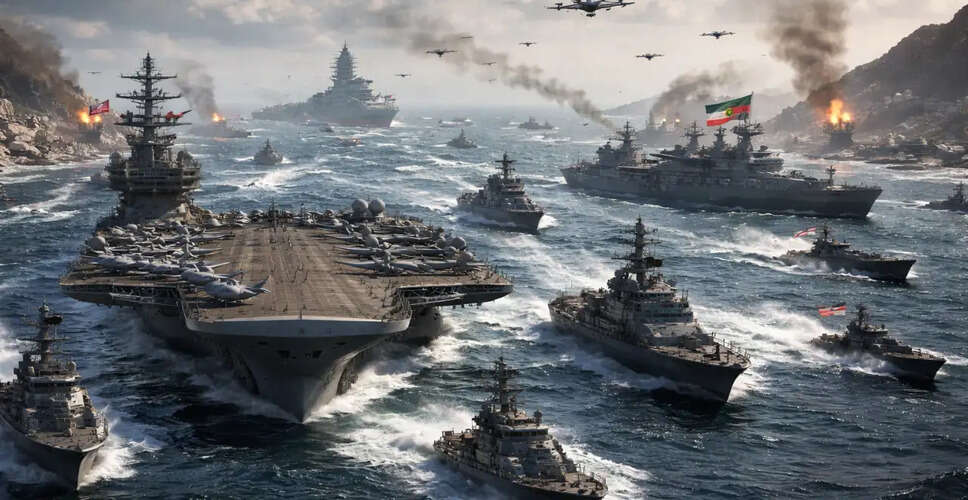

Rising Maritime Activity in the Strait of Hormuz
Tehran: As the ongoing tensions between the United States and Iran in West Asia approach the four-month mark, there has been a noticeable uptick in vessel movements through the crucial Strait of Hormuz. Recent reports indicate that the Islamic Revolutionary Guard Corps (IRGC) of Iran has relaxed some of the restrictions in this vital waterway. Commentator Mario Nawfal, referencing data from Reuters and Marine Traffic, noted on Tuesday that the strait had become increasingly busy with vessels navigating through Iranian-controlled routes.
MarioNawfal
2057094994025206149
The IRGC reported that it facilitated the passage of 26 vessels within a 24-hour period, as stated by Al Jazeera. This development occurs amidst stalled negotiations between the US and Iran regarding the resumption of maritime traffic through the Strait of Hormuz. An official announcement from Iran’s state-affiliated ISNA news agency confirmed that “Traffic through the Strait of Hormuz is being conducted with the approval and coordination of the IRGC Navy.”
On Wednesday, the Persian Gulf Strait Authority (PGSA) of Iran released a new maritime map on X, illustrating a regulated zone that extends from Kuh-e Mubarak in Iran to the southern region of Fujairah in the United Arab Emirates at the eastern entrance of the strait. The map also delineates the area from the tip of Qeshm Island to Umm al-Quwain at the western entrance.
Since the onset of the conflict following airstrikes by the US and Iran on February 28, the IRGC has effectively blocked the Strait of Hormuz, disrupting the flow of crude oil and natural gas and leading to an energy crisis in the region. Concurrently, the US has enforced a naval blockade, restricting ships from entering or leaving Iranian ports.
Prior to the escalation of the US-Iran conflict, the Strait of Hormuz was responsible for 20% of the global trade in crude oil and liquefied natural gas (LNG).