
Impact of Ali Larijani's Alleged Death on US-Iran Relations
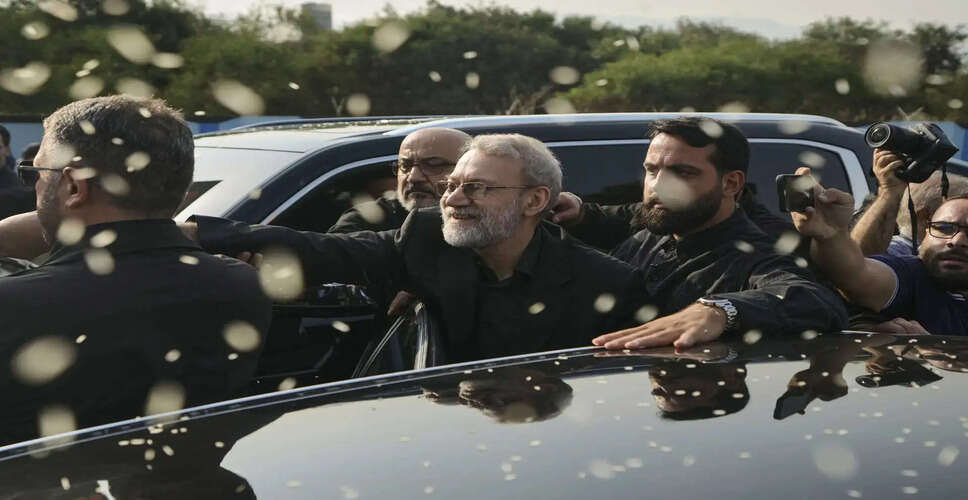
Unconfirmed Reports of Larijani's Death
While Iran has yet to verify the reports regarding the strike and the alleged death of Ali Larijani, the implications could be significant for US President Donald Trump. On March 17, Israeli Prime Minister Benjamin Netanyahu announced on X that they had eliminated Larijani, who had become a key figure in Iran's security apparatus following the death of Supreme Leader Ayatollah Ali Khamenei on February 28. Israeli Defence Minister Israel Katz also claimed that Larijani and General Gholamreza Soleimani, a commander in the IRGC's Basij militia, were targeted in recent strikes. However, Iran has not confirmed these claims. If true, this would mark a pivotal moment since Khamenei's assassination, as Larijani was seen as a crucial player capable of fostering consensus for negotiations.
Reasons Behind the Targeting of Larijani
Three Strategic Motivations
Trita Parsi, the executive vice president of the Quincy Institute for Responsible Statecraft, outlined three potential reasons for Israel's actions in a post on X. The primary motivation appears to be Israel's desire to eliminate any diplomatic avenues for Trump. Larijani was known for advocating dialogue with the US and had worked to garner support for a negotiated resolution. Israel, having pushed for a full-scale conflict with Iran for over two decades, may not want Trump to find a way to de-escalate the situation. Without Larijani, Trump's options for ending the conflict could be severely limited.
Potential Shift in Iranian Leadership Dynamics
The second motivation could involve a strategic pivot back to regime decapitation. The complexities surrounding the reopening of the Strait of Hormuz have proven more challenging than anticipated, and without international backing, the US may struggle to regain control. If military options are off the table, the collapse of the Iranian regime might be seen as an alternative. Parsi suggests that the elimination of Larijani could be an attempt to destabilize the regime further, similar to the earlier attempt with Khamenei.
The Aftermath of Larijani's Alleged Death
Parsi also notes that the strike may have been opportunistic, with Israeli intelligence acting upon locating Larijani rather than a calculated strategy to disrupt US diplomacy. He argues that Israel's focus throughout the conflict has been on diminishing Iran's capabilities and altering the regional power dynamics, rather than seeking a resolution. The removal of Larijani could lead to the emergence of more hardline figures within Iran's leadership, potentially escalating tensions further.
Future Implications for Iran and the Region
In the absence of Larijani, power dynamics in Iran may shift further towards the IRGC and security services, which rely on coercion rather than consensus. Vali Nasr, a professor at Johns Hopkins-SAIS, remarked that Larijani's successor will likely be appointed by the IRGC, leading to increased radicalization within Iran's leadership. This could create a more challenging environment for the US to disengage from ongoing conflicts in the region.
Ongoing Tensions in the Strait of Hormuz
The situation surrounding the Strait of Hormuz remains critical. As the conflict continues, Iran has been retaliating against Gulf nations, targeting US military bases and energy infrastructures, which has driven Brent crude prices above $100 per barrel. Trump's attempts to form an international coalition to counter Iran's actions have met with resistance. If Larijani's death is confirmed, it represents a significant tactical setback, but the broader implications for US diplomatic efforts and regional stability remain uncertain.