
IAEA Chief Confirms Progress on Iran Nuclear Inspections Amid Conflicting Reports

IAEA's Commitment to Inspect Iran's Nuclear Facilities
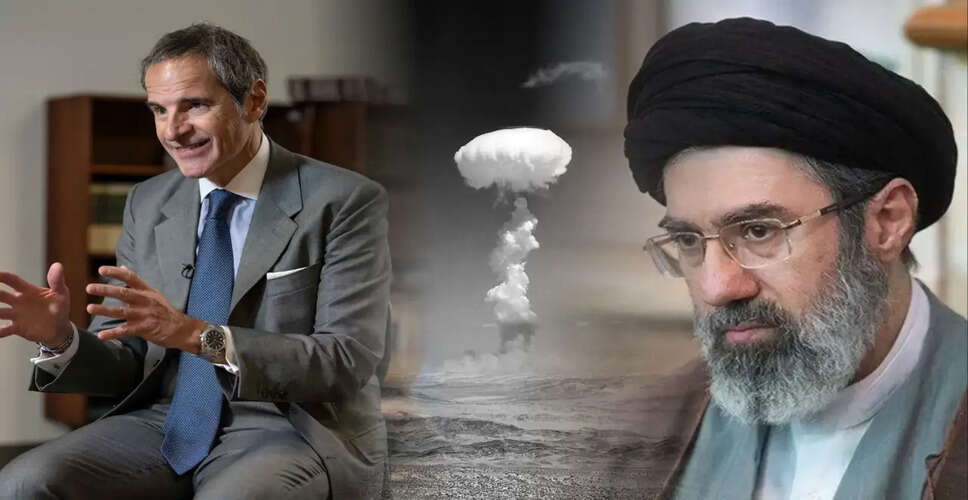
Rafael Mariano Grossi, the head of the International Atomic Energy Agency (IAEA), has indicated that inspections of Iran's nuclear enrichment sites will proceed, despite mixed messages from Tehran and Washington regarding the scheduling of these visits. Speaking from Japan's Fukushima Daiichi nuclear power plant, Grossi aimed to clarify the confusion surrounding the recent US-Iran Memorandum of Understanding. Although Iranian officials have publicly denied the immediacy of inspections, Grossi emphasized that the agreement mandates IAEA oversight of Iran's nuclear activities. This situation has quickly become a significant test of the delicate diplomatic arrangement established between the two nations. The deal, finalized after extensive negotiations, aims to ease tensions, restore maritime stability in the Strait of Hormuz, and pave the way for a broader agreement within 60 days.
Diverging Narratives from Iran and the US
Conflicting Signals From Tehran And Washington
Grossi made it clear that the political rhetoric from either side would not change the obligations outlined in the agreement. He stated, "I can understand political statements; they are part of the reality, but the fundamental thing I would like to remind you and draw your attention to is that there has been a Memorandum of Understanding, signed by both presidents. This is going to happen." His remarks come amid increasingly conflicting narratives from Iranian and American officials regarding access to Iran's nuclear facilities. Iranian Foreign Ministry spokesperson Esmail Baghaei claimed on Tuesday that UN inspectors were not scheduled to visit nuclear sites that were damaged during American strikes last year, contradicting US Vice President JD Vance's assertion that inspections would be part of the implementation process.
Trump's Comments on Iran's Nuclear Compliance
President Donald Trump also weighed in, asserting that Iran had fully accepted stringent international monitoring requirements. He stated on Truth Social, "Iran has fully and completely agreed to the highest level of nuclear inspections long into the future." Later, he suggested that Tehran's public stance was inconsistent with ongoing negotiations, saying, "If they were right, I'd cancel the meetings right now." Grossi, however, seemed focused on de-escalating the situation, emphasizing that the timing of inspections was less critical than their formal inclusion in the agreement. He remarked, "The accord explicitly states that the nuclear activities that are going to be carried out with regards to the nuclear material facilities will be supervised by the IAEA. Whether this happens the day after tomorrow or in one week or in 10 days, it's important, but not essential."
The Importance of Access to Iran's Nuclear Sites
Why Access To Iran's Nuclear Sites Matters
The inspections are strategically significant, as the IAEA has not been able to access key Iranian enrichment facilities since the 12-day conflict between Israel and Iran in 2025. Western intelligence agencies and nuclear watchdog officials believe Iran has enough highly enriched uranium that could potentially be further refined to create multiple nuclear weapons. Tehran maintains that its nuclear program is entirely peaceful.
The IAEA has had limited access to some facilities, including the Bushehr nuclear power plant. However, inspectors have not been allowed to visit enrichment sites where uranium stockpiles and advanced centrifuge cascades are believed to be located. Without these inspections, the agency states it cannot independently verify the status of Iran's nuclear inventory or assess the operational condition of its enrichment infrastructure. The interim agreement signed between Washington and Tehran last week requires Iran to dilute portions of its enriched uranium stockpile while establishing a framework for broader negotiations on sanctions relief, nuclear restrictions, and regional security issues. As technical discussions continue, access for IAEA inspectors is likely to become a crucial benchmark for evaluating whether this diplomatic breakthrough can endure beyond its initial phase.