
Humanitarian Crisis Deepens in Pakistan-Occupied Territories
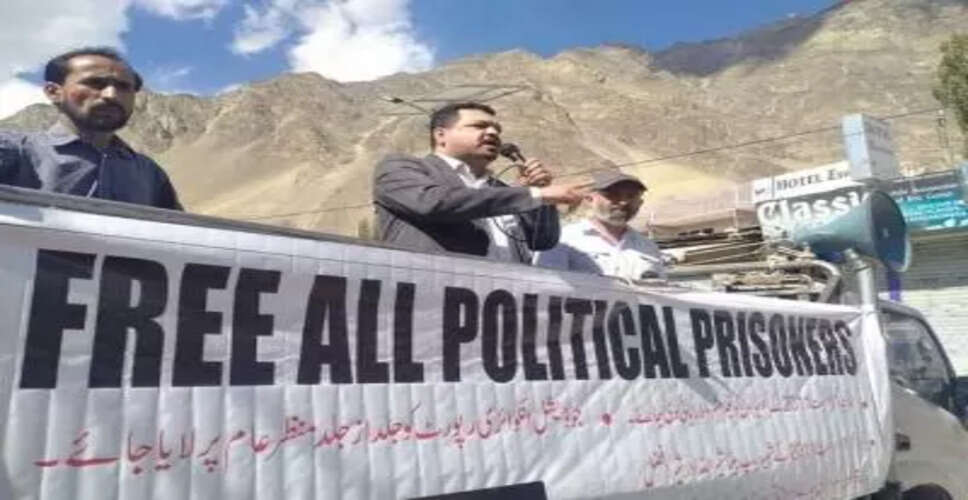
Escalating Humanitarian Issues in PoJK and PoGB
London, March 20: A recent report has shed light on the growing humanitarian crisis in Pakistan-occupied Jammu and Kashmir (PoJK) and Pakistan-occupied Gilgit-Baltistan (PoGB), where essential services are severely lacking. Issues such as inflation, unemployment, food scarcity, and power outages are compounded by political exclusion and a security-focused administration.
The UK-based publication 'Asian Lite' notes that the rising participation of women and students in protests reflects widespread societal dissatisfaction, indicating a deep-rooted crisis stemming from systemic neglect.
As unrest intensifies and government crackdowns increase, the deteriorating humanitarian situation in PoJK and PoGB reveals the shortcomings of Pakistan's governance in these regions, which lack constitutional integration.
“Protests extend beyond just food prices. Residents face year-round challenges with electricity shortages and exorbitant power bills. Despite being home to significant hydropower projects, they endure extensive load-shedding while paying commercial rates. This contradiction highlights a broader crisis — areas rich in resources yet deprived of their benefits,” the report elaborated.
“In PoJK, protests have escalated into widespread shutdowns, with demonstrators refusing to pay electricity bills due to unaffordable costs, unpaid wages, and the erosion of fundamental civil rights. Authorities have often responded with arrests, communication blackouts, and force,” it continued.
The report also pointed out that in PoGB, land ownership disputes have emerged as a significant issue, with large areas designated as state property, stripping communities of their ancestral land rights.
“Claims of land grabs associated with infrastructure and strategic projects have heightened local resentment, especially where residents face displacement without compensation. Resource exploitation follows a similar trend,” it added.
Moreover, the electricity produced from hydropower in PoJK and PoGB is directed to Pakistan’s national grid, while local populations grapple with power shortages and rising tariffs.
“The belief that regional resources are exploited for external gain has intensified distrust towards federal authorities,” the report stated.
Addressing the repression in these territories, critics assert that Pakistani security agencies, particularly the Inter-Services Intelligence, focus more on suppressing dissent than addressing the underlying issues.
“Reports from rights organizations frequently cite allegations of surveillance, intimidation, and enforced disappearances,” the report highlighted.
While the crisis has begun to gain sporadic international attention, activists from PoJK and PoGB raised serious concerns regarding restrictions on freedom of expression and peaceful assembly during a side event at the UN Human Rights Council session in Geneva in 2025.
“Speakers highlighted systematic suppression and the lack of legal protections for millions residing in these disputed areas. Despite such interventions, Pakistan’s official stance has largely been one of denial, often attributing protests to ‘external influences’ and ignoring the documented economic and humanitarian issues raised by the local populace,” the report concluded.