
How AI and Autonomous Systems are Shaping the U.S. Military's Strategy Against Iran
U.S. Military Campaign Against Iran
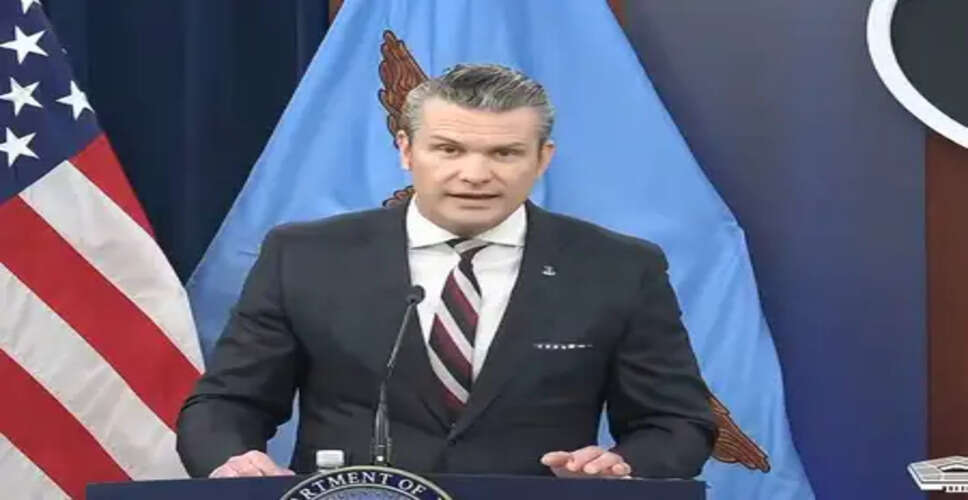
Washington: The U.S. is integrating autonomous technologies and AI in its military operations against Iran, as stated by Secretary of War Pete Hegseth during a Pentagon briefing on Operation Epic Fury.
Hegseth acknowledged the significant role of advanced technologies in the ongoing conflict but refrained from sharing specific details.
He mentioned, “We have numerous autonomous systems, including drones equipped with intelligent AI features.”
The deployment of these systems underscores the increasing importance of AI in contemporary warfare, especially in areas like drone operations, surveillance, and targeting.
According to U.S. officials, the current military efforts against Iran encompass long-range strikes, naval maneuvers, and precise air assaults aimed at crippling Tehran’s military framework.
Chairman of the Joint Chiefs of Staff, Air Force General Dan Caine, reported that thousands of targets have already been engaged in the initial phase of the operation.
Caine noted, “We have successfully targeted over 2,000 locations.”
The military's strategy focuses on three primary goals: dismantling Iran’s ballistic missile capabilities, neutralizing its naval forces, and preventing the nation from restoring its military strength.
Caine elaborated, “Our first objective is to target and eliminate Iran’s ballistic missile systems.”
He continued, “Next, we aim to destroy the Iranian Navy, and finally, we are committed to ensuring Iran cannot quickly rebuild its combat capabilities.”
The Pentagon has indicated that U.S. forces are adapting their strategies as the operation evolves, transitioning from long-range strikes to more direct precision attacks within Iranian airspace.
Caine stated, “CENTCOM is now transitioning from extensive strike packages utilizing standoff munitions to precision strikes directly over Iran.”
These military actions are designed to exert continuous pressure on Iranian forces and hinder their capacity to launch missiles and drones.
U.S. officials have observed a significant reduction in the frequency of Iranian attacks since the conflict's onset.
Caine remarked, “Iran’s theatre ballistic missile launches have decreased by 86% since the conflict began.”
Despite these positive developments, military leaders have warned that the situation remains volatile and perilous.
Caine cautioned, “These operations are intricate, risky, and far from concluded.”
Operation Epic Fury commenced earlier this week amid escalating tensions between Washington and Tehran over missile strikes and Iran’s nuclear ambitions, marking one of the most severe military confrontations in the Middle East in recent years.