
Houthi Maritime Embargo Triggers Oil Tanker Turnarounds Near Yemen

Significant Shift in Oil Shipping Routes
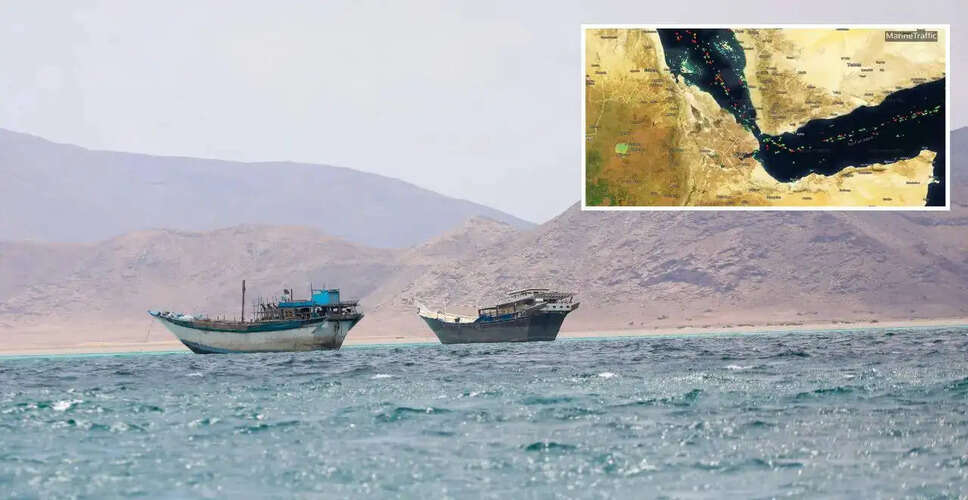
Recent ship-tracking data reveals that at least seven oil tankers have altered their courses near Yemen following the announcement of a "maritime embargo" by the Iran-aligned Houthi group against Saudi Arabia. The vessels, which were either departing from or heading to Saudi ports, made abrupt navigational changes shortly after the Houthis issued their statement on Monday. In an email directed to shipowners, the group declared that vessels were prohibited from loading or unloading cargo at any Saudi ports and cautioned that ships could be targeted anywhere within their operational range. Although the specific reasons for each course alteration cannot be independently confirmed, maritime risk management firm Vanguard noted that the timing aligns with the embargo declaration.
Increased Tensions in the Red Sea
These developments coincide with warnings from a maritime security organization led by the US Navy, indicating that Iran's Houthi allies in Yemen have finalized preparations to attack vessels navigating the southern access point of the Red Sea. The Joint Maritime Information Center (JMIC), based in Bahrain, informed mariners that sources close to the Houthis indicated the group has deployed missiles and drones near Bab el-Mandeb. The European Union's naval mission in the region has also advised that "merchant vessels associated with Israeli, US, or Saudi interests" should refrain from traversing the Red Sea and Gulf of Aden until the threat level diminishes.
— Reuters (@Reuters) July 22, 2026
Approximately 15% of global maritime trade transits through the Red Sea, connecting the Mediterranean Sea with the Gulf of Aden via the Suez Canal and Bab al-Mandab Strait. This route has gained significance for Saudi oil exports, particularly after the US-Israeli conflict with Iran led to the effective closure of the Strait of Hormuz, which severely limited oil and gas shipments from the Gulf. Rosemary Kelanic from the US think tank Defense Priorities remarked that the Red Sea has been crucial in alleviating pressure on global markets. She cautioned that if the Houthis impose further restrictions on shipping through this route, it could lead to increased prices.
According to maritime intelligence firm Kpler, on the day prior to the Houthi blockade announcement, 20 vessels entered the Red Sea while 22 exited through the Bab al-Mandab Strait.
Current Shipping Traffic Status
MarineTraffic data indicates that the Liberian-flagged crude oil tanker Rodos, which was transporting Saudi crude to India, departed from the Red Sea port of al-Muajiz on Monday evening. The vessel initially headed south towards the Bab al-Mandab Strait but made a U-turn approximately nine hours later, returning north. Another Liberian-flagged tanker, Mica, which had set sail from Saudi Arabia's Jazan port, also reversed its course after initially heading south.
Ship-tracking data further reveals that at least eight vessels approaching the Red Sea from the south opted to turn back instead of entering the Bab al-Mandab Strait. Among these was the Marshall Islands-flagged vehicle carrier Liu Jiang Kou, which was en route from China to the Saudi port of Jeddah before changing its course in the Gulf of Aden. Similarly, the Hong Kong-flagged crude oil tanker New Prime, also traveling from China to Saudi Arabia, reversed its direction and is now positioned in the Arabian Sea.
Security Advisory Issued
The European Union's naval mission in the area, Aspides, issued a warning on Wednesday advising that "merchant vessels linked to Israeli, US, or Saudi interests should avoid transiting the Red Sea and Gulf of Aden until the threat level decreases." The Houthis claimed their embargo was a response to what they termed a Saudi blockade of ports and airports in Houthi-controlled northwestern Yemen. Saudi Arabia has denied these allegations and stated it would take all necessary measures to safeguard its vessels in accordance with international law. Since the closure of the Strait of Hormuz, Saudi Arabia has redirected over 70% of its crude exports through the Red Sea port of Yanbu using its east-west pipeline. Recent data from Kpler and maritime analytics platform Signal Ocean indicates that approximately four million barrels of crude per day have been shipped from Yanbu, a significant increase from around 973,000 barrels per day a year ago. Kpler estimates that about six million barrels of crude transit through the Bab al-Mandab daily, with roughly two-thirds originating from Saudi Arabia and the remainder consisting of Russian crude transported via the Red Sea.