
Houthi Attacks on Saudi Aramco: A New Wave of Tensions in the Middle East
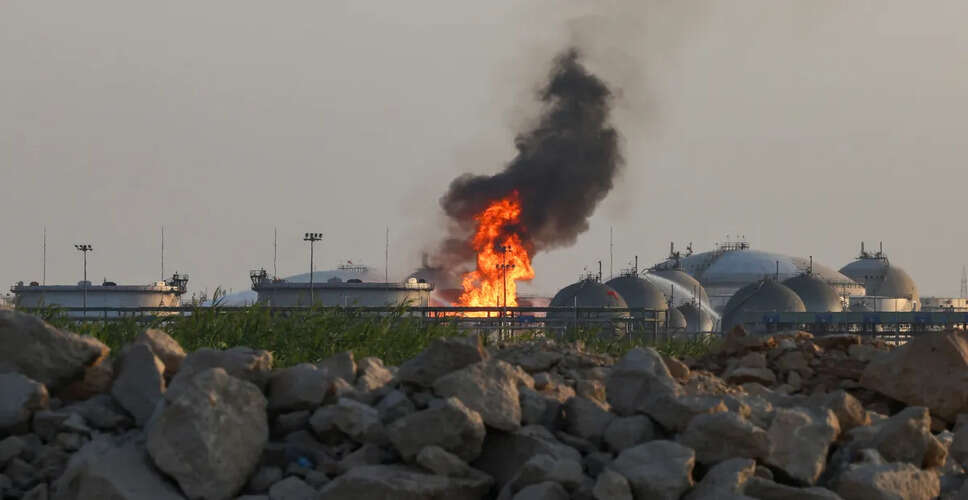

Houthi Strikes Target Saudi Oil Headquarters
In a recent escalation, Houthi forces launched an attack on the Saudi Aramco headquarters, targeting offices of senior executives. This incident underscores the rebels' capability to strike significant targets, despite prior warnings.
According to two regional officials, the upper floors of the building housing top executives sustained damage, including the office of the CEO. Fortunately, there were no reported injuries. The officials requested anonymity due to the sensitivity of the information.
The Houthis claimed responsibility for the strike, stating they targeted Dhahran with a ballistic missile.
On the same day, residents in Riyadh reported hearing new explosions, which were attributed to the Houthi rebels from Yemen.
A Houthi representative mentioned that countries like Russia and China have approached the rebels to negotiate a ceasefire.
The recent attacks have raised concerns in the region and affected global markets, putting pressure on President Trump, who is contemplating whether the US should support Saudi military actions against the Houthis.
The Saudi-led coalition reported intercepting several missiles aimed at Dhahran and Riyadh, as well as a cruise missile targeting Al-Kharj, which houses the Prince Sultan Air Base.
The Houthis described their actions as retaliation against Saudi aggression in Yemen, where they reported casualties from Saudi airstrikes.
The rebels have consistently targeted Saudi infrastructure, including airports and military sites, intensifying the ongoing conflict. A Riyadh resident noted that King Khalid International Airport has been hit multiple times, resulting in numerous casualties.
The Houthis, who have become a significant proxy for Iran, are also pursuing their own strategic goals, increasing pressure on a key US ally.
Diplomatic Efforts for Ceasefire
A senior Houthi official revealed that both regional and international powers are seeking to mediate a ceasefire to halt the attacks on Saudi Arabia.
Mohamed al-Bukhaiti, a member of the Houthis' political bureau, stated that Oman is attempting to facilitate negotiations, with Russia and China also involved through Iran.
"We welcome any mediation that can lead to a resolution of the conflict and the blockade between Sanaa and Riyadh," he expressed. "We are prepared for a comprehensive end to the war and blockade from both sides, not just a temporary ceasefire."
The Houthis have continued to threaten further attacks on airports and oil facilities, leading to the cancellation of over 3,000 flights in Saudi Arabia recently, according to aviation analytics.
Experts have pointed out that Saudi Arabia struggles to intercept all Houthi missiles and drones, prompting the kingdom to seek additional military support from allies like the US. Officials indicate that Saudi Arabia is running low on interceptors.
The Houthis possess a significant arsenal capable of reaching targets over 1,600 kilometers away, complicating interception efforts.
Even successful interceptions pose risks; debris from intercepted missiles has fallen in residential areas, injuring civilians.
In response, Saudi Arabia has conducted airstrikes in Yemen to support the internationally recognized government, reigniting tensions after a period of relative calm.
The International Committee of the Red Cross reported a surge in weapon-related injuries in Yemen, particularly in Marib and Taiz, as hospitals struggle to cope with the influx of casualties.
The World Food Program has also reported that it can no longer reach over 600,000 people in Taiz who rely on humanitarian aid.
This renewed fighting has escalated Yemen's civil war, which had seen a lull in violence.