
High-Stakes Peace Talks in Pakistan: Can J D Vance and Iran's Ghalibaf Find Common Ground?

Peace Talks in Islamabad Amidst Tensions
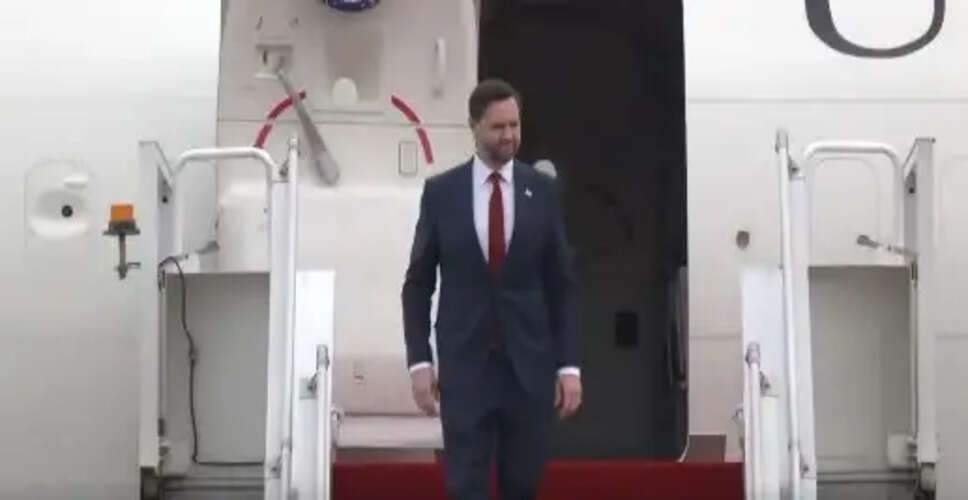
Islamabad: The Vice President of the United States, J D Vance, along with Iranian Parliament Speaker Mohammad Bagher Ghalibaf, arrived in Pakistan on Saturday to engage in crucial peace discussions. The global community is keenly observing these talks, hoping for a resolution to the escalating conflict in West Asia, which has caused significant economic turmoil.
Vance is joined by special envoy Steve Witkoff and Jared Kushner, who is the son-in-law of former President Donald Trump. The Iranian delegation, led by Ghalibaf, includes Foreign Minister Abbas Araghchi, Secretary of the Supreme National Defence Council Ali Akbar Ahmadian, and Central Bank Governor Abdolnaser Hemmati.
The purpose of their visit is to participate in peace negotiations mediated by Pakistan, occurring just days after a two-week ceasefire was announced between Iran and the US.
However, the situation has been complicated by a series of Israeli airstrikes on Lebanon, which have resulted in over 300 casualties, undermining the ceasefire agreement.
Iran has accused Israel of breaching the ceasefire terms, while the US and Israel maintain that Lebanon was not included in the ceasefire arrangement.
Before the negotiations begin, both Iranian and American delegations are expected to meet with Pakistan's Prime Minister Shehbaz Sharif, as reported by Iran's semi-official Tasnim news agency.
Upon their arrival at Nur Khan airbase, the delegations were welcomed by Deputy Prime Minister Ishaq Dar, Army Chief Field Marshal Asim Munir, and Interior Minister Syed Mohsin Raza Naqvi.
Dar, who also serves as Foreign Minister, praised the US's commitment to fostering lasting peace and stability in the region.
He expressed optimism that the discussions would be constructive and reiterated Pakistan's commitment to facilitating a durable resolution to the ongoing conflict in West Asia, according to statements from the Pakistan Foreign Office.
Ghalibaf shared a poignant image on social media from his flight to Pakistan, showing him in front of pictures of Minab School students who lost their lives in the strikes.
He captioned the photo, 'My companions on this flight – Minab 168.'
According to earlier reports from Tasnim, negotiations will not commence until Iran's 'preconditions' are met, which include halting Israeli attacks on Lebanon.
Ghalibaf emphasized that two mutually agreed measures—establishing a ceasefire in Lebanon and releasing Iran's frozen assets—must be fulfilled prior to the start of talks.
US President Donald Trump has warned that military action against Iran will resume if the negotiations fail to yield a peace agreement.
Before leaving for Pakistan, Vance expressed his eagerness for the talks, hoping for a 'positive' outcome.
'As the President stated, if the Iranians are willing to negotiate sincerely, we are ready to extend an open hand. However, if they attempt to deceive us, they will find our negotiating team unyielding,' Vance remarked.
Reports indicate that Iran's delegation to Islamabad consists of 71 members, including negotiators, experts, and security personnel.
Pakistan has been instrumental in facilitating dialogue between the two nations, a process that gained momentum following Prime Minister Sharif's appeal earlier this week, which led to a temporary halt in hostilities.
Iran's Foreign Minister Araghchi has communicated with the ambassador to Lebanon, asserting that the US must adhere to its ceasefire obligations, which should encompass Lebanon.
Iranian President Masoud Pezeshkian has condemned the Israeli strikes on Lebanon as blatant violations of the ceasefire, stating that such actions would render negotiations futile.
Islamabad is under heightened security measures, with a 'red alert' status in place ahead of the talks.
Over 10,000 police and security personnel have been deployed to ensure the safety of the visiting delegations, according to officials.
The Red Zone, which contains key government buildings, is being secured by military forces and Rangers, allowing only authorized personnel and residents access.
The outcome of these negotiations is being closely monitored worldwide, as their success or failure could significantly impact security in West Asia, global energy markets, and international diplomatic relations.