
Global Leaders Express Concerns Over International Order at UN Assembly
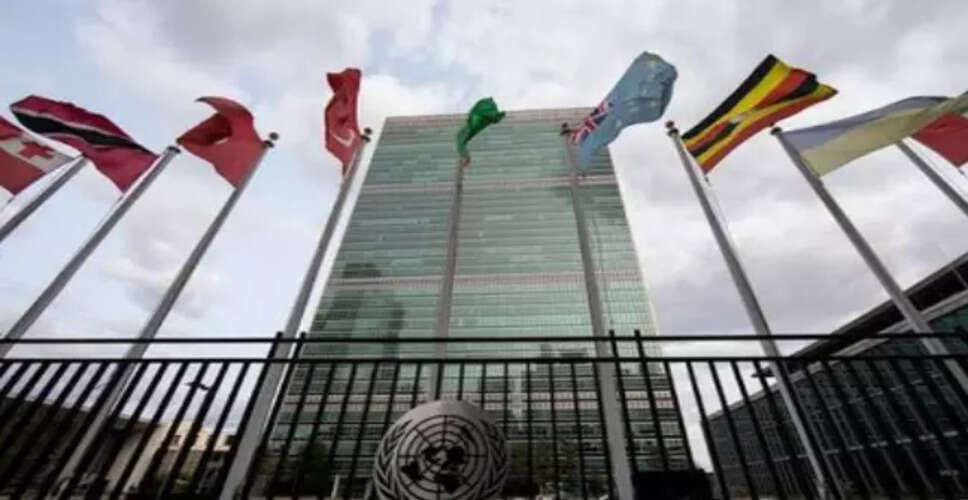

Concerns Raised at the UN General Assembly
Photo: IANS
United Nations, Sep 28: The recent speeches delivered by major global economies during the UN General Assembly highlighted a collective anxiety regarding the disintegration of the international order. However, they also revealed significant disagreements on whether the solution lies in enhanced multilateralism, increased national sovereignty, or assertive unilateral actions.
Over the course of five days, representatives from the G20 nations articulated a world fraught with conflicts, economic pressures, disrupted supply chains, technological competition, and waning trust in global institutions.
US President Donald Trump advocated for military interventions and an 'America First' policy, criticizing international organizations and asserting that the UN should cease enforcing what he termed the 'far-left agenda' of unelected global bureaucrats.
In contrast, China’s Vice President Han Zheng urged for the preservation of the post-war order and emphasized the importance of resolving disputes through dialogue. He stated, 'The world desires peace, not conflict,' and cautioned against the pitfalls of protectionism, which he claimed yields no victors.
Russian Foreign Minister Sergei Lavrov pointed to the rise of the Global South and East as new sovereign power centers, accusing Western nations of attempting to maintain privileges established through historical dominance.
European leaders from France, Germany, Italy, and the UK defended the need for international collaboration while advocating for the adaptation of existing institutions.
French President Emmanuel Macron questioned whether nations preferred a return to chaos or a civilized global society, while German Foreign Minister Johann Wadephul called for a UN capable of conflict resolution rather than mere management.
Italian Deputy Prime Minister Antonio Tajani suggested that alliances should function as bridges rather than barriers, and British Prime Minister Andy Burnham highlighted the threats posed by disinformation, cyber risks, and artificial intelligence.
Brazilian President Luiz Inácio Lula da Silva criticized the UN's credibility, attributing it to the paralysis of the Security Council. He asserted, 'There will be no victors on the battlefield; diplomacy is the sole path forward.'
Mexico's Foreign Minister Roberto Velasco Álvarez linked peace to inclusive development, stating, 'Peace cannot be mandated; it is cultivated through social justice.'
Argentina's President Javier Milei expressed the strongest dissent against the current system, labeling the UN as a 'useless organization' that perpetuates an arrogant bureaucracy, arguing that international cooperation should not equate to subjugation.
India's External Affairs Minister S. Jaishankar cautioned that nations distant from conflict zones are bearing the consequences of wars they did not instigate, highlighting disruptions in essential sectors like food, fuel, and finance.
Australia, Canada, Indonesia, and South Korea positioned themselves as potential stabilizers amid competing global factions. Australian Prime Minister Anthony Albanese emphasized that the UN's mission should not rest solely on the shoulders of great powers or affluent nations.
Canadian Foreign Minister Anita Anand remarked, 'We are experiencing a rupture, not merely a transition,' advocating for reduced dependency on any single partner.
Indonesia stressed that effective multilateralism must yield tangible benefits for families and workers, with Foreign Minister Sugiono asserting, 'The solution to flawed multilateralism is not less of it, but rather a stronger and improved version.'
South Korean President Lee Jae Myung called for peaceful coexistence on the Korean Peninsula and renewed dialogue with North Korea, while Japan emphasized the importance of resilient supply chains and nuclear disarmament.
South Africa highlighted inequality as a central issue, noting that the wealthiest 10% control a significant portion of global wealth, while developing nations struggle with debt and an inequitable climate-finance system.
Saudi Arabia linked stability in the Gulf region to global energy security, and Türkiye insisted that international law should be uniformly applied to all nations, regardless of their power status.
The discussions underscored a general consensus among G20 nations regarding the symptoms of global unrest: wars are inflicting economic hardship, technology is centralizing power, and public trust in international institutions is dwindling. However, their proposed solutions varied widely, from rebuilding multilateral frameworks to asserting national sovereignty.
The G20 consists of 19 countries, along with the European Union and the African Union, representing approximately 85% of the global economy, over 75% of international trade, and about two-thirds of the world's population.