
First Combat Use of New US Missile System in Iran Conflict
A New Era of Warfare in Iran
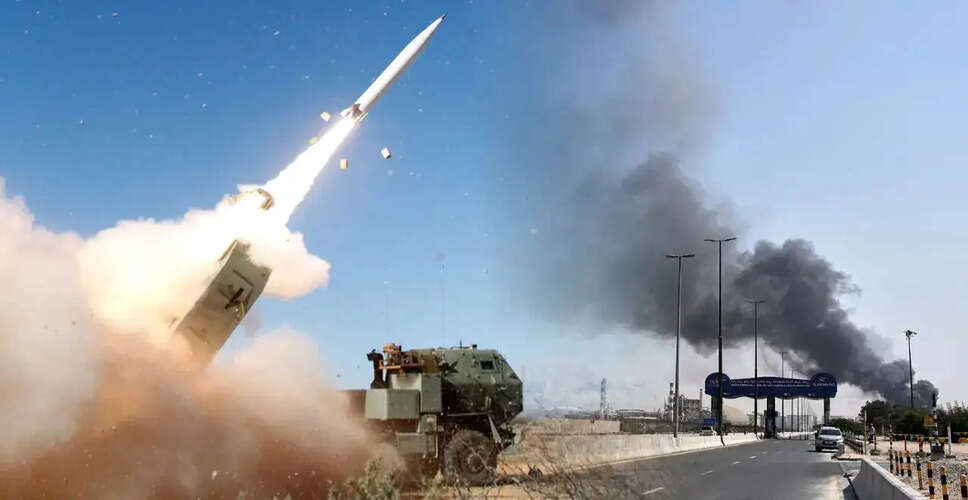
Recent footage reveals a significant event in Lamerd, southern Iran, where a missile strike resulted in a devastating fireball over a residential area. Analysts suggest this incident may represent the inaugural combat deployment of the Precision Strike Missile (PrSM), a cutting-edge system developed by Lockheed Martin that has only recently been introduced into military service. While there has been no official confirmation, the evidence is beginning to align.
Analysis of the Footage
What Experts Are Saying
Independent analysts have verified CCTV footage from Lamerd, showing a projectile just before it detonated over homes. Experts from various defense analysis firms have noted key features of the missile, including its shape and flight path, as well as the scale of the explosion. Notably, the missile lacked the control surfaces typically associated with other systems.
CCTV footage appears to show a likely US Precision Strike Missile (PrSM) hitting a residential area and sports hall in Lamerd on the first day of the Iran War, killing 21 people.Source: @Shayan86 pic.twitter.com/jBPdRezKWy
— Clash Report (@clashreport) March 29, 2026
Civilian Casualties and Targeting Controversies
Impact on Civilians
The aftermath of the strikes has been tragic, with Iranian state media reporting at least 21 deaths from two nearly simultaneous attacks—one on residential buildings and another on a sports facility nearby. This facility was a hub for local children and students. Among the deceased was a 12-year-old girl who was known to arrive early for volleyball practice, and the youngest victim was reported to be just two years old. The intended target of the strikes remains disputed, with some analysts suggesting a nearby base linked to the Islamic Revolutionary Guard Corps (IRGC), although satellite images have not confirmed damage to such a site.
The Debut of the PrSM
Potential First Use of the PrSM
If verified, the Lamerd strike would mark the operational debut of the PrSM, designed to replace the ATACMS with an extended range of approximately 500 kilometers and enhanced precision. Much of its capabilities remain classified, but its deployment in an active conflict indicates a significant shift in military strategy. General Dan Caine, Chairman of the Joint Chiefs, recently suggested that US forces have made history with their use of advanced weaponry in early operations.
Context of the Conflict
Wider Implications of the Strike
The Lamerd strike did not occur in a vacuum; it coincided with another reported attack in Minab, where Iranian officials claimed a school was targeted—an assertion the US is currently investigating, emphasizing that it does not target civilian sites. This pattern indicates a strategy that combines high-value targeting with deep-strike capabilities, reaching areas previously deemed out of reach. Towns like Lamerd, situated in rugged terrain, are now within striking distance.
The Future of Warfare
Precision and Its Consequences
For military strategists, the PrSM signifies a major advancement. However, for those affected on the ground, the focus is on the consequences—where the missile lands, what it strikes, and the civilians caught in the crossfire. While the use of this missile remains an assessment rather than an official confirmation, the signs are converging. If this was indeed its first combat deployment, the Iran conflict has entered a new phase characterized by escalation and the introduction of next-generation weaponry.