
FIFA's Club World Cup Faces Attendance Crisis in the U.S.
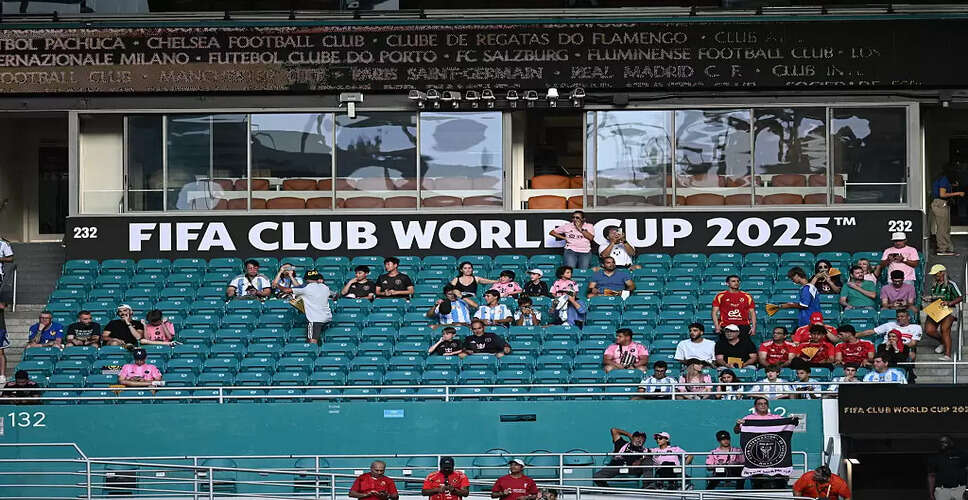
Attendance Woes at the Club World Cup
FIFA's ambitious vision for a revamped Club World Cup has hit a significant snag in the United States. On Tuesday, the Inter & Co Stadium in Orlando became an unexpected emblem of this disconnect, as it was designed to accommodate over 25,000 fans but attracted fewer than 600 spectators for the match between South Korea's Ulsan Hyundai and South Africa's Mamelodi Sundowns.
The match faced delays due to a storm, and journalist Maher Mezahi reported on social media that only 97 fans were present just before the game started. His later estimate suggested around 557 attendees, while FIFA claimed the official count was 3,412—contradicted by images showing large sections of the stadium empty.
Disappointing Turnout for Major Matches
This issue was not isolated. The day prior, Chelsea's much-anticipated match against Los Angeles FC drew only 22,000 fans at the expansive 75,000-capacity Mercedes-Benz Stadium in Atlanta, leading to the closure of the upper tier. Despite general admission tickets being priced at $52, the allure of star players and Premier League fame failed to generate significant interest.
This trend raises concerns for a tournament intended to be a highlight in the global football calendar.
FIFA's Price Cuts and Fan Engagement Challenges
In an effort to boost attendance, FIFA has been reducing ticket prices. For the opening match featuring Lionel Messi's Inter Miami, tickets were offered to local college students for as low as $20, resulting in over 60,000 fans attending at the 65,000-capacity Hard Rock Stadium in Miami.
However, despite these numbers, FIFA's broader strategy is under scrutiny. Observers noted that the attendance at the Orlando match was shockingly low, with one fan commenting on the disparity between the expected turnout and the reality.
FIFA's Optimism vs. Reality
Despite the disappointing attendance figures, FIFA remains optimistic. In a recent press release, the organization claimed to have sold nearly 1.5 million tickets and reported over 340,000 fans attending the first eight matches. FIFA President Gianni Infantino described the tournament as a platform for new stories and heroes, expressing pride in the multicultural atmosphere it has fostered.
Yet, many observers see a stark contrast between FIFA's optimistic statements and the actual turnout.
Concerns About Future Fan Engagement
The challenges facing the tournament extend beyond mere aesthetics, raising critical questions about fan engagement, especially with the FIFA Men's World Cup approaching in 2026. If a match featuring a prominent team like Chelsea struggles to fill even half a stadium, it casts doubt on the overall interest in football in the U.S.
Moreover, it raises concerns about how lesser-known teams will fare during the World Cup group stages in various cities across the country.
Criticism from LaLiga and Future Implications
LaLiga President Javier Tebas has voiced strong criticism of the tournament's format and timing, stating his desire to prevent future Club World Cups. He remarked on the lack of intensity in Chelsea's match against LAFC, likening it to a preseason friendly.
For FIFA, this situation is more than just a public relations issue; it serves as a warning regarding its reputation and strategy. With the U.S. set to co-host the 2026 World Cup alongside Mexico and Canada, the low turnout for high-profile club matches raises concerns about attendance during group stage matches featuring lower-ranked national teams.
Conclusion: Is FIFA's Crown Jewel Losing Its Luster?
The Club World Cup was intended to generate excitement, expand the U.S. fanbase, and establish soccer as a mainstream sport in America. However, it now poses a troubling question: Is FIFA's flagship tournament beginning to lose its appeal before it has even fully launched?