
Federal Charges Filed Against Southern Poverty Law Center for Fraud

Overview of the Indictment
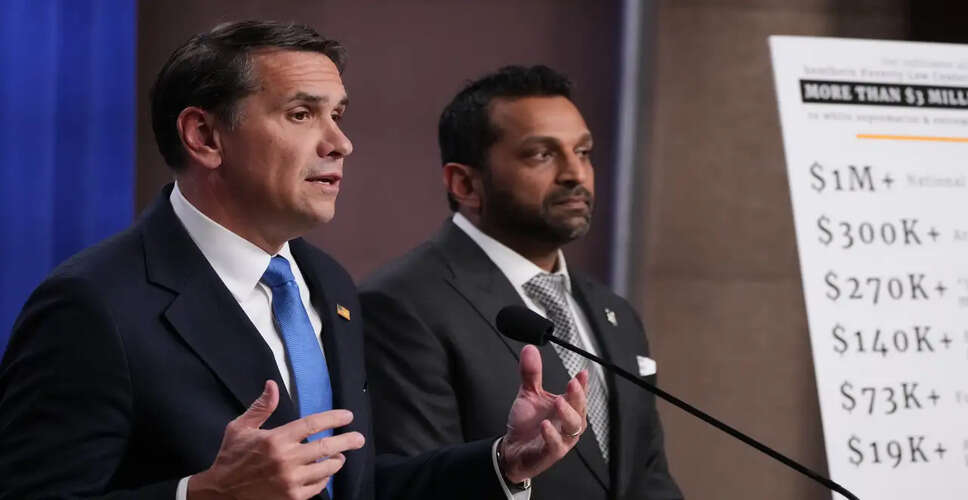
On Tuesday, the Southern Poverty Law Center (SPLC) faced federal fraud charges, as announced by acting Attorney General Todd Blanche. The allegations state that the organization raised millions improperly to fund informants infiltrating extremist groups like the Ku Klux Klan. The Justice Department claims that the SPLC misled donors by using their contributions to support the very extremism it claimed to combat, with over $3 million paid to individuals linked to various extremist organizations from 2014 to 2023.
Blanche emphasized that instead of dismantling these groups, the SPLC was allegedly fueling the extremism it professed to oppose by compensating sources to incite racial hatred. The charges include wire fraud, bank fraud, and conspiracy to launder money, stemming from a case initiated by the Justice Department in Alabama, where the SPLC is headquartered.
Details of the Informant Program
The indictment followed the SPLC's announcement of an ongoing criminal investigation into its informant program, which aimed to monitor extremist activities and share findings with law enforcement. SPLC CEO Bryan Fair stated that the organization would defend itself vigorously against these charges.
According to Blanche, the funds were transferred through multiple bank accounts before being loaded onto prepaid cards for extremist group members, including the National Socialist Movement and the Aryan Nations-affiliated Sadistic Souls Motorcycle Club. The SPLC reportedly failed to inform donors about the specifics of this program, which is a requirement for nonprofit organizations.
Historical Context and Political Implications
The indictment reveals that at least nine unnamed informants were compensated through a covert program that allegedly began in the 1980s. Within the SPLC, these informants were referred to as field sources or 'the Fs.' One informant reportedly received over $1 million between 2014 and 2023 while associated with the neo-Nazi National Alliance.
Fair defended the program's secrecy, citing the historical context of the Civil Rights Movement, which was marked by violence against activists. He asserted that the information gathered from informants was crucial in saving lives.
Political Backlash Against the SPLC
Founded in 1971, the SPLC has utilized civil litigation to combat white supremacist groups and has become a focal point of criticism from conservative circles, who accuse it of being excessively partisan. This investigation raises concerns about the potential misuse of the Justice Department under the Trump administration to target political adversaries.
Conservatives have long criticized the SPLC for labeling right-wing organizations as extremist based on their beliefs. The center's scrutiny intensified following the assassination of conservative activist Charlie Kirk, which brought renewed attention to its reports on groups like Turning Point USA.
FBI Director Kash Patel announced last year that the agency would cut ties with the SPLC, labeling it a 'partisan smear machine' that defamed 'mainstream Americans' through its hate map. Additionally, House Republicans held a hearing in December, alleging that the SPLC collaborated with the Biden administration to infringe upon the rights of Christian and conservative Americans.