
EU Approves Major Loan Package to Support Ukraine Amid Ongoing Conflict
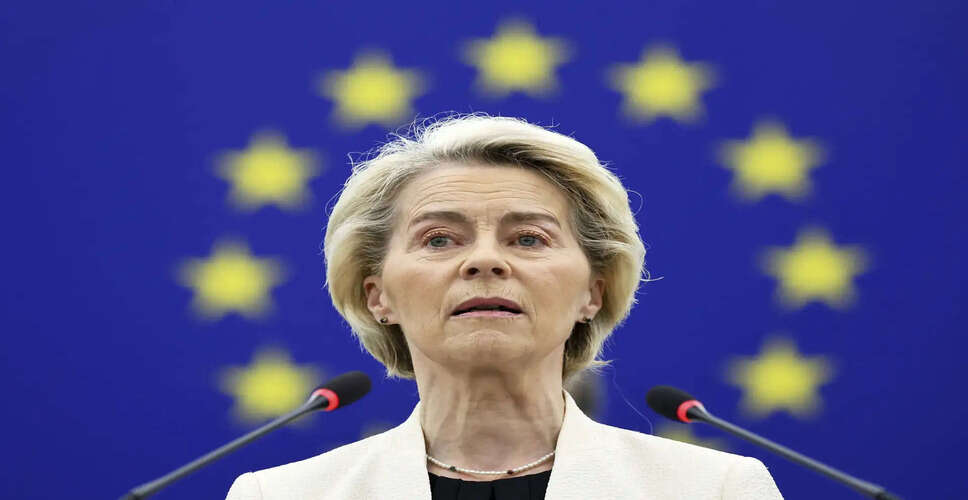

EU Takes Charge in Supporting Ukraine
The European Union has made a pivotal move by approving a substantial loan package of €90 billion (approximately $105 billion) aimed at bolstering Ukraine's government and military operations through the end of next year. This decision was finalized just before an informal EU summit in Cyprus, coinciding with a shift in U.S. policy under President Trump, who has reduced direct military assistance to Ukraine while redirecting focus towards the Middle East.
As Russia continues its aggressive military campaign in eastern Ukraine, the responsibility for supporting Kyiv has increasingly fallen on European nations. The approval of this loan had faced delays, primarily due to opposition from Hungary's former Prime Minister Viktor Orbán, who had strong ties to Moscow. Following Orbán's recent electoral defeat, EU leaders expressed relief, with Polish Prime Minister Donald Tusk remarking on social media that for the first time in years, there were no Russians obstructing the process.
Ukrainian President Volodymyr Zelensky welcomed the financial aid, asserting that it signifies Ukraine's resilience. He indicated that this support could potentially encourage Russia to engage in negotiations, while also emphasizing the necessity for continued assistance from all allies, including the United States. Zelensky stated, “During the war we need everything and everybody.”
The $105 billion loan is intended to cover approximately two-thirds of Ukraine's essential budget and defense expenditures for 2026 and 2027. However, EU officials have cautioned that this amount may fall short, as Ukraine's funding gap for the upcoming year has expanded beyond initial expectations, possibly necessitating another significant aid package within a year. Discussions are ongoing with nations like Japan and the UK to address these financial needs through 2027, although no agreements have been finalized yet.
Europe is also grappling with its own challenges in maintaining this level of support. The conflict in Iran has led to increased energy prices, and nationalist sentiments in countries such as France and Germany are calling for a cessation of aid to Ukraine. The upcoming French presidential election could further complicate the situation.
Despite these hurdles, stronger EU members, particularly Germany, the Nordic countries, the Netherlands, and Poland, continue to provide robust support for Ukraine. Recent commitments include $4 billion in new defense assistance from Germany, focusing on air defense, drones, and collaborative weapons production. Ukraine has also initiated joint arms manufacturing with several European countries, including Germany, Denmark, Norway, and the UK.
In recent weeks, Zelensky has become more vocal regarding U.S. support, expressing concerns that American weapon stocks, particularly air defense interceptors, are being depleted due to operations in the Middle East, which could impact supplies for Ukraine. He also pointed out that European nations are now purchasing U.S. weapons and sending them to Kyiv.
While Europe can offer significant financial and conventional military aid, it cannot entirely substitute for certain U.S. capabilities, such as advanced battlefield intelligence and specific long-range interceptors necessary to counter Russian ballistic missiles. Zelensky has also rejected the idea of Ukraine receiving only symbolic benefits of EU membership in the near future, stating, “Ukraine does not need symbolic membership in the EU. Ukraine is defending itself and is definitely defending Europe. And it is not defending Europe symbolically — people are really dying.”
Currently, the combination of Russia's persistent threat and Europe's strategic interest in containing Moscow's influence in Ukraine has ensured continued support. However, officials recognize that sustaining political will across the bloc is becoming increasingly challenging as the conflict prolongs and domestic pressures rise.
This week's EU decision marks a significant turning point: the war in Ukraine is no longer solely an American issue — it has evolved into a conflict that Europe must sustain. Whether the current commitment levels will be adequate remains a pressing and unresolved question.