
Escalation of US-Israel Conflict with Iran: A Month of Turmoil
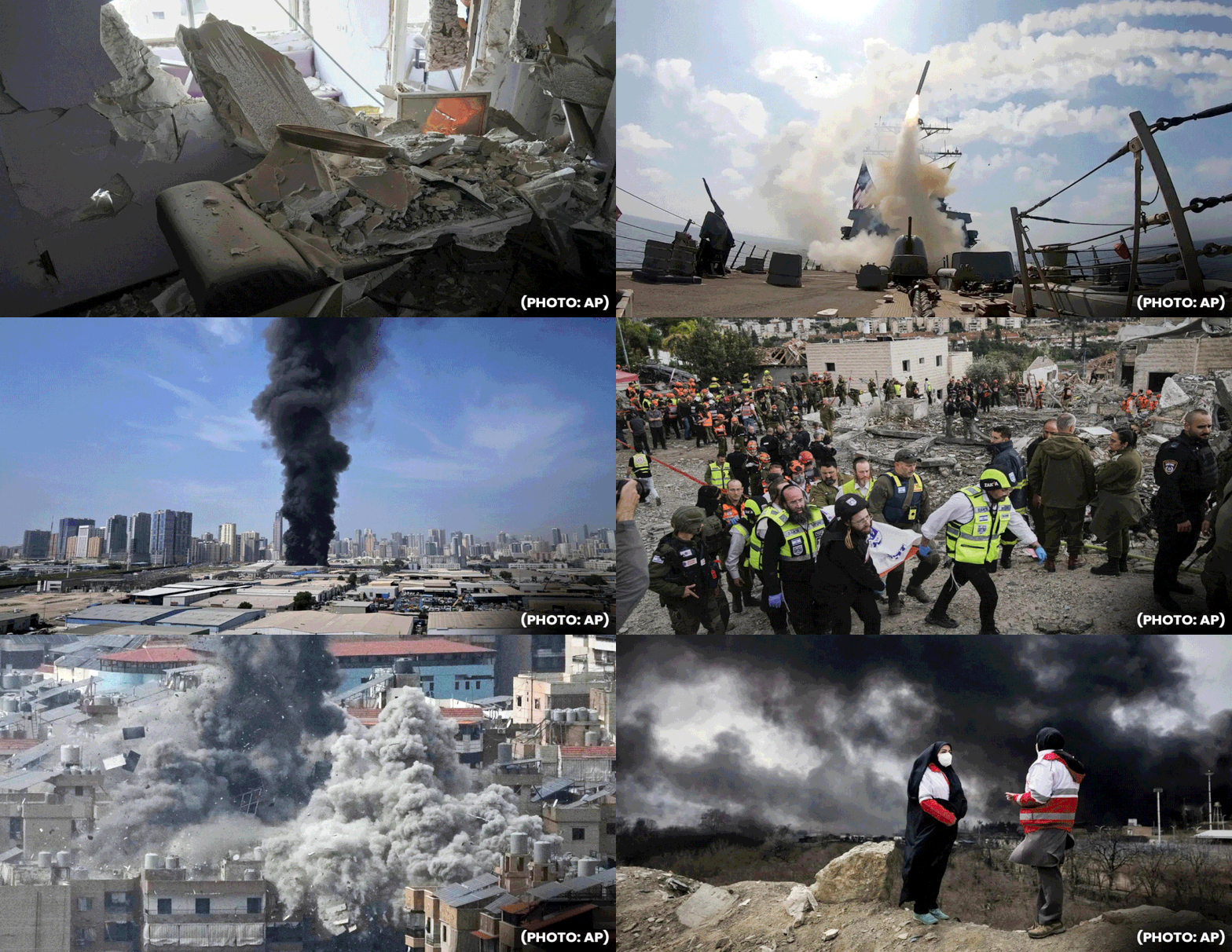
Intensifying Conflict in the Middle East
As the US-Israel conflict with Iran enters its second month, the situation in the Middle East has escalated dramatically, resulting in significant casualties, expanded military actions, and a growing global economic impact. The ongoing war has not only affected regional stability but has also disrupted energy markets and raised concerns about a prolonged conflict.
Week 1: Initial Strikes and Leadership Loss
The conflict ignited on February 28 with extensive US and Israeli airstrikes on Iran, marking one of the most aggressive openings in recent military history. These attacks resulted in the deaths of several high-ranking Iranian officials, including Supreme Leader Ali Khamenei and key military leaders. In retaliation, Iran launched a barrage of missiles and drones aimed at Israel, US military assets, and energy infrastructure in the Gulf, while also attempting to block the vital Strait of Hormuz, crucial for global oil transport.
The conflict expanded further as Hezbollah entered the fray, launching rockets at Israel, which retaliated with airstrikes and ground operations in southern Lebanon. By the end of the first week, over 1,300 fatalities were reported in Iran, including a devastating strike on a school in Minab that claimed the lives of more than 170 individuals, many of whom were children. Oil prices surged past $90 per barrel, and air travel in the region faced significant disruptions.
Week 2: Prolonged Conflict and Regional Expansion
As the second week unfolded, it became evident that Iran's government remained intact, indicating that the conflict would not be resolved quickly. US and Israeli forces continued their relentless strikes, targeting oil depots in Tehran, which resulted in large fires and heavy smoke enveloping the city. Iran and its allies executed coordinated attacks throughout the region, including near the Strait of Hormuz and in Saudi Arabia. Maritime tensions escalated as vessels were attacked near Hormuz, while the US admitted it was not fully prepared to escort commercial ships through the area.
In Lebanon, Israeli military operations intensified, leading to the displacement of over 800,000 individuals and numerous casualties. Oil prices briefly exceeded $110 per barrel before slightly declining. Politically, Iran appointed Mojtaba Khamenei as the new supreme leader, signaling continuity and defiance, while US President Donald Trump claimed the war would conclude 'soon,' despite Israeli leaders indicating no clear timeline.
Week 3: Energy Warfare and Escalation
The third week saw a significant escalation, with both sides targeting critical energy infrastructure. Israel conducted assassinations of senior Iranian officials and struck the South Pars gas field. In retaliation, Iran targeted energy facilities across the region, including sites in Qatar and an oil refinery in Israel. Iran also successfully breached Israel's air defenses, launching missile strikes that caused damage in southern cities. The US bolstered its military presence by deploying interceptor drones and expanding operations in the area.
Fighting escalated in Lebanon and Iraq, with ongoing rocket attacks and strikes on US-linked targets. Hezbollah extended its attacks deeper into Israeli territory, resulting in a rising civilian death toll, which surpassed 1,400 in Iran, and over one million people displaced in Lebanon. Energy disruptions began to affect global markets, leading to increased fuel prices and growing concerns in Europe and Asia.
Week 4: Diplomatic Efforts Amidst Ongoing Violence
In the fourth week, while there were limited signs of diplomatic engagement, the fighting persisted at a high intensity. The US deployed thousands of additional troops to the Middle East, raising the possibility of ground operations within Iran. Israel expanded its strikes to include industrial sites and a nuclear reactor, while Iran threatened retaliation against similar targets throughout the region. Iran continued its missile and drone attacks, including strikes across the Gulf, and Hezbollah maintained daily assaults on Israeli forces, claiming damage to military assets.
Politically, Trump stated that Iran was 'begging' for a ceasefire, although Iranian officials denied any direct negotiations. A ceasefire proposal from the US was rejected by Tehran, while regional powers, including Gulf nations, called for de-escalation. The humanitarian situation deteriorated, with deaths in Iran nearing 2,000 and additional casualties reported across the region. In Lebanon, over 1.2 million individuals were displaced, raising alarms about a potential humanitarian crisis. Economic pressures mounted as oil prices climbed above $112 per barrel, the highest in years, while global markets began to show signs of strain.