
Escalation in Iran: US Military Aircraft Shot Down Amid Ongoing Conflict
Significant Military Developments in Iran
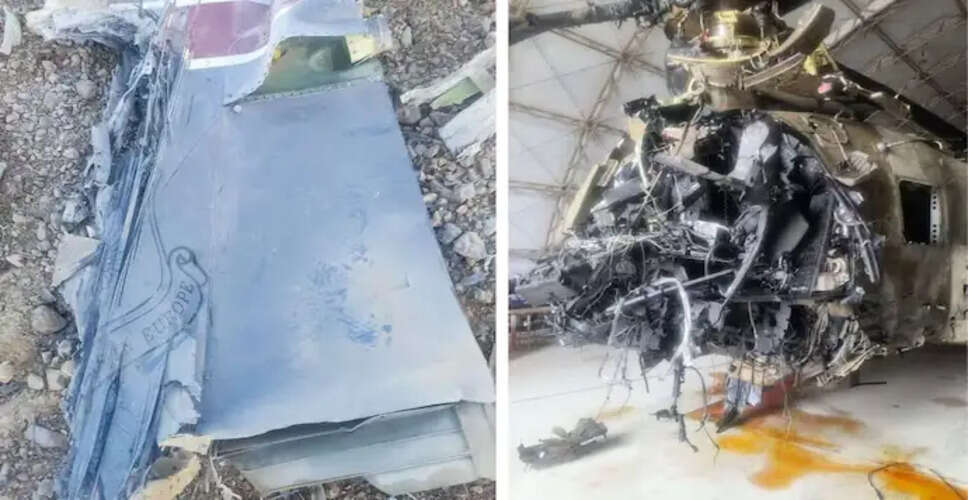
In a dramatic turn of events, Iran successfully shot down two US military aircraft on Friday, marking a significant escalation in the ongoing conflict that has persisted for nearly five weeks. One crew member was rescued, while another remains unaccounted for.
This incident represents the first time US aircraft have been lost in this conflict, occurring just two days after President Trump declared in a national address that the US had decisively defeated Iran and was prepared to conclude the conflict swiftly.
Reports indicate that one fighter jet was downed within Iranian territory, with a US service member rescued from the wreckage, but the fate of a second crew member is still uncertain, prompting a military search-and-rescue operation.
Neither the White House nor the Pentagon has disclosed detailed information regarding the downed aircraft. In a brief conversation with a news outlet, Trump refrained from commenting on the ongoing search efforts but asserted that the situation would not hinder negotiations with Iran.
Iranian state media reported that an A-10 attack aircraft crashed in the Persian Gulf after being targeted by Iranian defense forces. A US official, speaking anonymously, noted that it remains unclear whether the aircraft was shot down or crashed due to other circumstances.
These incidents occurred as Iran intensified its military actions across the Middle East, maintaining pressure on Israel and its Gulf allies, despite claims from the US and Israel that Iran's military capabilities had been severely diminished.
Uncertain Status of Service Members
The Pentagon has informed the House Armed Services Committee that the status of the second service member from the downed fighter jet remains unknown. An email from the Pentagon, which was obtained by a news agency, confirmed that they had received reports of an aircraft being shot down in the region, but further details were not provided.
Iran's aggressive actions targeting Gulf energy infrastructure and its control over the Strait of Hormuz, a crucial transit route for a significant portion of the world's oil and natural gas, have led to volatility in stock markets, soaring oil prices, and potential increases in the cost of essential goods, including food.
Potential Shift in Military Dynamics
Prior to the announcement of the rescue, social media footage depicted American drones and aircraft operating in the mountainous area where Iranian state television claimed at least one pilot had ejected from the fighter jet. An anchor on the channel urged local residents to report any enemy pilots to the authorities, promising a reward for their cooperation.
This incident marks the first time the US has lost aircraft within Iranian territory during this conflict, potentially signaling a new level of military pressure on the US forces.
Throughout the war, Iran has made various claims regarding downed enemy aircraft, many of which were later proven false. However, this time, Iranian state media publicly called for assistance in locating a downed pilot.
Reports indicated that the military shot down a US F-15E Strike Eagle, a variant of the Air Force fighter jet that operates with both a pilot and a weapons system officer. A former Air Force investigator noted that the Strike Eagle is equipped with an emergency locator beacon that can be activated automatically or manually.
White House press secretary Karoline Leavitt confirmed that Trump had been briefed on the situation but did not provide additional details. The president later shared messages regarding Iran on his social media platform but did not mention the downed aircraft or the ongoing search efforts.
Iran's Continued Military Aggression
The news of the downed aircraft coincided with Iran's attack on Kuwait's Mina al-Ahmadi oil refinery, with state-run Kuwait Petroleum Corp. reporting that firefighters were working to control multiple fires resulting from the assault.
Additionally, Kuwait reported that an Iranian attack caused damage to a desalination plant, which is vital for providing drinking water to Gulf states and has become a significant target in the ongoing conflict.
Sirens were activated in Bahrain, while Saudi Arabia claimed to have intercepted several Iranian drones, and Israel reported incoming missile threats.
In the United Arab Emirates, authorities shut down a gas field after debris from a missile interception reportedly caused a fire. Activists also reported strikes in and around Tehran and Isfahan, although the specific targets were not immediately clear.
In Lebanon, where Israel has engaged in a ground invasion against the pro-Iranian Hezbollah militant group, an Israeli drone strike near Beirut killed two individuals as they left Friday prayers, according to local news sources.
Since the conflict began on February 28, over 1,900 individuals have lost their lives in Iran. A recent review indicated that civilian casualties have primarily occurred around strikes on security and state-linked sites rather than indiscriminate attacks on urban areas.
The conflict has also resulted in casualties in Gulf states and the occupied West Bank, with reports of 19 deaths in Israel and 13 US service members killed. In Lebanon, over 1,300 individuals have died, and more than one million have been displaced, with ten Israeli soldiers also reported dead.
Global Implications of Iran's Actions
World leaders continue to grapple with Iran's control over the Strait of Hormuz, which has significant implications for the global economy and serves as a strategic advantage in the ongoing conflict.
The UN Security Council is anticipated to address this issue soon. Trump has fluctuated in his stance regarding America's role in the strait, alternating between threats to Iran and urging other nations to secure their own oil supplies. Recently, he stated on social media that, with a little more time, the US could easily open the Strait of Hormuz, seize the oil, and generate substantial profits.
As of now, Brent crude prices have surged to around USD 109, reflecting an increase of over 50 percent since the onset of the war, coinciding with Iran's restrictions on traffic through the strait.