
Escalating Tensions: US Strikes Iran Amid Ongoing Conflict in the Strait of Hormuz
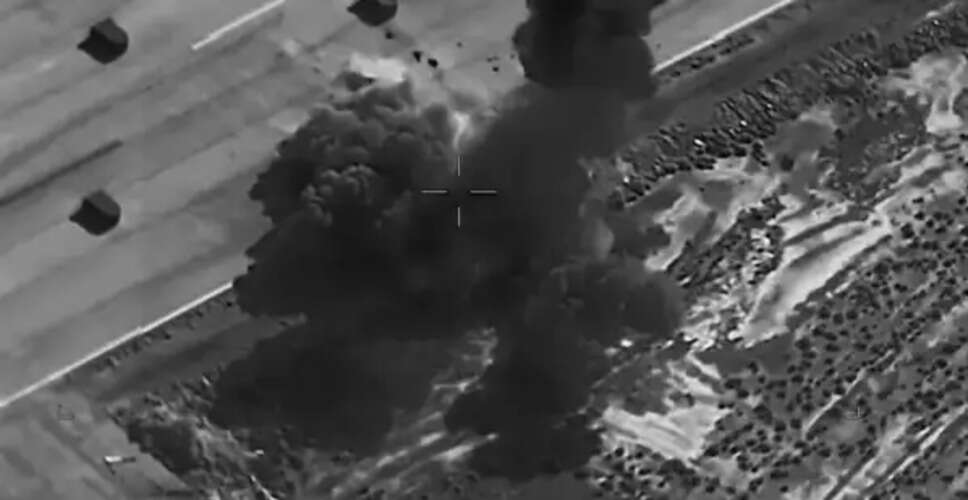

US Military Action Against Iran
In a significant escalation, the United States launched airstrikes against Iran early Sunday following an Iranian attack on a commercial vessel in the Strait of Hormuz, which resulted in the ship catching fire and its crew having to evacuate. In retaliation, Iran targeted several nations, including Bahrain, Kuwait, Qatar, and the United Arab Emirates.
The Strait of Hormuz has emerged as a critical point of contention in the ongoing negotiations between Iran and the US, which have been strained since the conflict reignited on February 28.
Prior to the conflict, approximately 20% of the world's oil and natural gas traversed this strait. Iran's control over this vital passage during the war has contributed to a global energy crisis, although oil prices have since decreased from wartime peaks of $120 per barrel.
According to the US Central Command, the recent strikes targeted around 140 sites, significantly more than previous operations, focusing on missile and drone launch facilities, ammunition depots, and communication hubs.
These military actions aim to diminish Iran's capacity to threaten civilian maritime traffic and commercial shipping in the strait.
This new wave of violence follows comments from US President Donald Trump, who indicated that an interim agreement regarding the Iran conflict was no longer viable.
US Defense Secretary Pete Hegseth remarked on social media, stating, "Iran made a poor choice. Now they pay the price."
In response, Mohammad Bagher Qalibaf, the speaker of Iran's parliament and a key negotiator, declared, "The era of one-sided deals is OVER. We warned you: keep your word or face the consequences. Reality is knocking."
Regional Repercussions
The United Arab Emirates issued a public alert on Sunday regarding incoming missile and drone strikes, with explosions reported in neighboring Qatar. Shortly after, Qatar's military confirmed it had intercepted Iranian missiles.
Missile alerts were also activated in Bahrain, home to the US Navy's 5th Fleet, while Kuwait's military reported intercepting incoming threats.
Details regarding specific targets in the UAE remain unclear, as this region had not previously been affected by Iran's recent attacks. The last incident involving the Emirates occurred in May when a drone ignited a fire near the country's only nuclear power facility.
Iran has made various claims about additional attacks, although these reports have not been independently verified.
The attack on the Cyprus-flagged container ship resulted in significant damage to its engine room, and one crew member is currently unaccounted for, according to US Central Command.
The United Kingdom Maritime Trade Operations center, managed by the British military, noted that the vessel was navigating a route close to Oman's coastline, a strategy employed to avoid Iranian territorial waters. The crew abandoned the ship as it was engulfed in flames.
Iran's paramilitary Revolutionary Guard stated that several vessels ignored their warnings and were subsequently targeted, with one vessel reportedly hit by a warning shot.
Iran's Stance and Future Actions
Iran has declared that the Strait of Hormuz will remain closed "until further notice" and has threatened to target additional enemy bases in the region if further attacks occur.
Iranian state media reported US strikes across several southern provinces, including Bushehr, Hormozgan, Khuzestan, and Sistan and Baluchestan, but did not provide immediate casualty or damage figures.
This latest surge in violence follows diplomatic discussions between the foreign ministers of Iran and Oman regarding the strait, amidst a backdrop of Iranian assaults on vessels and US retaliatory strikes that have undermined the interim peace agreement.
The Strait of Hormuz, while located within the territorial waters of both Iran and Oman, has historically been recognized as an international waterway.
Oman announced that it and Iran would continue discussions about the Strait of Hormuz at both technical and political levels, although Iran did not confirm any commitment to keeping the strait open to all, a condition sought by the Trump administration.
Iran's new supreme leader, who has remained out of the public eye since the war's onset, vowed to avenge the killing of his predecessor, Ayatollah Ali Khamenei, during the initial strikes of the conflict.
He stated, "Such revenge is the will of our nation and must certainly be executed," in a message broadcast on state television.
US Concerns Over Iranian Leadership
US officials, speaking on the condition of anonymity, expressed concerns that the recent resumption of strikes was driven by a rogue faction of hard-liners within Iran, aiming to disrupt the ceasefire.
Iran maintains that its theocratic leadership is unified under the new supreme leader.
Following the US airstrikes on Thursday, additional attacks reportedly targeted Iran, raising questions about who might be behind these actions.
While Israel did not claim responsibility for these strikes, it is speculated that Gulf Arab states may have conducted them to deter further Iranian aggression.
In retaliation for US strikes, Iran targeted Bahrain, Jordan, Kuwait, and Qatar.
The two rounds of US strikes last week resulted in at least 17 fatalities and 115 injuries, according to the Iranian Health Ministry spokesperson, Hossein Kermanpour.