
Escalating Tensions: US-Iran Conflict Intensifies Amid Regional Strikes
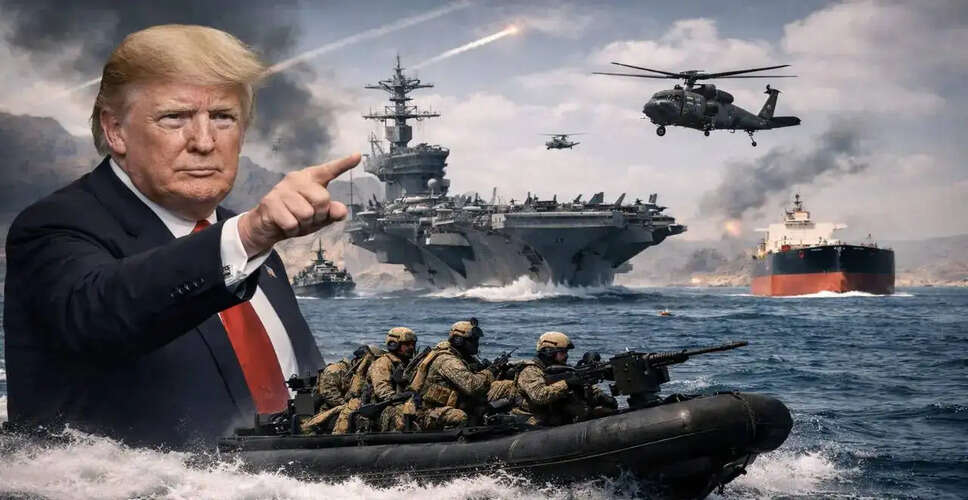
Conflict Escalation in the Middle East
The ongoing conflict involving the United States, Israel, and Iran has now reached its third week. Recent events include a missile hitting a helipad within the US Embassy in Baghdad and debris from an intercepted Iranian drone impacting an oil facility in the UAE, raising alarms about global oil supply stability. Iran has broadened its military actions in the region and has issued threats to potentially block the Strait of Hormuz, a vital maritime corridor for a significant portion of the world's oil.
President Trump stated that he anticipates support from various nations, including China, France, Japan, South Korea, and Britain, to send naval forces to secure shipping routes in the strait. However, it remains uncertain if these countries have confirmed such deployments. Trump also asserted that US forces have effectively neutralized Iran's military capabilities and vowed to maintain aggressive operations along Iran's coastline to ensure the Strait of Hormuz remains 'open, safe, and free.'
“One way or the other, we will soon get the Hormuz Strait OPEN, SAFE, and FREE! President DONALD J. TRUMP pic.twitter.com/MG4JSOCeK4
— Luis Almodovar (@LuckyLui) March 14, 2026
On the same day, Trump emphasized that nations reliant on oil shipments through the Strait of Hormuz must also contribute to its protection, calling for a collaborative effort to ensure regional security. Meanwhile, Iran's military command has threatened to target cities in the UAE, which includes Dubai, a major global travel hub. Iranian officials have alleged that the US utilized UAE facilities to conduct strikes on Iranian territory.
Iran has warned residents in areas it claims are used by US forces to evacuate, specifically mentioning Jebel Ali port in Dubai, Khalifa port in Abu Dhabi, and Fujairah port. This marks a significant escalation, as it is the first instance of Iran directly threatening non-US commercial interests in a neighboring nation since the conflict escalated following US-Israeli strikes on February 28.
Images circulating on social media depicted smoke rising from the US Embassy in Baghdad, while a fire was reported at Fujairah port after a drone was intercepted. No group has claimed responsibility for the attack on the embassy helipad, which has been a target of Iranian-aligned militias in the past. US officials have not commented on the incident.
Iranian Foreign Minister Abbas Araghchi warned that Tehran would retaliate against American companies in the region if its energy infrastructure is attacked. He stated that Iran would respond to any aggression against its energy facilities, following US strikes on military sites on Kharg Island, a crucial hub for Iranian oil exports. Trump confirmed that US strikes had targeted military installations on Kharg Island but had not yet affected oil infrastructure. However, he cautioned that if Iran disrupts shipping in the Strait of Hormuz, the US might target Iranian oil facilities next.
The US military reported that recent strikes had 'obliterated' several targets on Kharg Island, which is home to Iran's primary oil export terminal. Iran's parliament speaker previously warned that such attacks could provoke a new level of retaliation. Reports indicate that the US is increasing its military presence in the region, with an additional 2,500 Marines and an amphibious assault ship being deployed, contributing to one of the largest US military buildups in decades.
US Defense Secretary Pete Hegseth noted that over 15,000 enemy targets have been struck since the conflict began, averaging more than 1,000 per day. Israel has also intensified its military operations, conducting strikes on Iranian missile launchers, air defense systems, and weapons production facilities, with over 200 targets hit in the last 24 hours.
Additionally, the US military confirmed that elements of the 31st Marine Expeditionary Unit and the USS Tripoli (LHA-7) have been directed towards the Middle East. These units are designed for rapid response missions, including embassy protection and humanitarian operations, although officials clarified that this does not indicate plans for a ground invasion.
Earlier in the week, the US Navy had already deployed 12 warships in the Arabian Sea, including the aircraft carrier USS Abraham Lincoln (CVN-72) and several destroyers. This latest deployment will further enhance the US naval presence in the region.
Despite ongoing tensions, Iran has reportedly permitted some Indian vessels to navigate through the Strait of Hormuz. Tehran's ambassador to India, Mohammad Fathali, confirmed that certain Indian ships were granted safe passage, although further details were not disclosed.