
Escalating Tensions: The US-Israel Strikes on Iran and Its Aftermath
Overview of the Conflict
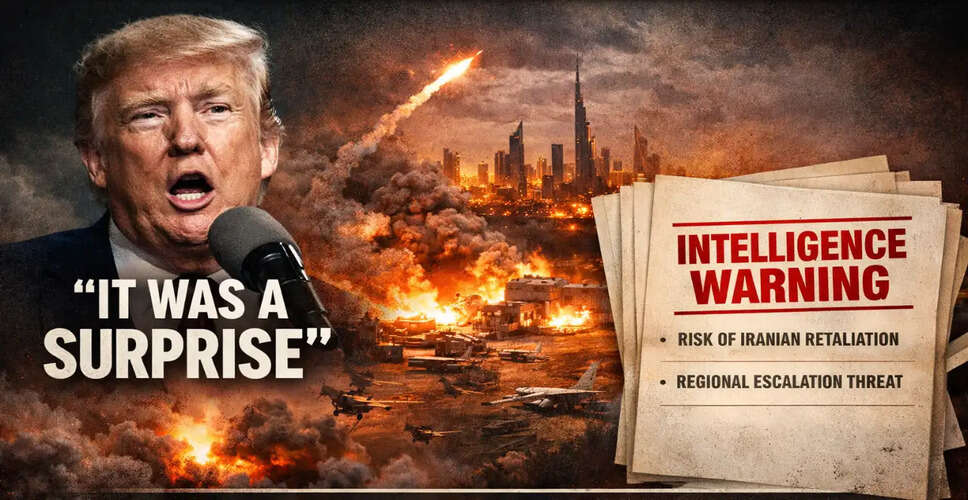
On February 28, the United States and Israel executed coordinated strikes against Iran, resulting in the death of Supreme Leader Ayatollah Ali Khamenei. This action raised significant concerns about potential retaliation, as Washington anticipated that such attacks could lead to a wider conflict involving other nations in West Asia. Despite this, President Donald Trump expressed surprise at Iran's subsequent response, prompting questions about the intelligence available prior to the strikes.
The Ongoing Conflict
The Strike That Raised the Stakes
The conflict involving the US, Israel, and Iran has now progressed into its third week. The joint military operations, named 'Roaring Lion' and 'Epic Fury', commenced on February 28, leading to the death of Khamenei and several key figures in his administration. In retaliation, Iran has targeted US positions and Israeli interests, including recent attacks in the UAE's Fujairah and Dubai.
As per reports, the ongoing war has resulted in over 1,300 fatalities in Iran, 880 in Lebanon, and 12 in Israel. Additionally, 13 US military personnel have lost their lives, including six in a plane crash in Iraq. The conflict has also displaced more than 1 million individuals in Lebanon, accounting for approximately 20% of the country's population.
Trump's Reaction to Iran's Retaliation
Trump Says He Was Surprised By Iran's Retaliation
As Iran continues its assaults on neighboring countries, including the UAE, Qatar, Saudi Arabia, and Kuwait, Trump recently stated that he was taken aback by Tehran's aggressive response. During a meeting at the Kennedy Center, he expressed disbelief that Iran would target other nations in the Middle East, claiming, "Nobody expected that. We were shocked." He reiterated his surprise in an interview, labeling it the most significant shock of the entire situation.
When questioned about the lack of briefings regarding the potential for Iranian strikes on Gulf states, Trump responded, "Nobody, nobody, no, no, no. The greatest experts, nobody thought they were going to hit."
Warnings Prior to the Strikes
Warnings Came Before the First Move
Reports indicate that Trump was cautioned about the possibility of Iranian retaliation against US allies in the Gulf prior to the attacks, according to sources familiar with US intelligence. While the intelligence did not guarantee a response, it was certainly considered a potential outcome. Ahead of Operation Epic Fury, Trump was informed that Iran might attempt to close the crucial Strait of Hormuz, a vital oil passage, leading to global price increases and disruptions.
Previous Reports on US Strikes
What Earlier Reports Had Already Flagged
Several media outlets had reported in January that US strikes on Iran were imminent, but the actions were delayed due to extensive consultations with Gulf allies. These allies cautioned that a US attack could provoke widespread retaliation and destabilize the region. Countries such as Egypt, Oman, Saudi Arabia, and Qatar urged the Trump administration to reconsider military action, fearing it would disrupt the global economy and exacerbate regional volatility.