
Escalating Tensions in the Strait of Hormuz Amid Ongoing Conflict
Conflict Intensifies in West Asia
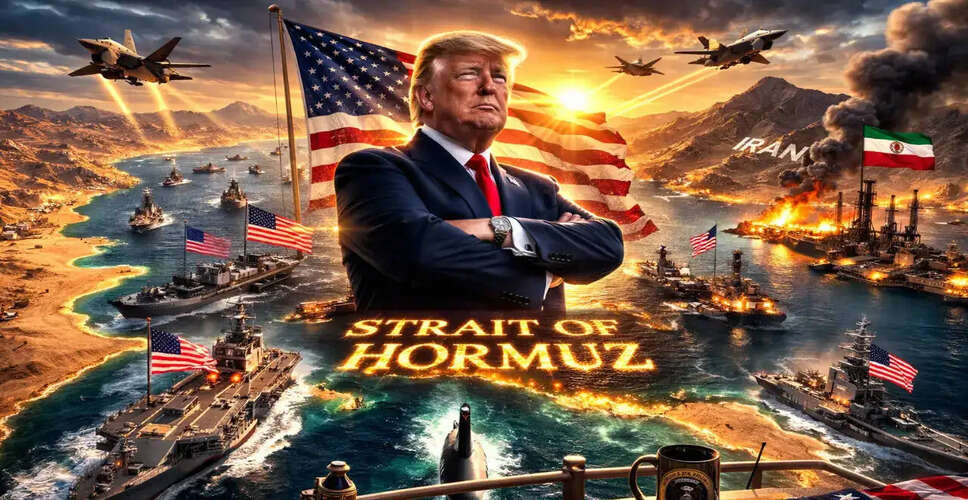
As the conflict in West Asia reaches its fourth week, the situation has worsened with increased attacks on oil facilities. On March 19, President Donald Trump issued a pointed statement criticizing NATO allies for their lack of support in the ongoing conflict against Iran. He emphasized that while the United States does not utilize the Strait of Hormuz, it is committed to defending it for the benefit of all. The Iranian Islamic Revolutionary Guard Corps (IRGC) has effectively blocked access to the strait, which has been closed for the past 20 days, raising concerns about a potential regional escalation.
Previously, Trump had called on NATO members and other global powers, including China, to assist in reopening the Strait of Hormuz, but these nations have largely declined his request. On Monday, Trump claimed that several countries had indicated their forces were en route to help secure the strait, stating, “They’ve already started to – it takes a little while to get there.” However, many European nations have publicly declared their intention not to participate militarily in the conflict.
International Response to the Crisis
In a joint statement, leading European nations—France, the United Kingdom, Italy, Germany, and Japan—expressed their willingness to collaborate with the US in ensuring the safety of the Strait of Hormuz. They condemned Iran's recent attacks on unarmed commercial vessels and civilian infrastructure, including oil and gas facilities. The British Embassy in Washington noted their readiness to contribute to efforts ensuring safe passage through the strait and welcomed the International Energy Agency's decision to authorize a coordinated release of strategic petroleum reserves.
Impact of the Blockade on Europe
The blockade of the Strait of Hormuz has significantly disrupted a crucial shipping route for crude oil and natural gas, causing Brent crude prices to approach $100 per barrel and leading to increased wholesale gas prices in Europe. This situation has resulted in higher fuel costs for consumers across the continent, where ports handle over 3.4 billion tonnes of goods annually.
Trump's Stance on Iran
Trump has denied any plans to deploy US ground troops to Iran, asserting that he could mobilize military forces at his discretion without disclosing his strategies. He warned Iran that he could conclude the conflict swiftly, mentioning the potential to take control of Kharg Island, which he described as 'totally unprotected.' He claimed that the island's infrastructure was largely destroyed, except for the pipes, which would take years to rebuild.
Iran's strikes have severely impacted maritime traffic in the Strait of Hormuz, contributing to an energy crisis in the region. The strait, a narrow passage between the Persian Gulf and the Gulf of Oman, is responsible for approximately 20% of global oil and liquefied natural gas shipments.
Escalation of the Middle East Conflict
The conflict escalated further on Thursday as Iran targeted major oil facilities in Gulf nations, including Saudi Arabia, in retaliation for Israeli strikes on Iranian energy sites. Earlier that day, a drone attack struck Saudi Arabia's SAMREF refinery in Yanbu, following similar attacks on oil refineries in Kuwait. Iranian assaults also targeted natural gas facilities in Qatar and the UAE, causing a spike in global energy prices.
On Thursday evening, Iran launched strikes on Israel's oil refineries in Haifa, marking a significant escalation in hostilities. Israeli Energy Minister Eli Cohen reported temporary power disruptions, although electricity was restored to most affected areas. The conflict initially ignited on February 28, following US and Israeli airstrikes that killed several high-ranking Iranian officials, including Supreme Leader Ayatollah Ali Khamenei.