
Drone Attack Disrupts Operations at Kuwait International Airport Amid Rising Tensions
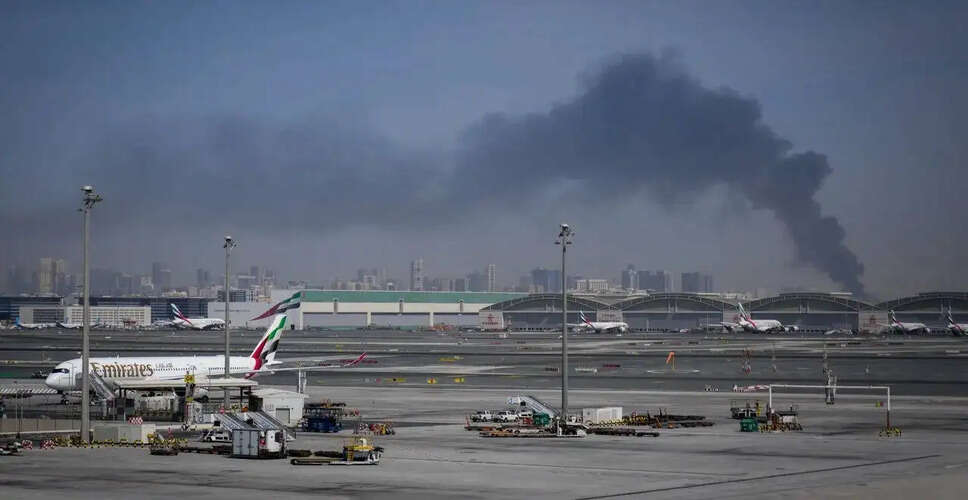
Drone Assault on Kuwait Airport
On Sunday evening, Kuwait International Airport was targeted by a swarm of drones, as reported by the nation's aviation authority. Initial assessments indicate that the airport's radar system sustained damage during the incident. In response, emergency protocols were promptly initiated, although there have been no immediate reports of injuries. Following the attack, air traffic at the airport has experienced significant disruptions.
The ongoing conflict involving the United States, Israel, and Iran has now entered its third week, with escalating tensions following US military strikes on Kharg Island, a vital hub for Iran's oil exports. President Trump stated that these strikes were carefully executed to avoid damaging the island's oil infrastructure, but he cautioned that it could become a target if Iran disrupts shipping in the Strait of Hormuz. Iran has issued warnings that any assault on its energy facilities would lead to retaliation against oil infrastructure in the region and US-linked assets, raising concerns about a wider energy and security crisis in the Gulf.
Recent Developments in Iran
Iran's Military Actions
The Islamic Revolutionary Guard Corps (IRGC) of Iran has reported launching missiles and drones at Israel in collaboration with Hezbollah. This operation was part of the annual al-Quds Day activities, aimed at showing support for the Palestinian cause. Additionally, US Secretary of Defense Pete Hegseth has suggested that Iran's new supreme leader, Mojtaba Khamenei, has been injured, stating, "We know the new so-called, not-so-supreme leader is wounded and likely disfigured." The US State Department has also announced a $10 million reward for information regarding Khamenei and other high-ranking Iranian officials.
President Trump confirmed that US forces targeted Iranian military sites on Kharg Island, referring to it as Iran's "crown jewel" due to its critical role in the country's economy, with approximately 90% of Iran's crude oil exports passing through it before reaching the Gulf and the Strait of Hormuz.
Since February 28, Iranian sources report that at least 1,444 individuals have lost their lives and 18,551 have been injured due to US-Israeli strikes on Iran.
Regional Reactions
Escalating Tensions Across the Gulf
In retaliation, Iran has conducted drone and missile strikes targeting US military assets and commercial sites throughout the Gulf region. The Saudi Ministry of Defence announced on Friday that air defenses successfully intercepted and destroyed six drones—five in the eastern region and one over the Empty Quarter desert. In Qatar, military forces intercepted an incoming missile, prompting authorities to issue security alerts to mobile devices regarding potential missile or drone strikes and to temporarily evacuate certain areas, including parts of Education City.
In Bahrain, warning sirens were activated, and the Ministry of Interior advised residents to stay calm and seek safety. Meanwhile, in Oman, where two individuals were recently killed by falling drones, Sultan Haitham bin Tariq and Qatar's Emir Sheikh Tamim bin Hamad Al Thani held a phone conversation advocating for dialogue and regional de-escalation.