
Did Trump's Trade Offer Really Influence India-Pakistan Ceasefire? Insights from New Delhi
India's Stance on US Trade Claims
New Delhi: On Thursday, India clarified that trade discussions were not part of its talks with the United States amid the military tensions with Pakistan, effectively dismissing claims from Washington that a trade offer helped ease the conflict.
This statement follows comments from US Commerce Secretary Howard Lutnick, who testified in a New York court that a 'fragile ceasefire' between India and Pakistan was only achieved after President Donald Trump proposed trade access to both nations to prevent a 'full-scale war.'
Recently, Trump has asserted that he warned both India and Pakistan that the US would halt trade if they did not cease hostilities.
India has consistently stated that the agreement to halt military actions was reached through direct communications between the Directors General of Military Operations (DGMOs) from both countries.
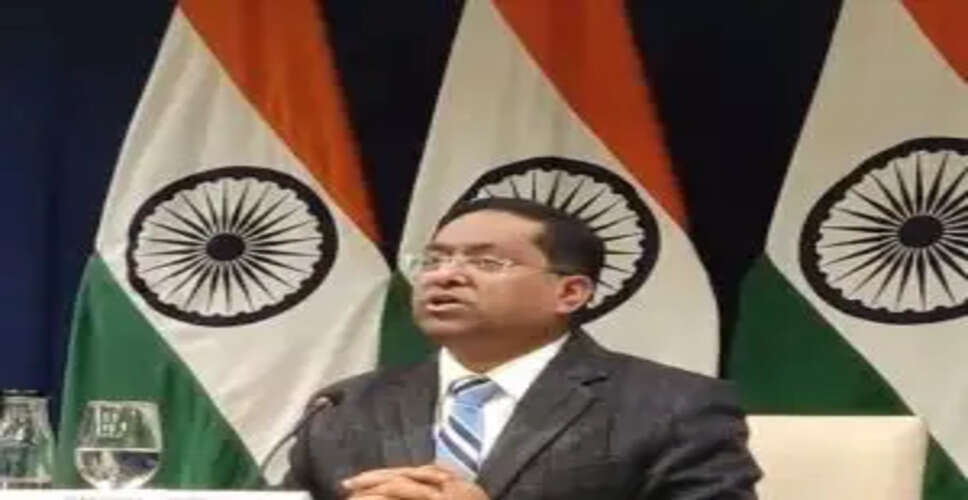
External Affairs Ministry spokesperson Randhir Jaiswal emphasized that from the initiation of Operation Sindoor on May 7 until the ceasefire agreement on May 10, discussions between Indian and US leaders focused on the military situation, with no mention of trade or tariffs.
Jaiswal addressed inquiries regarding the Trump administration's statements made in court, reiterating that the ceasefire was a result of direct dialogue between the DGMOs of India and Pakistan.
Lutnick's remarks were made during a submission to the Court of International Trade, where he opposed any limitations on President Trump's authority to impose tariffs.
He argued that the president's tariff powers are essential for effective diplomacy, citing the recent ceasefire between the two nuclear nations as a direct result of Trump's intervention.
Lutnick warned that any ruling limiting presidential powers could undermine the credibility of Trump's trade offer, potentially destabilizing the region and endangering millions.
The US Court of International Trade recently ruled that many of Trump's tariff policies were unlawful, placing a hold on them.
Additionally, US Vice President JD Vance spoke with Prime Minister Narendra Modi on May 9, discussing strategies to reduce tensions between India and Pakistan.
Following India's Operation Sindoor on May 7 in response to the Pahalgam attack, External Affairs Minister S. Jaishankar also engaged in discussions with US Secretary of State Marco Rubio and other global counterparts.
Reports indicate that India informed the US of its intention to respond to Pakistan's military actions after launching Operation Sindoor.