
Devastating Airstrike on Kabul Drug Rehabilitation Center Claims Hundreds of Lives
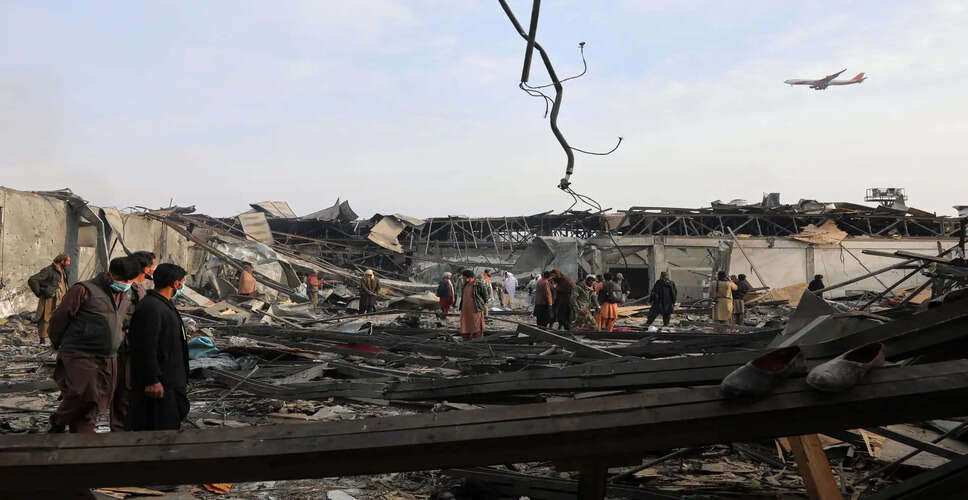
Tragic Aftermath of the Airstrike
A survivor from the airstrike that targeted a drug rehabilitation center in Kabul recounted the harrowing experience, describing it as feeling like 'doomsday.' Ahmad, aged 50, witnessed flames engulfing fellow patients at the facility where he was receiving treatment late on Monday night. He tragically noted that he was the only survivor among 25 others in his dormitory. 'The entire place was ablaze. It was like doomsday,' he stated.
According to the Taliban government in Afghanistan, the attack resulted in at least 400 fatalities and left 250 individuals injured. Pakistan, however, refuted claims of targeting a medical facility, asserting that its strikes were aimed at military sites and 'terrorist support infrastructure.' This incident has heightened tensions between Afghanistan and Pakistan during the holy month of Ramadan.
Ahmad, who also served as a guard at the center, mentioned that residents had gathered in their dormitory after evening prayers when the airstrike occurred. Hospital personnel reported extensive destruction and significant casualties. Mohammad Mian, a worker in the radiology department, noted that many patients were housed in large containers on the premises, with few surviving in the areas that were directly impacted. 'It was incredibly terrifying,' he remarked. 'Those who survived were fortunate enough to be in rooms that were not destroyed. However, in the areas where the bombs fell, everyone perished.'
Images from the site revealed severe damage, with charred walls and devastated rooms indicating where the fires had ravaged the buildings. Other sections were reduced to rubble, with personal belongings like clothing, shoes, and bedding scattered throughout the debris. In one dormitory, bunk beds remained upright against a wall, their bedding untouched, while the ceiling had been blown away.
Dr. Ahmad Wali Yousafzai, a health officer at the hospital, reported that the facility was accommodating around 2,000 patients at the time of the attack. He recalled the multiple explosions that hurled staff across the rooms. As the fires spread, screams echoed 'from all directions.' He lamented, 'We were too few to save everyone.'
Rescue operations continued into Tuesday, with ambulance driver Haji Fahim stating he transported at least eight bodies over several hours, and more victims remained trapped beneath the rubble. 'We have returned again... there are still bodies under the debris,' he said.
Pakistan's Position
In response, Pakistan claimed it had 'precisely targeted military installations and terrorist support infrastructure' during the airstrike on Kabul. This attack occurred shortly after China expressed its willingness to mediate and urged both nations to resume negotiations. The ongoing conflict represents the most severe tensions between the two South Asian Islamic neighbors, who share a 2,600-km (1,600-mile) border.
Hamdullah Fitrat, the Taliban's deputy spokesman, stated on social media that the airstrike occurred at 9 p.m. (1630 GMT) on Monday, targeting the state-run Omid Hospital, which he described as a 2,000-bed drug rehabilitation center. The Pakistani information ministry contended that Omid Hospital was located miles away from Camp Phoenix, a site it claimed was a 'military terrorist ammunition and equipment storage location' that was actually targeted. Pakistani Information Minister Attaullah Tarar noted that the visible secondary explosions following the strikes indicated the presence of large ammunition depots.
Fighting between the former allies escalated last month, with Pakistani airstrikes in Afghanistan aimed at militant strongholds. Islamabad accuses Kabul of harboring militants who launch attacks on Pakistan, a claim the Taliban denies, asserting that addressing militancy is an internal issue for Pakistan.
India's Reaction
India has 'unequivocally' condemned Pakistan's 'barbaric' airstrike on the drug treatment center in Kabul, labeling it a 'blatant assault' on Afghanistan's sovereignty and a threat to regional peace and stability. In a strong response to the attack, New Delhi accused Pakistan of attempting to 'disguise a massacre as a military operation.' It criticized the strike as indicative of Islamabad's ongoing pattern of 'reckless behavior' and its repeated efforts to 'externalize internal failures.'