
Debate Erupts Over Candace Owens' Claims Regarding Charlie Kirk's Death
Political Controversy Surrounding Kirk's Death
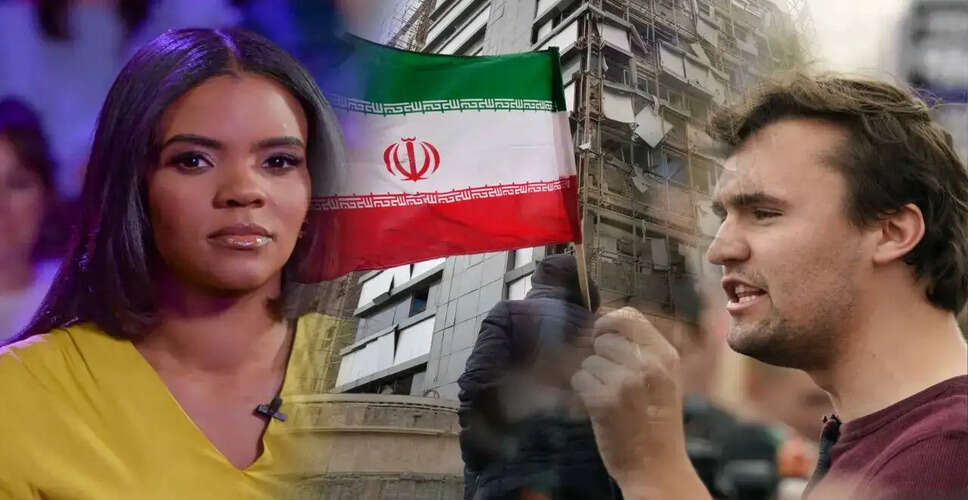
Political discussions have reignited following Candace Owens' controversial theory linking the death of Charlie Kirk to his supposed opposition to a broader US military engagement with Iran. In the fourth episode of her online series, Owens posited that Kirk's changing perspectives on Israel and Middle Eastern policies positioned him against significant geopolitical interests. Her comments, made without presenting new, verifiable evidence, revolved around the implications of timing and motive. Owens suggested that Kirk's influence among young conservative activists could have rendered him a political hurdle during a period of escalating tensions between the US and Iran. This theory quickly gained traction on social media, despite critics labeling it as speculative and lacking support.
Charlie Kirk's Actual Stance on Iran
Analysis of Kirk's public speeches, interviews, and writings reveals a more nuanced view than the one presented by Owens. As the founder of Turning Point USA, Kirk consistently expressed strong support for Israel and advocated for a tough stance against Iran's nuclear ambitions. He endorsed US sanctions against Tehran and criticized what he termed appeasement strategies. Nevertheless, he also exhibited a broader conservative skepticism towards prolonged military engagements abroad, aligning with aspects of the 'America First' movement. In previous public discussions, Kirk labeled the Iraq War as strategically flawed while asserting that Iran should not be allowed to develop nuclear weapons. This distinction—favoring deterrence while opposing regime-change wars—has been a focal point of debate within conservative policy discussions.
JUST IN: Candace Owens now claims she has proof the U.S. Military was involved in Charlie Kirk’s assassination.Owens says she received an email from “a man in the military” which she claims she received last night. “It feels like today will be the day that the government can… pic.twitter.com/MJttXUUXBe
— Collin Rugg (@CollinRugg) December 9, 2025
Owens contended that Kirk's evolving position challenged certain pro-war narratives. However, critics argue that there is no documented evidence from Kirk that indicates a firm opposition to confronting Iran if US national interests were at stake.
Claims and Reactions
In her statements, Owens expressed her 'personal belief' that Kirk's death could have been orchestrated through a 'sophisticated military operation' aimed at influencing public opinion. She further asserted that his perceived views on Israel and Iran placed him in a politically vulnerable position. These claims have faced significant pushback. Commentators from various ideological backgrounds have pointed out that no law enforcement agency has suggested a geopolitical motive behind Kirk's death, nor has any official investigative body confirmed the existence of a coordinated plot related to Middle Eastern policy.
This debate has reignited tensions within conservative media circles. Some critics warn that invoking international conspiracy theories without evidence could damage credibility. Others argue that this incident highlights deeper divisions within the political right regarding US foreign policy, especially in light of rising US-Iran tensions. The controversy arises during a time of volatility in the Middle East, where discussions about US military involvement are particularly sensitive. Political tragedies often lead to competing narratives shaped by ideology, emotion, and distrust.